The hardware stories worth noting this week share an unusual trait: none of them are about a leap to new silicon. Google is reusing its TPU 8i and TPU 8t chips for two new specialized systems, a first batch of Android XR smartglasses is being judged on what it does rather than what it displays, and a discounted Ecoflow power bank is being sold on what it can already deliver. The pattern is a market that has stopped waiting for the next manufacturing node and started monetizing what is already on the shelf.
Reuse as the new roadmap
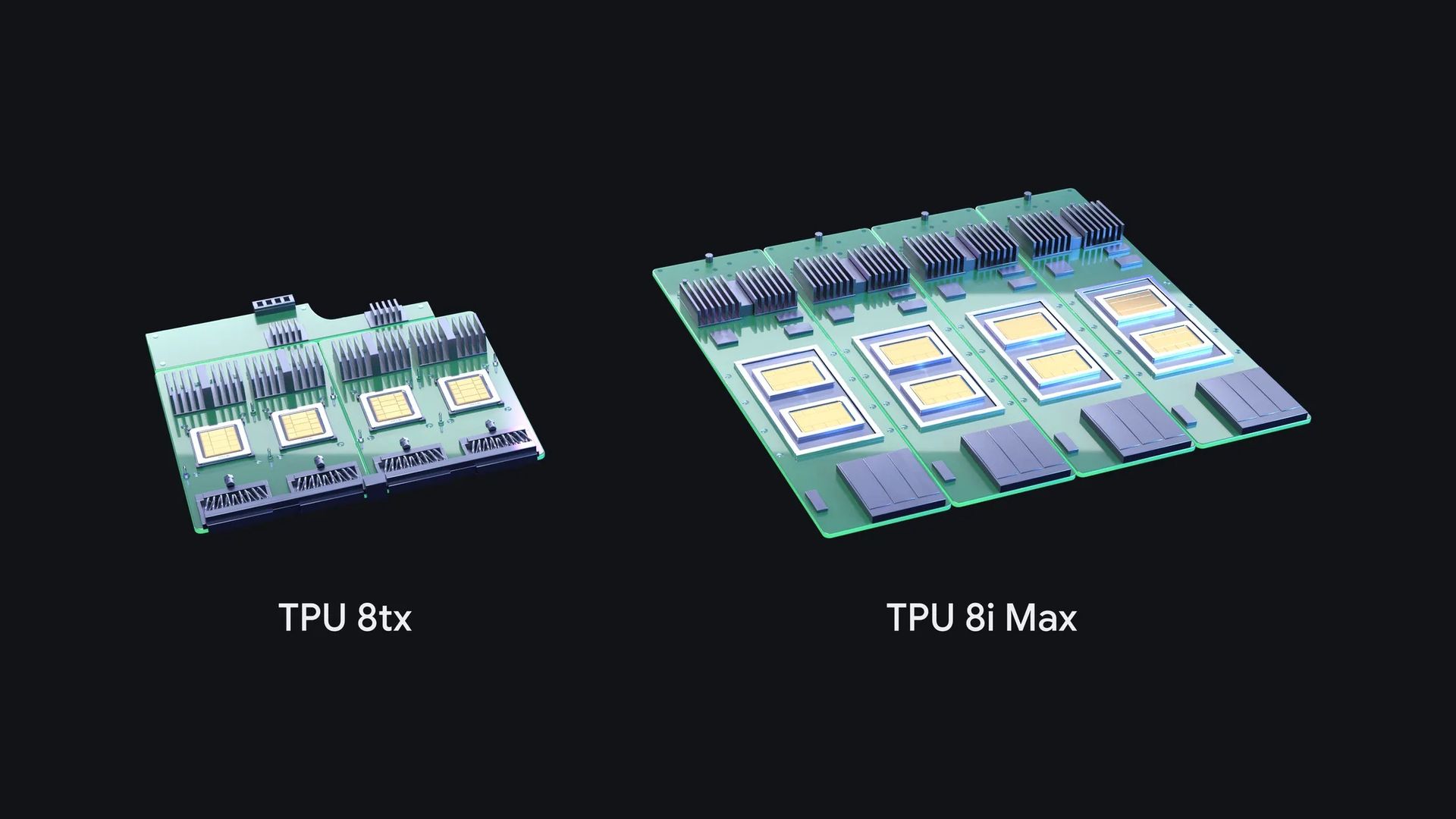
The clearest expression of the trend comes from Google's data-center work. As Tom's Hardware reported, the TPU 8i Max and TPU 8tx reuse existing TPU 8i and TPU 8t silicon, with the new systems targeting long-context agents and confidential inference rather than introducing a new chip generation. That is a meaningful choice. Rather than tying product cadence to a fresh piece of silicon, Google is repackaging proven parts around workloads that its customers are actually asking for.
For US cloud and enterprise buyers, the implication is practical. The competitive question is shifting from whose chip is fastest to whose system is best arranged for a specific job. A long-context agent workload and a confidential inference workload have different bottlenecks, and both can be served by the same underlying dies if the surrounding system is designed well. That favors companies with strong platform engineering, and it gives US buyers more reason to evaluate offerings by workload fit rather than by headline specifications.
The device that doesn't need a display
On the consumer side, the same logic shows up in Google's first run of Android XR smartglasses. Engadget's reviewer came away rethinking a stance on specs without displays, which is a notable admission. The pitch of intelligent eyewear is not a screen; it is the value delivered by sensors, audio and on-device intelligence in a form factor people might actually wear.
This matters for the US market because the display-heavy branch of the smartglasses conversation has spent years promising a future that has not arrived at a mass price. A product that succeeds by doing less, more reliably, is a healthier commercial foundation. It also puts pressure on the software side: if the glasses are judged on what they do, then the assistant, the latency and the privacy posture become the product. Hardware makers that treat those as afterthoughts will be judged accordingly, and US consumers comparing options will have a clearer basis for choosing.
The boring hardware that already works
At the least glamorous end of the desk, The Verge noted a limited-time Amazon deal on an Ecoflow laptop power bank: a 25,000mAh / 90Wh battery that can deliver up to 140W through either of its two USB-C ports and charge three gadgets quickly, at $48.99, down from $85.79, for Prime subscribers on the black or silver models. There is no new chemistry and no new standard here. The appeal is that the capability is settled and the price has moved.
That is the consumer-facing version of the same pattern. Power delivery over USB-C at high wattage is now a solved problem, and the market is competing on price and capacity rather than on novel features. US consumers benefit directly, but the broader signal is that a category has matured and is being priced accordingly. When a component reaches that stage, the interesting engineering moves upstream to the systems that integrate it.