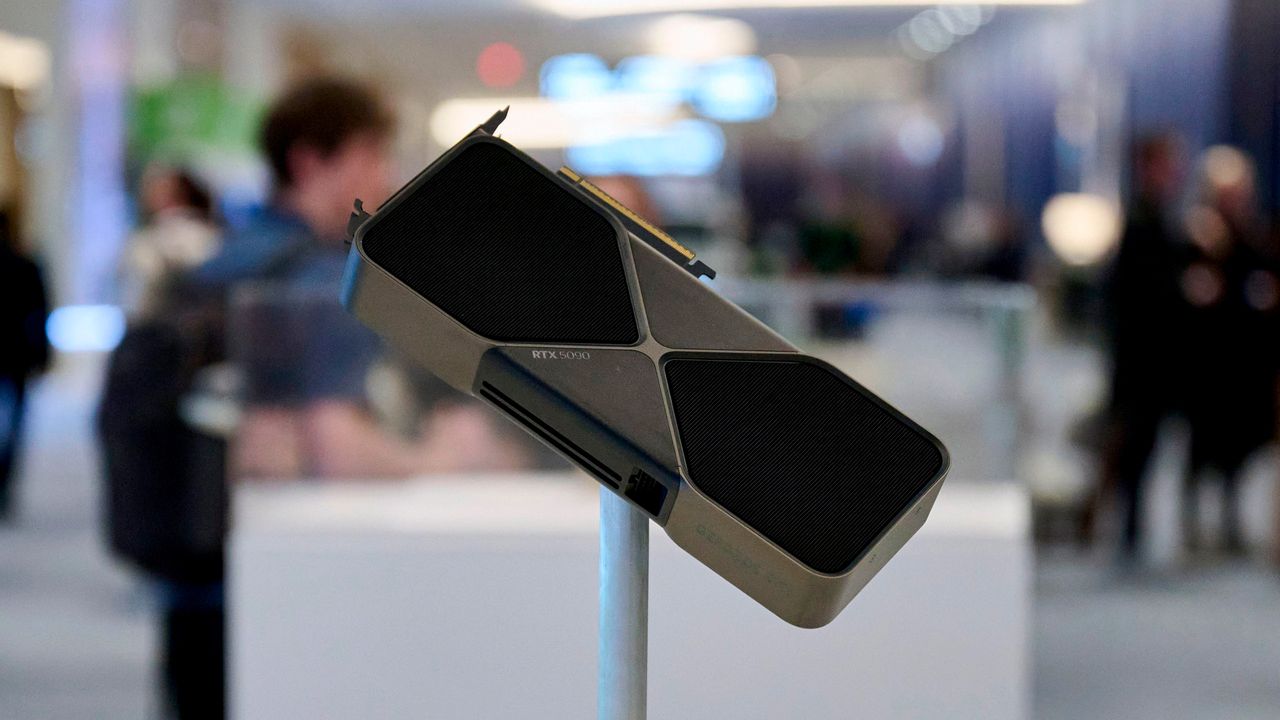
For years, the pitch to American hardware buyers has been simple: pay more up front and the product will serve you longer. The past two days of hardware news suggest the opposite bargain is taking hold. Ownership is becoming more conditional, support windows are closing on schedule, and the resale and entry markets are being reshaped around those constraints. The unifying thread is not any single product or vendor. It is that the obligations attached to expensive hardware are quietly shrinking while the prices are not.
A Six-Thousand-Dollar Part With a Paper Trail Problem
The most pointed example comes from Tom's Hardware, which reported that Nvidia allegedly denied a warranty claim on a GeForce RTX 5090 Founders Edition because the serial number on the bracket was unreadable. The card in question is a $6,500 GPU, and the report notes that this was not an isolated complaint among customers. The detail that matters is not the dollar figure, which is extreme by definition. It is the failure mode. A serial number is the mechanism by which a manufacturer verifies that a product is the one it sold, under the terms it agreed to. When that number fades, the burden of proof shifts from the company to the owner, who is left arguing about a physical property of the object that the company itself printed.
For US consumers, this is a familiar asymmetry. Warranty terms are written by the manufacturer, enforced by the manufacturer, and adjudicated in the first instance by the manufacturer. What is new is the scale at which the asymmetry now operates. A rejected claim on a budget device is an annoyance. A rejected claim on a flagship graphics card, in a market where such cards are already scarce and expensive, turns a single physical defect into a total loss. The practical advice that follows is unglamorous but real: document serial numbers at purchase, keep the box and receipt, and photograph identifying marks before they wear. None of that should be necessary. That it is necessary is the story.
End-of-Support Dates Are Not Abstract Warnings
BleepingComputer reported that Microsoft has reminded customers that Windows Server 2022 reaches the end of mainstream support next month and will remain in extended support until October 2031. The date is not a surprise. Microsoft publishes these timelines years in advance, and the reminder is routine. What deserves attention is what the transition actually means for the businesses that depend on it. Mainstream support is when a vendor ships non-security fixes and design changes at no additional charge. Extended support generally means security updates continue while everything else stops. In practice, an organization running Windows Server 2022 next month is not cut off, but it is on a clock with a known expiry.
This matters to US companies specifically because the migration path is rarely just an operating system. Server refreshes pull in hardware, licensing, application compatibility testing, and staff time. A reminder issued a month before the change lands is not much runway for a mid-sized firm. The rational response, for many, is to do nothing and accept extended support as the new normal, which is exactly how a supported product becomes a slowly aging liability. The pattern here mirrors the GPU story from the opposite direction. In one case, a company is narrowing its obligations on a premium consumer product. In the other, a company is honoring a published schedule that will narrow its obligations on enterprise software. Both point to the same reality: long-term support is a line item, not a promise.
The Used Market Is Now a Support Decision
Engadget's piece on whether older MacBooks are still worth buying in 2026 lands directly on this theme. The guidance is blunt: avoid Intel-powered MacBooks, while Apple Silicon models remain solid. That is not primarily a performance judgment. It is a support judgment. Apple Silicon machines are still within the window where the platform is getting current software and security attention. Intel-era Macs are not. A buyer shopping the used market in 2026 is therefore not choosing between two laptops. They are choosing between two remaining lifespans, and the sticker price does not fully reflect the difference.
US consumers have spent two decades treating personal computers as durable goods with long, forgiving tails. That assumption is eroding. The used market is becoming a market in remaining support time, and the spread between a machine with three good years left and one with none is often not visible in the listing. For budget-conscious buyers, especially students and small businesses, this raises the cost of being wrong. Paying less up front for a machine that stops receiving updates sooner can be the more expensive decision.