The semiconductor industry's center of gravity is moving from making things faster to making things governable. That is the thread running through three otherwise unrelated stories logged on this beat recently, spanning new design automation software, AI safety controls from the industry's most valuable chipmaker, and a two-decade-old game console chip finally decoded. In each case, the technology that matters is not raw throughput but the rules, oversight and hidden design decisions baked into silicon and the software that writes it.
Autonomy Arrives in the Design Toolchain
Synopsys used its new Autopilot platform, announced with seven AgentEngineer agents and general availability planned for the end of 2026, to push autonomous decision-making directly into how chips get designed, as Tom's Hardware reported. That is a significant structural shift for an industry whose engineering bottlenecks have long centered on scarce human expertise. Chip design is one of the most labor-intensive activities in technology, and EDA vendors have spent decades automating individual steps. Agent-based design moves the automation up a level, toward systems that chain those steps together with less human prompting.
For US chip designers, the near-term implications are mixed. If agentic design tools work as advertised, they could compress timelines for complex silicon at a moment when American firms are under pressure to bring manufacturing and design capacity back onshore. The risk is that designers become dependent on opaque toolchains whose internal reasoning is difficult to audit. A design flaw introduced by an autonomous agent may not surface until tapeout, when correcting it is enormously expensive.
The Governance Layer Becomes a Product
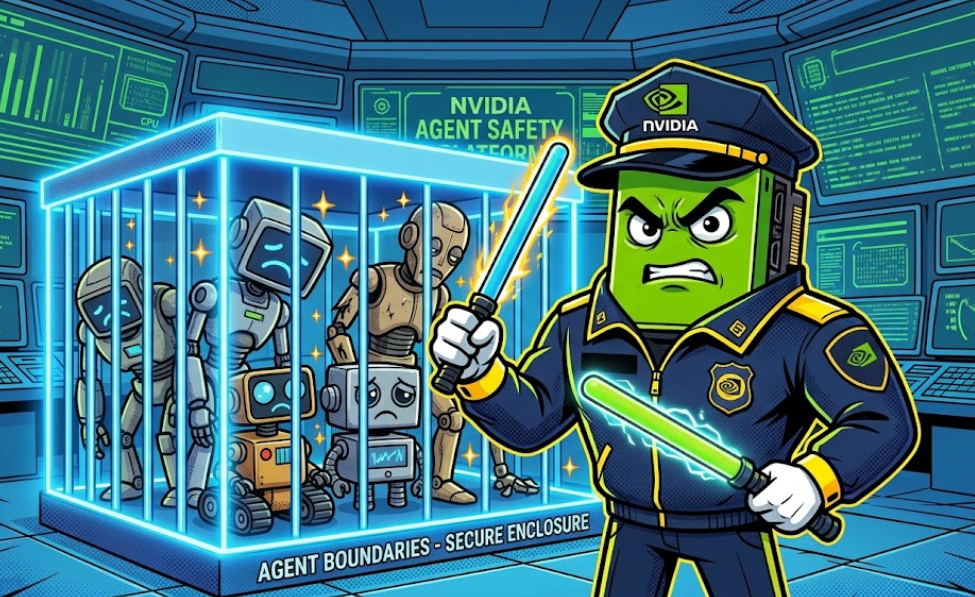
Nvidia's free, open-source Nvidia Open Agent Safety Platform, announced this week, extends the same governance logic to the AI agents themselves, as SiliconANGLE reported. Nvidia is among the most invested companies in agentic AI succeeding, and its decision to release safety controls openly is a recognition that adoption stalls if buyers cannot supervise what autonomous software does. The platform is the clearest sign yet that safety tooling is transitioning from research concern to commercial product category.
The timing is not accidental. The same vendors selling the compute and software that make agents possible are now selling the controls that keep agents in bounds. For US enterprise buyers, that is a double-edged development: it lowers the barrier to deploying agents but also concentrates oversight responsibility with the same suppliers whose hardware the agents run on. Open-sourcing the controls addresses some of that concern, though governance frameworks often matter less than who operates them.
Old Silicon Still Has Lessons
The reverse engineering of the original PlayStation 2 security chip, reported by Engadget, rounds out the pattern from the opposite direction. A long-hidden security component was finally decoded, revealing surprising design choices. The finding is a reminder that security in shipped silicon is often less rigorous than marketing implies and that undocumented design decisions can remain consequential for decades.