AI Silicon Needs CPU Hosts, Not Just Accelerators

Photo: Tom's Hardware

Article

AI Silicon Needs CPU Hosts, Not Just Accelerators

Three unrelated leaks point to the same shift: the CPU is becoming the anchor of AI-era compute, not the accessory to it.

HemeswariOctober 2, 20265 min read

The Thread

Three stories logged on this beat point in one direction. Accelerators get the headlines, but the silicon decisions that matter in 2026 increasingly hinge on the CPU sitting underneath them. Intel is reportedly preparing cache-heavy desktop parts, Qualcomm's top Snapdragon tier is bringing AI graphics to phones, and OpenAI has chosen AMD EPYC "Turin" CPUs as hosts for its Jalapeño ASICs. Each story, on its own, looks like a product note. Together they describe a market where general-purpose processors are being revalued as the substrate for AI workloads at every scale.

Cache Wars Return to the Desktop

Tom's Hardware reported on a leaked product table for Intel's upcoming Nova Lake processors, one that references three "BFC" chips with up to 144MB of game-boosting L3 cache. The naming plays on the heavily-rumored bLLC, the large-cache design that has circulated in enthusiast discussion. The specific number matters less than the direction: Intel appears to be pushing cache capacity as a headline spec for gaming silicon.

That is a notable choice for a US chipmaker under competitive pressure in the consumer desktop market. Large L3 pools primarily help latency-sensitive workloads, games chief among them, where memory stalls cost frames. It is the same lever AMD has pulled with its stacked-cache parts, and Intel's rumored move suggests the company sees gaming performance as a place where it can still differentiate on architecture rather than core counts alone.

For US consumers, the practical implication is that the next round of desktop buying decisions may hinge on cache tiers rather than clocks. For US technology companies, it signals that the high-margin enthusiast segment is being contested with silicon design choices aimed at a specific workload, not general-purpose throughput. The rumor remains unconfirmed, and leaked tables have been wrong before, but the shape of the strategy is legible.

The Phone Gets the Same Treatment

CNET reported that AI upscaling and frame generation are coming to upcoming premium Android phones running the new highest-tier Snapdragon chips, capabilities PCs and consoles have had for years. This is the same architectural idea as the desktop cache story, applied at a different power envelope: dedicated silicon offloads work that would otherwise consume the main compute pipeline.

That matters on the CPU beat because Snapdragon's highest tier is a system-on-chip, and the CPU cores within it are being asked to coordinate graphics work that used to be the GPU's alone. AI upscaling and frame generation are, in practice, scheduling problems as much as they are rendering problems. The host processor decides what runs where, when, and at what power cost. Qualcomm's ability to make that coordination cheap is what will determine whether these features feel like a selling point or a battery tax.

For US consumers, this compresses the upgrade cycle argument. Features that recently justified a new console or a discrete graphics card may soon justify a new phone. For US carriers and handset makers, it gives them a spec to market that is not simply camera megapixels. For chip designers, it widens the pool of devices where CPU-adjacent AI acceleration is table stakes.
OpenAI Picks a Host, and It Is Not the Obvious One

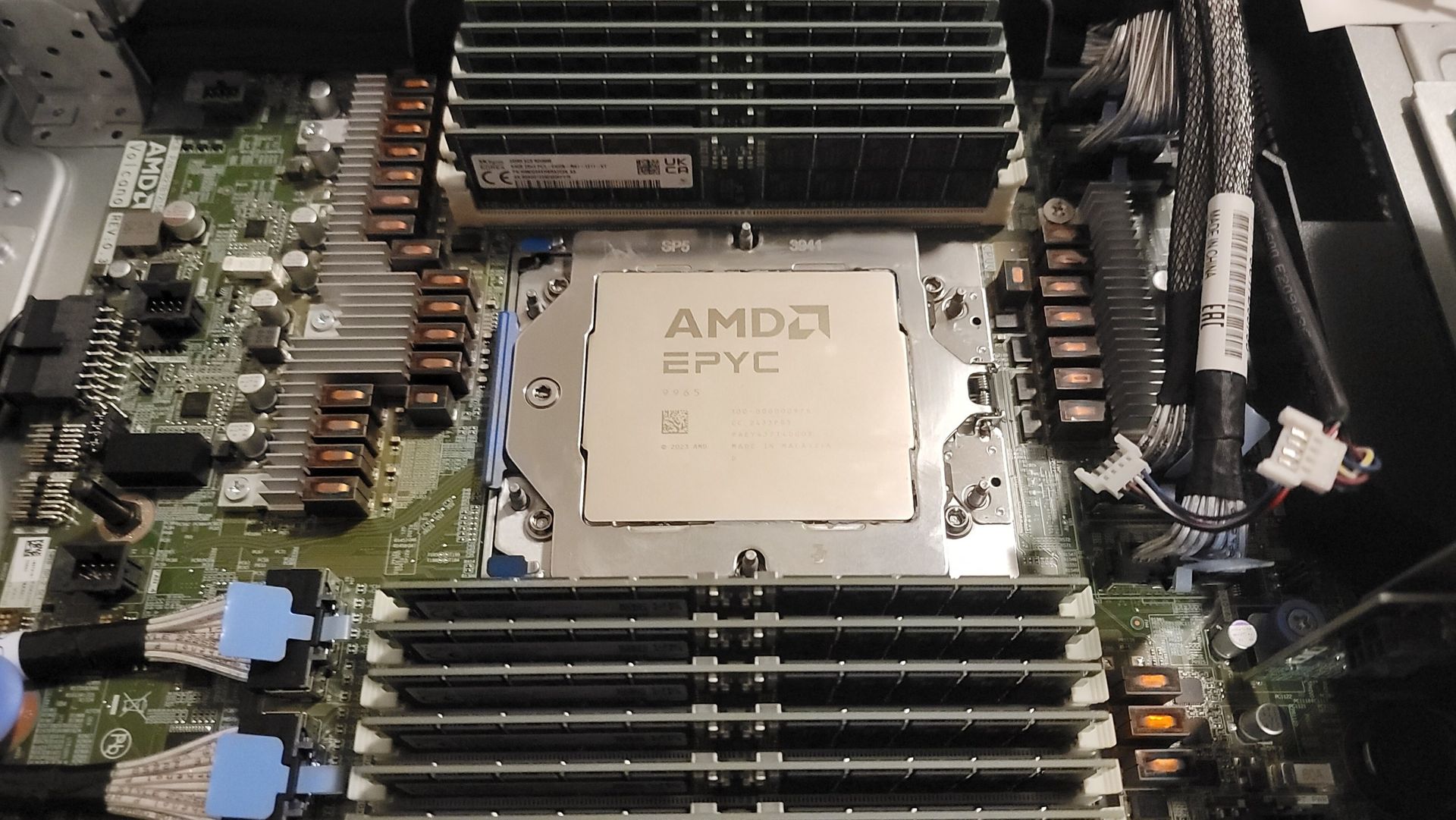
Tom's Hardware reported that OpenAI's Jalapeño ASICs are being deployed alongside AMD EPYC "Turin" CPUs as hosts, rather than Nvidia's Vera, Arm's AGI, or other high-performance agentic chips. This is the most consequential of the three stories for the server market, because it is about a purchasing decision at rack scale rather than a rumored consumer product.

An accelerator cannot run alone. Something has to feed it, manage memory, handle I/O, and keep the pipeline full. Choosing EPYC Turin as that host is a vote for x86 general-purpose compute as the control plane of AI infrastructure. It also complicates the assumption that AI deployments inevitably pull the rest of the rack toward a single vendor's ecosystem.

For US technology companies, the signal is that the host CPU market remains a live competitive arena even as accelerator spending dominates the conversation. For AMD, it is a design win measured in sockets, not just chips. For Nvidia, it is a reminder that accelerator leadership does not automatically translate into host CPU attachment. For US cloud operators and enterprises planning AI capacity, it suggests procurement decisions will be evaluated at the rack level, where host choice affects power, software compatibility, and total cost.

Why These Three Belong Together

The common thread is that the CPU is being repositioned as the anchor of AI-era systems rather than a supporting part. On the desktop, Intel is rumored to be chasing cache to win gaming workloads. On mobile, Qualcomm's top Snapdragon tier is taking on graphics tasks that once belonged to larger devices. In the data center, OpenAI is pairing custom accelerators with AMD server CPUs rather than the newest alternative hosts.

None of these stories is about a CPU outperforming an accelerator at model training or inference. That is not the claim. The claim is narrower and more durable: as specialized silicon proliferates, the value of the general-purpose processor that organizes it goes up, not down. The bottleneck shifts from raw math to coordination, and coordination is what CPUs are for.

That reframing has consequences for how US chip companies allocate design resources. Cache, host interfaces, and scheduling efficiency become competitive differentiators again, not legacy concerns. It also has consequences for US consumers, who will see AI features marketed on phones and desktops where the underlying pitch is about what the main processor can orchestrate, not what a single accelerator can do in isolation.

What to Watch

Three concrete things follow from the material above. First, whether Intel formally confirms the Nova Lake parts and the cache figures that Tom's Hardware surfaced in the leaked table, and whether those chips reach US retail in the tiers the rumor implies. Second, whether the AI upscaling and frame generation features CNET described arrive broadly across premium Android devices in the US or remain limited to the highest Snapdragon tier, since that determines how quickly the capability becomes an expectation rather than a differentiator. Third, whether OpenAI's choice of AMD EPYC Turin as a host for Jalapeño ASICs, as Tom's Hardware reported, is followed by similar host selections from other large AI buyers, which would tell us whether this is one deployment decision or the start of a pattern.

Each of those is a CPU story. That is the point.

More on this beat: Hardware on TechManNews.

#CPUs#AI silicon#Intel Nova Lake#AMD EPYC#Snapdragon#data center

Newsletter

Get Tech News in Your Inbox

The latest AI, gadgets, software and startup stories from TechManNews, delivered every morning - free.