The binding constraint in AI hardware is moving. For three years the story on this beat was silicon: who could get GPUs, how fast, and at what price. The three stories logged on this beat recently point somewhere else. The limits now being tested are physical space, environmental process, and how hard each already-installed GPU is actually working.
Spending Is Running Ahead of Every Other Signal
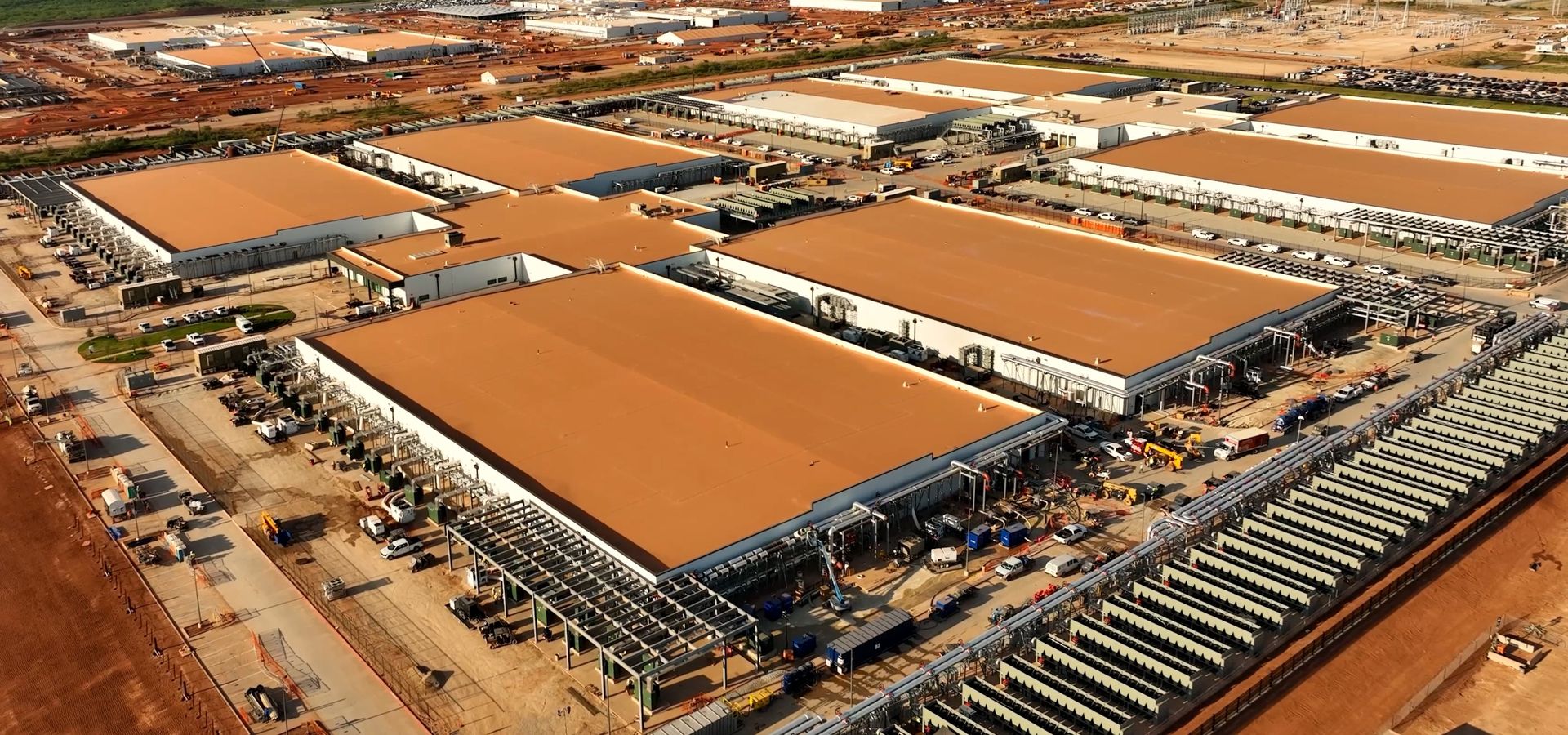
The Census Bureau data reported by Tom's Hardware put U.S. data center construction spending at a record $85 billion annual rate in August, up 73% in a year. That single figure reframes what is happening. This is not a capex line item inside a chipmaker's earnings; it is poured concrete, steel, and electrical infrastructure, tracked by a government statistical agency on the same footing as housing and highways.
For U.S. technology companies, the implication is that AI capacity is now a real-estate and utilities problem as much as a semiconductor one. A GPU that cannot be sited, powered, and cooled generates no revenue. The 73% year-over-year growth rate suggests the industry is solving that problem at extraordinary speed, but speed in construction invites a specific kind of risk: the compliance and permitting work that normally paces a project can get treated as a formality to be caught up on later.
That is precisely what the second story alleges.
The Compliance Debt Comes Due
As Tom's Hardware reported, Google's latest data center construction project in Finland is being investigated after the company representing the search giant reportedly cleared over 300 hectares of forest before obtaining a mandatory environmental impact assessment. Three hundred hectares is roughly 420 football fields, in the outlet's framing.
The detail that matters for this beat is not the forest itself but the sequencing. An environmental impact assessment is meant to precede clearing, not follow it. When construction schedules are compressed to match demand, the assessment becomes the step that slips. For U.S. companies building at home and abroad, the Finnish case is a live example of how that slippage gets found out. It also lands in a regulatory environment where data center siting is already contested at the county and state level in the United States, over water use, grid load, and tax abatements.
The financial read-through is straightforward. A project under investigation carries schedule risk, and schedule risk on a data center is not a rounding error when the facility is meant to serve capacity that has already been sold. U.S. technology companies with multi-year build pipelines now have to price regulatory friction into timelines that were themselves set by the pace of GPU deliveries.
Efficiency Becomes the Cheaper Lever
If land and process are getting harder, the alternative is to get more out of what is already racked. That is the third story, and it is the one that points forward.
As SiliconANGLE reported, Iterate Studio Inc. launched Lifeboat, an inference engine for large language models with confidential computing built in, and says the software fits two to six times as many concurrent AI agent sessions on each graphics processing unit. The stated target is a memory problem specific to agents.
Read that against the $85 billion construction figure and the two stories start to describe the same market from opposite ends. Building your way out of a capacity shortage costs tens of billions and takes years, and now carries visible regulatory exposure. Fitting two to six times as many sessions onto hardware you already own costs a software license and a deployment cycle. Neither replaces the other, but the marginal dollar is increasingly going to the second.