The pattern across these three stories is that AI compute demand has stopped being a procurement story and become an infrastructure story. The GPU cluster is now the fixed point around which optics, real estate and even unrelated aerospace businesses are being reorganized. In each case, the constraint being solved is not the chip itself but what has to be built, bought or abandoned to keep feeding it.
Optics Moves to the Center of the Rack
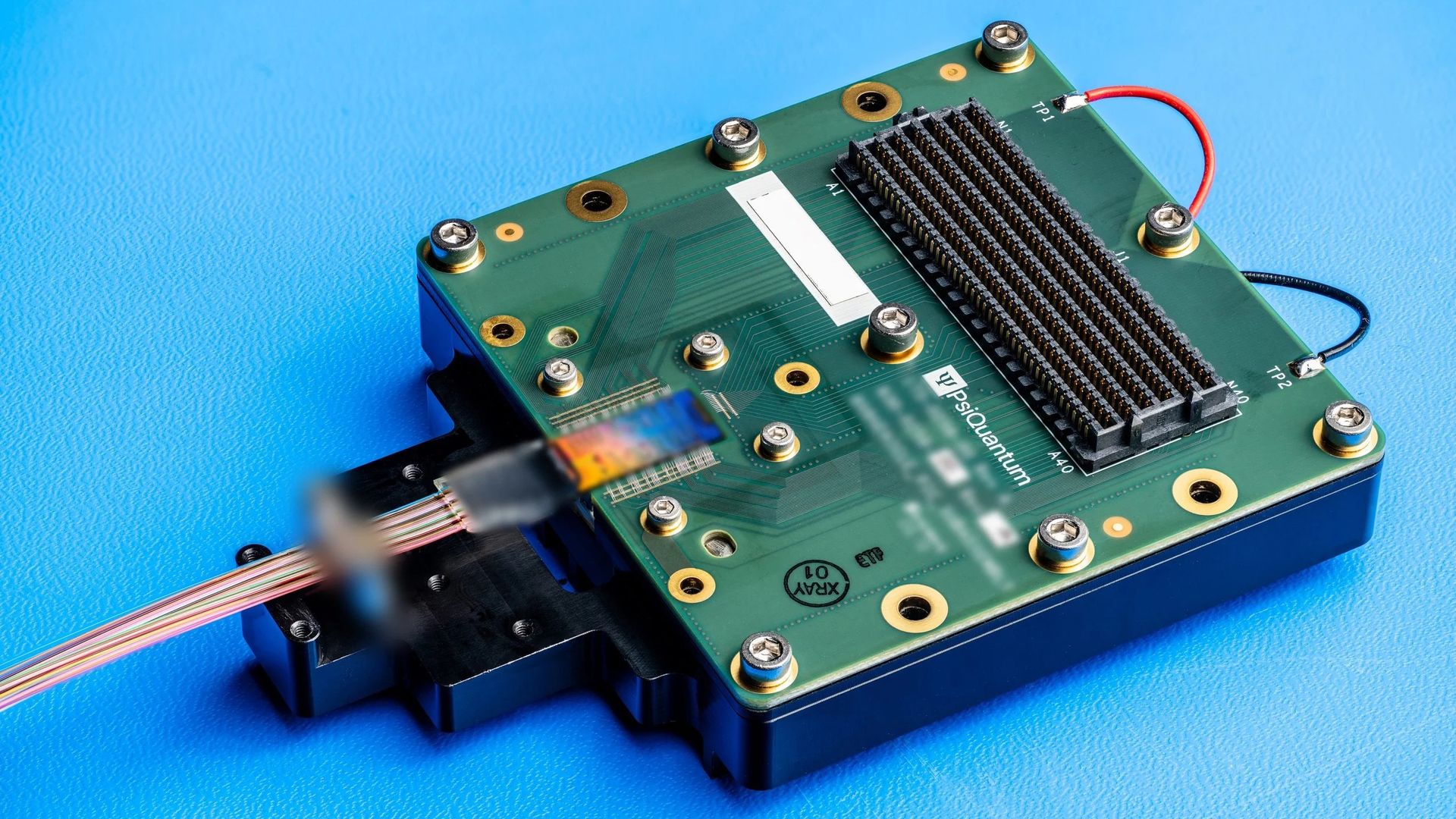
PsiQuantum's eight-port optical switch, reported by Tom's Hardware, is the clearest technical expression of this. The lab prototype loses 1.2 dB, under a quarter of its light, where data centers allow up to 3 dB. That is a component-level result, not a systems win, and the company's plans are for larger devices rather than deployed product.
But the direction matters. As GPU clusters scale, the network between accelerators becomes a first-order cost and power problem, and optical switching is one of the few levers that attacks both at once. A photonics company known for quantum computing repurposing its know-how for AI data center networking is a signal about where the demand and the money are. For US technology companies, the practical read is that the interconnect budget around the GPU is becoming as strategically important as the accelerator budget itself.
Real Estate Becomes a Compute Input
SpaceX's reported purchase of 418 homes near its flagship AI data center, per Tom's Hardware, treats land and housing as part of the hardware stack. The reported condition is notable: the company will only buy from people who drop participation in a lawsuit over noise pollution. The properties are said to be intended for SpaceXAI staff while also giving an exit to residents who no longer want to live near the site.
Whatever one thinks of the tactics, the underlying logic is familiar from the GPU side. Large AI facilities consume land, power and local tolerance in quantities that spill past the fence line. Buying out a neighborhood is a way of converting a community-relations problem into a capital expense. For US consumers, this is the most direct stake in the pattern: the cost of AI capacity can land on homeowners near the site, and the terms on which they are compensated are being set by the company building the facility rather than by any standard process.
It also raises a question US operators will face repeatedly. If siting decisions keep colliding with residents, the buyout becomes a template, and the price of that template will shape where the next cluster goes.