AI Capital Is Rewriting What Developers Get To Build
Article

AI Capital Is Rewriting What Developers Get To Build

Three funding stories from one week show capital concentrating on AI infrastructure and assistants, reshaping the tools and platforms US developers will work with.

JaysuryaOctober 3, 20264 min read

Photo: Crunchbase News

The money flowing into AI right now is not spread evenly across software. It is pooling around a narrow set of bets, and those bets determine what developers get to build with, what they get paid for, and which platforms they will be coding against. Three stories logged on this beat in the past week point at the same pattern: investors are funding the scaffolding of an AI-native software stack, not the applications on top of it.

The Week's Funding Reflects One Thesis

Crunchbase News reported that this week's list of the largest US startup funding rounds was, in its words, pretty much all about AI. The biggest financing was a $1 billion round for Instinct, a developer of AI assistants for everyday tasks, and most of the rest of the top ten followed the same theme.

The concentration matters because it tells developers where the next generation of default tooling is coming from. When a single company building AI assistants pulls in a billion dollars, that company is not just writing software. It is buying compute, hiring researchers, and building platforms that other developers will eventually be asked to integrate with, extend, or compete against. The rest of the top ten reinforces that direction rather than diversifying it.

Assistants Are Becoming A Platform Category

Instinct's positioning is worth pausing on. An AI assistant for everyday tasks is not a narrow productivity tool. It sits between the user and the operating system, the browser, the calendar, the inbox, and the file system. That is precisely the layer where developers have historically made their money: the apps and integrations that live just above the platform.

If assistants become the primary interface US consumers use to get things done, developers who once shipped standalone apps may find themselves shipping skills, plugins, or connectors to somebody else's assistant. That is a real shift in the developer economy. The funding round suggests investors believe that shift is coming, and that the assistant layer is worth owning at scale.

Robots Need Coders, Not Just Models

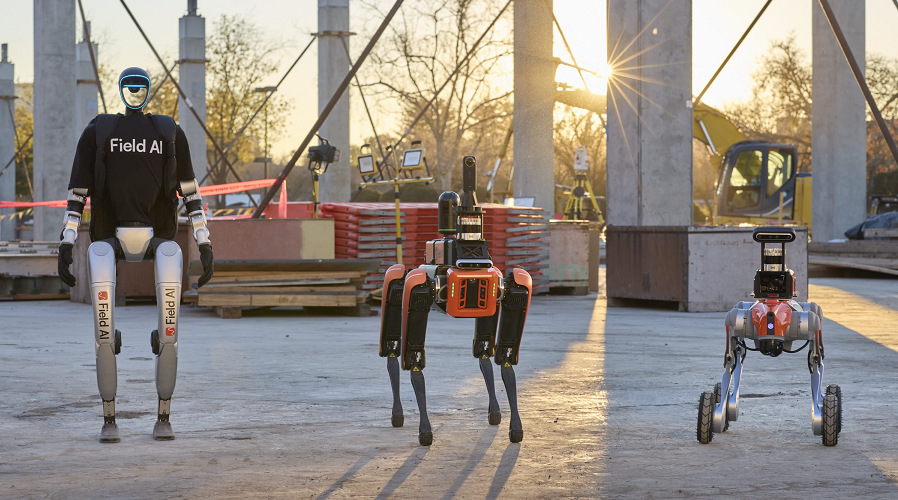
SiliconANGLE reported that FieldAI Inc., a startup developing artificial intelligence models for robots, is reportedly raising $700 million, with a source telling Business Insider the round could value the company at $10 billion. That is five times what FieldAI was worth last August, and the company is believed to have already signed a term sheet.

The developer implication here is less obvious but arguably larger. Robotics AI is not a pure research problem. It requires simulation environments, evaluation harnesses, deployment tooling, and safety-critical code paths. Even if FieldAI keeps its models proprietary, the ecosystem around robotics software needs developers who understand both machine learning and real-time systems. A $10 billion valuation on a company at this stage signals that capital believes that skill set is scarce and valuable.

The Conference Circuit Is Asking The Same Question

TechCrunch reported that TechCrunch Disrupt 2026 is built around one question: how do you build an enduring company in the AI era? The programming and speaker lineup reflect that framing.

That is not incidental. When a major industry event organizes itself around durability rather than novelty, it is a signal that the field is moving past the demo stage. For developers, the practical version of that question is blunt: which parts of the AI stack will still exist in five years, and which are transient wrappers around somebody else's model? The companies raising the largest rounds this week are betting on infrastructure, models, and assistant platforms. The conference framing suggests the harder question is now about businesses, not capabilities.

What This Means For US Developers

The pattern across these stories is a capital market placing its largest bets on the layers beneath the application. Instinct, FieldAI, and the rest of the week's top ten are not consumer apps with a subscription button. They are infrastructure for an AI-native software stack.

For US developers, that has three concrete consequences. First, the platforms they target are consolidating. A small number of well-funded assistants and robotics platforms will define the integration surface for a large share of new work. Second, the demand signal is shifting toward systems skills. Building a robot that operates safely, or an assistant that reliably completes everyday tasks, requires more than prompt engineering. Third, the funding concentration reduces the number of independent paths available to developers who want to build at the platform layer themselves. The capital is already committed to a short list.

None of this is a prediction that applications disappear. Applications have survived every platform shift. But the terms on which they are built, distributed, and monetized change when the layer underneath them is owned by a handful of heavily capitalized companies.

What To Watch

The most useful signals over the next few months will be concrete rather than rhetorical. Watch whether Instinct uses its $1 billion to open developer-facing APIs and integration programs, because that determines whether the assistant layer becomes a platform developers can build on or a walled garden they have to route around. Watch whether FieldAI's reported round closes on the terms described, and whether the company publishes any developer tooling, simulation environments, or hiring signals that indicate where robotics software work is heading. Watch the composition of the largest US funding rounds each week as tracked by Crunchbase News, because if the AI concentration persists, it tells developers where the next decade of tooling is being financed. And watch how TechCrunch Disrupt 2026's durability framing translates into concrete guidance, because the gap between building a capable system and building an enduring company is where most developer time is actually spent.

The thread running through all three stories is that capital is choosing the ground floor of the AI stack. Developers will build on whatever ground floor gets funded, whether or not they had a say in it.

More on this beat: Software on TechManNews.

#AI funding#developer platforms#robotics software#AI assistants#startup capital#US tech market

Newsletter

Get Tech News in Your Inbox

The latest AI, gadgets, software and startup stories from TechManNews, delivered every morning - free.