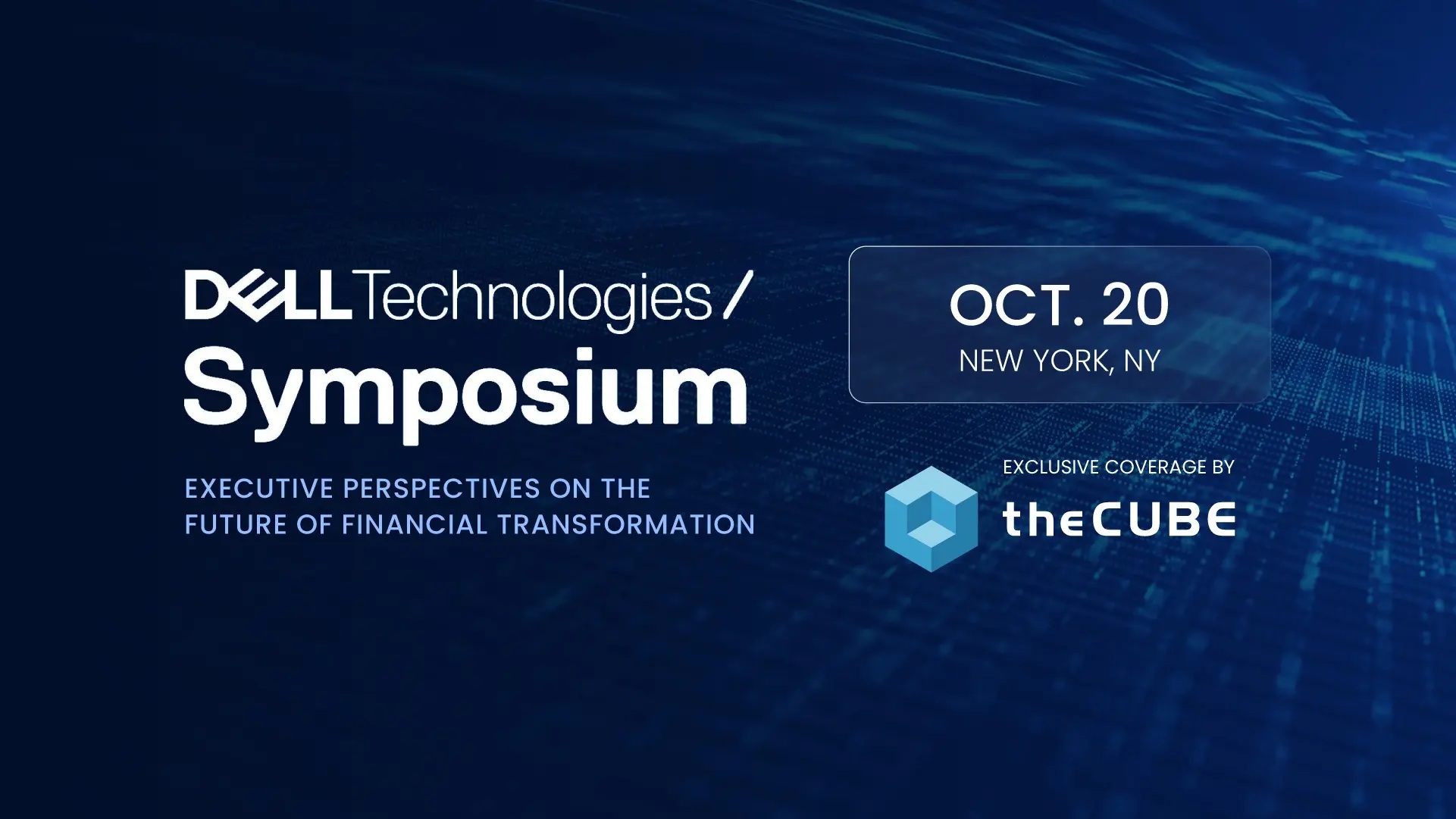
Dell Technologies is putting its AI Data Platform for the financial services industry at the center of its New York Symposium on Oct. 20. Dell executives and industry experts will join analysts from theCUBE Research at the event to examine the growing role of agentic AI, AI-powered PCs and modernized infrastructure in shaping the financial sector's future. The discussion will focus on how Dell's platform creates a more efficient path from raw enterprise information to AI-ready context for banks and other financial institutions.
Dell frames the problem as one of data rather than models. Arthur Lewis, president of the Infrastructure Solutions Group at Dell, said that in many cases the model is not the next constraint, but the data is, describing that as the problem the AI Data Platform was built to solve. Within the Dell AI Factory, he said, the platform serves as the data foundation that curates, connects and serves enterprise data to fuel AI, especially agentic AI.
The AI Data Platform uses a four-engine architecture with a storage layer intended to modernize data infrastructure and create efficiencies for financial institutions. A Data Orchestration Engine applies the latest machine learning models and normalizes product documentation, orchestrating retrieval requests and assembling the information needed for intelligence reports. A Data Processing Engine built on Apache Spark handles feature engineering, customer segmentation and training for affinity scoring. A Data Search Engine powered by Elasticsearch provides grounded retrieval through vector and keyword searches across product knowledge bases.
The platform also includes a Data Analytics Engine that exposes the Iceberg lakehouse as a governed SQL query surface that agents can call directly. Dell says any MCP-compatible agent framework can discover available data products and execute governed queries without building a custom adapter. A central part of the approach is Dell's Unified Semantic Layer, which is designed to connect information across disparate sources and make structured and unstructured enterprise data accessible to AI agents while preserving the business context needed for reliable responses.
Vrashank Jain, lead product manager for the AI Data Platform at Dell, said the semantic layer gives structured and unstructured information consistent business meaning so a term means the same thing everywhere it appears. He said it uses open models to fix the hardest part of building semantic layers, generating entities and definitions and finding meaning at scale with human-in-the-loop verification.
TheCUBE will provide coverage of the symposium on Oct. 20, with conversations featuring Dell leaders and industry executives. TheCUBE is a paid media partner for Dell's New York Symposium, and the source disclosure states that neither Dell nor other sponsors have editorial control over content on theCUBE or SiliconANGLE.
More company and startup news from TechManNews.