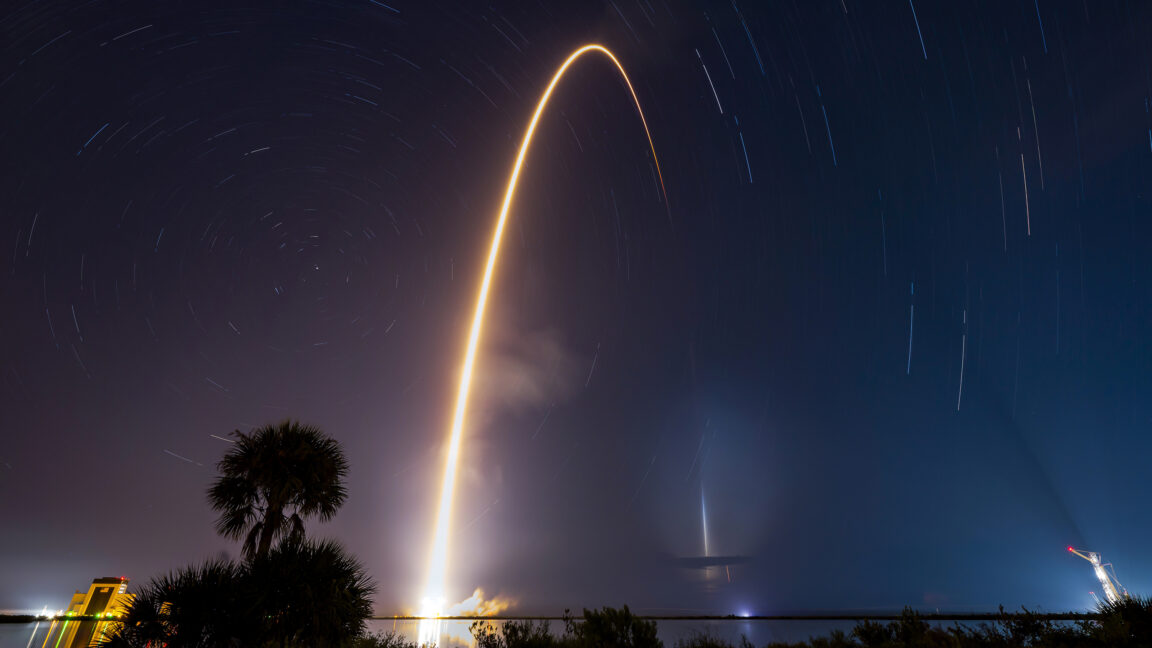
SpaceX is shifting its Starlink launch operations away from Florida’s Cape Canaveral spaceport for the rest of the year, a move that will significantly reduce the busy launch rate there. According to Kiko Dontchev, SpaceX’s vice president of launch, a Falcon 9 mission early Tuesday was the last planned Starlink flight from Cape Canaveral until Starship begins flying from Florida. As a result, the launch rate at the Florida spaceport, which includes neighboring Kennedy Space Center, will drop from eight or nine launches per month to roughly two per month. The change means the region will lose its status as the world’s busiest spaceport, a title it has held since 2015.
SpaceX’s West Coast launch pad at Vandenberg Space Force Base in California will take over regular Starlink launches, a trend that has already been growing since January. Dontchev stated on X that West Coast teams will continue launching Starlink missions from Vandenberg on a regular basis. He also said that all future Starlink missions out of Florida will fly on Starship, the company’s next-generation rocket. The shift marks a strategic pivot for SpaceX as it prepares to transition its commercial satellite delivery to a larger vehicle.
Tuesday’s launch also set a record for SpaceX, as the Falcon 9 first-stage booster completed its 37th flight, the most for any booster in the company’s fleet. The pre-sunrise timing allowed skywatchers along the East Coast to see the rocket as it headed northeast from Cape Canaveral. Dontchev praised his team, calling Falcon 9 the most reliable launch vehicle in history and noting that it helped build the largest low-Earth orbit satellite constellation, providing connectivity to millions worldwide. He added that the work laid the foundation for what comes next.
SpaceX has conducted roughly 260 Starlink missions on Falcon 9 from Florida, but now all Falcon 9 and Falcon Heavy launches from the state will carry customer payloads. The next such mission is scheduled for August 30, when a Falcon Heavy will lift off from Launch Complex 39A at Kennedy Space Center with NASA’s Nancy Grace Roman Space Telescope. A Falcon 9 mission in mid-September will follow, delivering the next four-person crew to the International Space Station. These customer launches will maintain a reduced but steady presence at the Florida spaceport.
The company’s long-term plan is to phase out Falcon 9 in favor of Starship for commercial missions, a transition that has raised concerns among customers about the reliability of launch services after 2028. SpaceX still aims to begin Starship and Super Heavy launches from Launch Complex 39A by the end of this year, but that timeline appears unlikely given the remaining preparation work and no signs of imminent transport of Starships from the company’s factory in South Texas to Florida. A Starship debut from Kennedy Space Center by mid-2027 seems more probable.
Starship is designed to carry up to 60 Starlink Version 3 satellites, which are larger, heavier, and more powerful than the Version 2 satellites currently flown on Falcon 9. SpaceX plans to use the next Starship test flight, designated Flight 14, to launch the first Starlink V3s into low-Earth orbit from Starbase, Texas, as soon as next month. This test will mark a key step in the transition to Starship-based Starlink deployment. The shift in launch operations underscores how quickly SpaceX’s cadence has evolved, as two launches per month was once the norm in Florida.
More technology news from TechManNews.