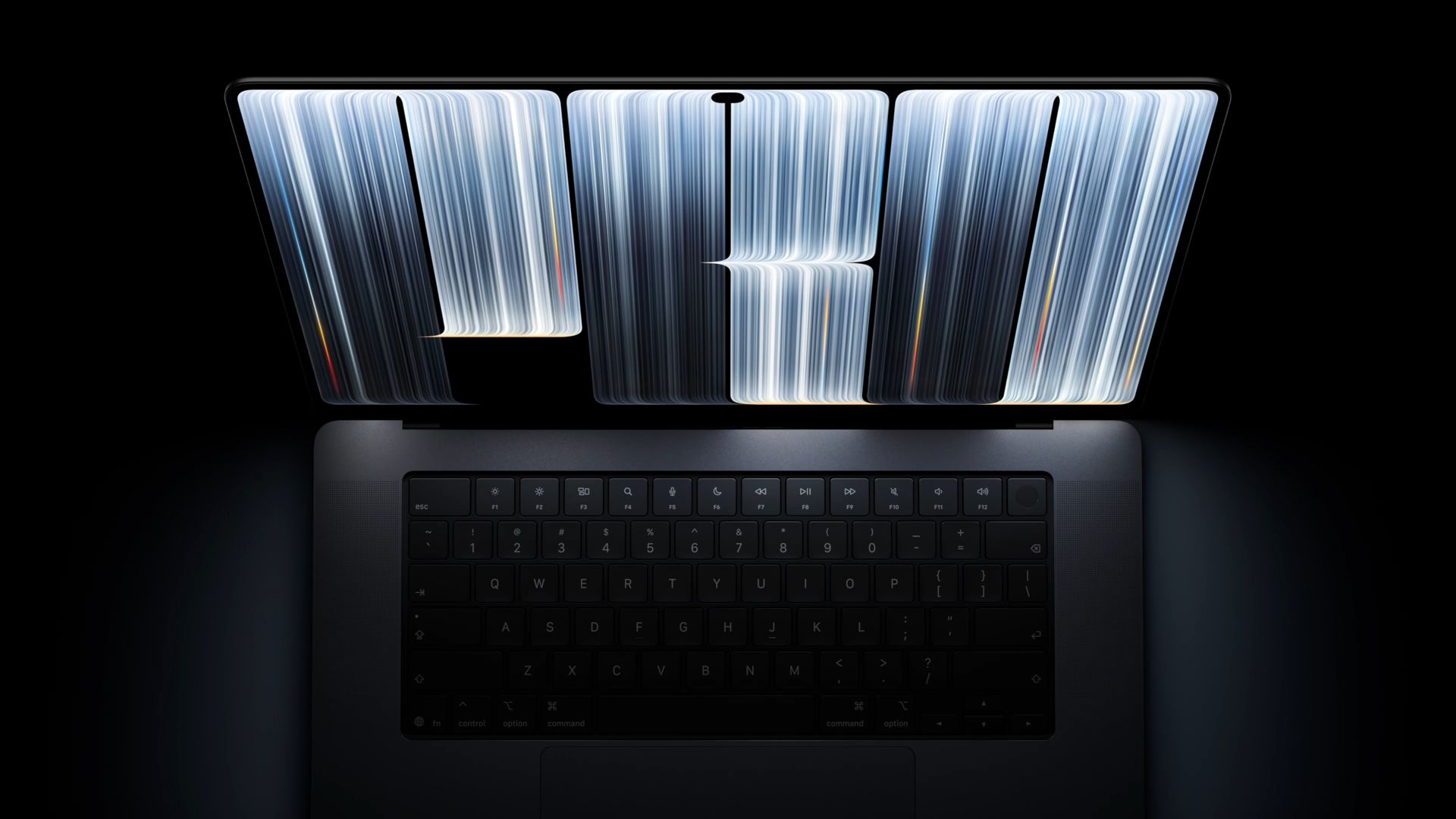
Apple unveiled a MacBook Pro with a touch display at an event in Los Angeles, ending a long-standing refusal to put touch on its laptop screens. The new model, called the MacBook Pro with PROLED XDR Display, is available starting today. It carries an M5 Pro or M5 Max chip and a tandem OLED screen, a display type that stacks multiple light-emitting layers to produce stronger contrasts. The touch feature has been standard on iPhones, iPads and Apple Watches for years but never before on a Mac laptop.
Apple's new chief executive, John Ternus, framed the change as an addition rather than a shift in the Mac's purpose. He said the Mac is built first around indirect input through the trackpad and keyboard, and that touch is useful in moments when it is comfortable and convenient. Ternus, who is nearly two months into the job, said the company worked on these products for a long time and that employees are enjoying the moment. His early tenure has included the foldable iPhone, a household device that controls digital appliances, new Mac Minis and AirPods.
Apple executives had previously argued against touch on Macs. Phil Schiller, now an Apple Fellow, said years ago that reaching to a fixed desktop screen is uncomfortable and that the iPhone and iPad interfaces were designed around multitouch while macOS relies on precision tools such as cursors. Schiller said Apple user testing had confirmed that view. Ternus himself said in 2021 that the Mac was entirely optimized for indirect input and that the company saw no reason to change that.
Apple's chief hardware officer, Johny Srouji, said ten years is a very long time and that display technology, custom silicon and other elements have changed. He said the combination of chips, display technology and software architecture eventually met the company's standard. Srouji said he wants his engineers limited by physics rather than imagination or timelines.
Greg Joswiak, Apple's senior vice president of worldwide marketing, acknowledged the feature was overdue for demanding users. He said Apple's professional customers, including engineers, scientists, software developers and media creators, were impatient about interacting directly with the screen. Joswiak noted that most professionals own an iPad and nearly every one owns an iPhone, and that a generation of young creators using MacBook Pros expects to touch the display. Ternus told Wired that adding touch did not make the product heavier or thicker, and that it arrived alongside the best display Apple has put in a Mac.
More gadget news from TechManNews.