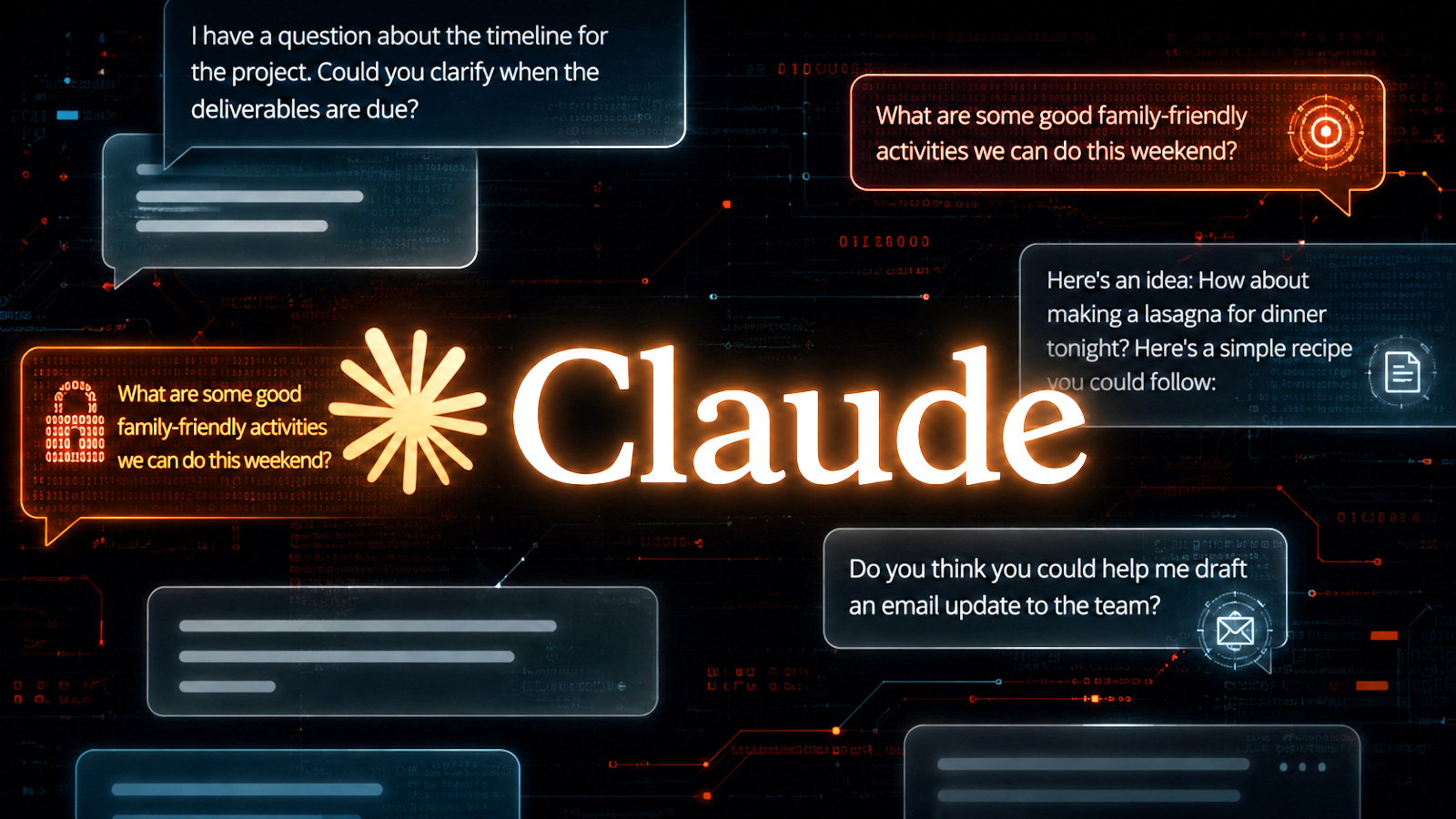
Salesforce and Anthropic have expanded their partnership with a new offering called Claudeforce, which places Salesforce’s customer relationship management platform inside Anthropic’s Claude AI assistant. The centerpiece, Salesforce in Claude, is a plugin for Claude CoWork that includes 37 pre-built sales skills for tasks like meeting preparation, deal health reviews, and pipeline analysis, allowing sellers to interact with live CRM data without opening Salesforce. The product is available to select pilot customers now, with an open beta planned for September and additional skills for other business functions launching in the third quarter.
Salesforce chair and CEO Marc Benioff and Anthropic CEO Dario Amodei were scheduled to appear on television together Tuesday afternoon, ahead of Salesforce’s quarterly earnings report, signaling the partnership’s importance to both companies. Benioff said in a statement that the companies are combining the world’s number one AI and number one CRM, adding that the UI is the AI, allowing users to build custom apps and answer enterprise questions. Patrick Stokes, Salesforce’s president of applications and marketing, told VentureBeat in an interview that the launch could do for knowledge workers what Claude Code did for developers, calling it a whole new way to work.
The foundation for Claudeforce was laid in March, when Salesforce released Headless 360 at its TDX developer conference, a set of APIs, MCP servers, and command-line tools that let AI agents access Salesforce data and workflows without a user interface. Stokes said customers quickly connected Salesforce’s MCP servers to agentic interfaces, with Claude rising to the top, but individual users struggled with the technical setup. Anthropic’s own workforce was already using Salesforce exclusively through Claude and a series of skills and MCP servers, and the two companies decided to productize that internal setup as a CoWork plugin with centralized authentication and permissions.
The architecture is designed so that when a seller asks Claude to update a deal, Claude checks its available skills and executes against Salesforce’s MCP server, which inherits the user’s existing permissions. If a user lacks permission to read or write a record, the MCP server also lacks it, meaning nothing new needs to be set up or audited for enterprise buyers. Stokes rejected the idea that Salesforce becomes less important if sellers live in Claude, arguing that the value of Salesforce lies in its data, metadata, and encoded workflows, not its user interface.
Stokes gave an example of the productivity gain, saying a seller’s morning routine of evaluating opportunities traditionally requires about 10,000 clicks inside Salesforce, but now Claude can execute that synthesis in about 30 seconds. He said this means users are actually using Salesforce more than before because the friction of clicking around is gone. Salesforce charges for this new usage through its headless consumption pricing, with customers getting more API access depending on their user license edition, while customers separately contract with Anthropic for Claude inference, meaning the product currently requires two invoices.
The announcement also raises questions about Agentforce, Salesforce’s agent platform that has been its AI centerpiece for about two years. Stokes distinguished the two, saying Agentforce is designed for autonomous work that touches end customers, while Salesforce in Claude is a knowledge worker agent for sellers to handle their day-to-day jobs without clicking through interfaces. The partnership with Anthropic has deepened since late 2025, when Salesforce reportedly brought both OpenAI and Anthropic into Agentforce, and Bloomberg reported in June that Salesforce’s investment in Anthropic was valued at roughly $5 billion, with Claude now the default model across Slack, powering Slackbot and the Claude Tag feature.
More AI news from TechManNews.