Nvidia has signed a series of capacity reservation agreements across two major parts of its AI accelerator supply chain, hardware interconnects and outsourced semiconductor assembly and test, as it moves to lock in production for its next-generation accelerators. The deals, announced October 21, cover substrates, co-packaged optics, advanced packaging and chip testing, and reach suppliers in Japan, Taiwan, South Korea, Singapore and the United States.
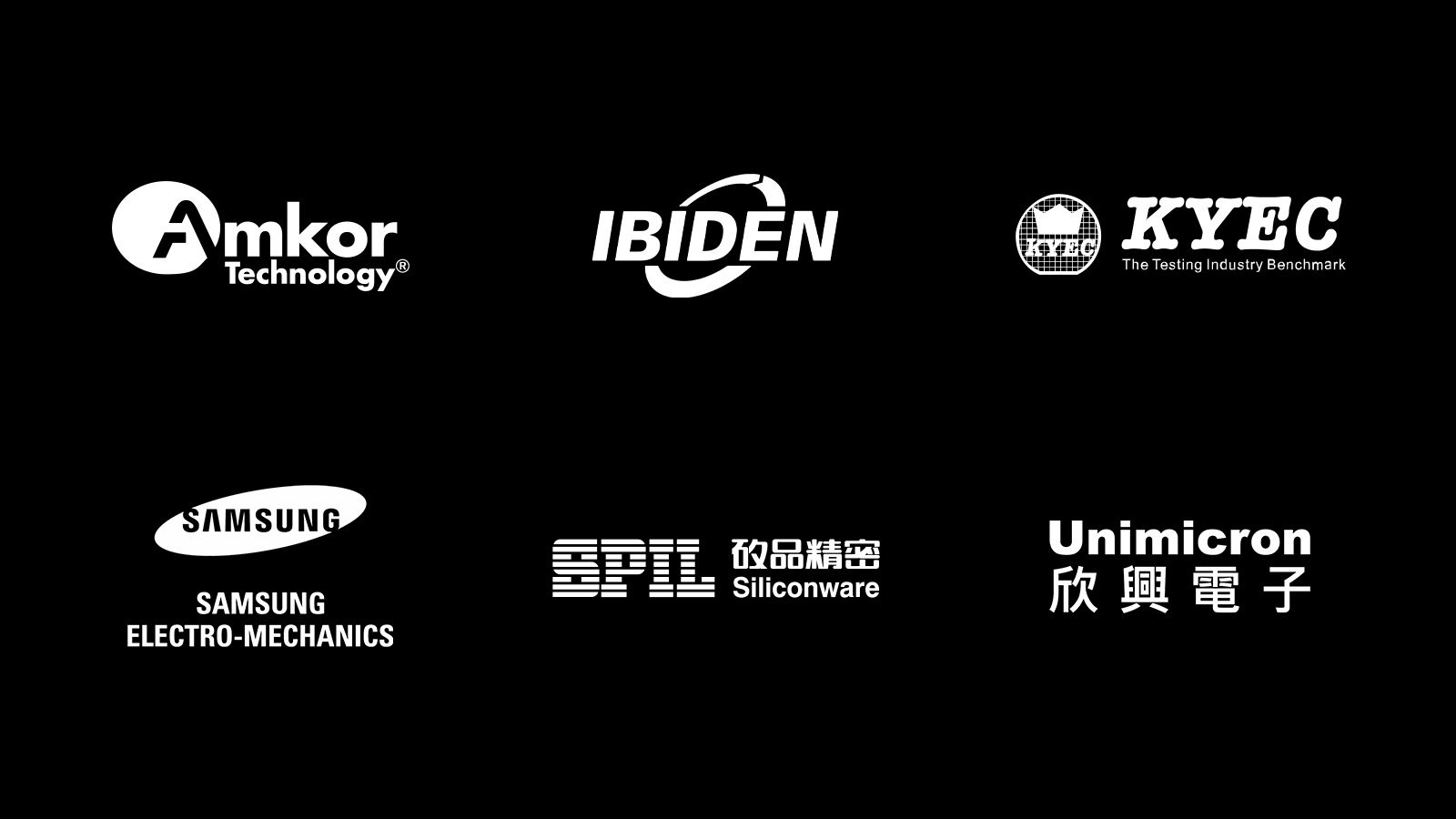
On substrates, Nvidia has signed agreements with Ibiden, Unimicron and Samsung Electro-Mechanics, three of the world's five largest substrate manufacturers. The company says it plans to secure 2.5 times its dedicated substrate capacity over the next three years. The substrate is the intermediary layer in every accelerator package that connects the silicon chips above it to the board below, and Nvidia's Blackwell generation places two reticle-sized GPU dies and eight HBM3E stacks on a single package, with Rubin and Rubin Ultra mounting even more components.
Ibiden leads the expansion, backed by a multibillion-dollar capacity reservation advance for its Ono Plant in Japan, which targets three times the plant's current capacity. Samsung Electro-Mechanics will supply from existing operations while the deal supports upgrades and new plants in Busan and Sejong. Unimicron's expansion in Taiwan is expected to start providing capacity in the second quarter of 2027 and reach full capacity by mid-2028.
For co-packaged optics, Nvidia has signed an agreement with Siliconware Precision Industries to expand manufacturing capacity for the optical engines used in those packages by 15 times by mid-2027, with plans to double again by the end of 2028. On advanced packaging, Nvidia and Amkor are targeting a 300% increase in interposer wafer capacity by the end of 2028 through expanded capacity in South Korea. Amkor confirmed the deal is worth $1.3 billion, bringing Nvidia's total investment in Amkor's Arizona and South Korea facilities to $3 billion.
Nvidia also plans to double its semiconductor testing capacity from calendar 2026 to 2027, paying King Yuan Electronics $1.1 billion to reserve capacity at KYEC's new $1.4 billion U.S. facility, where high-volume production is slated to begin in April 2027. KYEC currently handles nearly all of Nvidia's chip testing and is also expanding in Singapore, with high-volume production expected there in February 2027.
According to its August 2026 financial disclosures, Nvidia had accumulated $279 billion in outstanding supply and manufacturing-capacity commitments by July 2026, and has signed several more deals since. Competitors are expanding as well: AMD announced over $10 billion in investments across Taiwan's semiconductor ecosystem on May 21, 2026, and CEO Lisa Su confirmed on October 6 that AMD intends to increase those investments further. Intel is expanding its EMIB-T packaging technology, with reports that Google has reserved Intel capacity to package more than three million TPUs in 2028, and Samsung is ramping its 2nm manufacturing technology and preparing its Taylor, Texas, facility.
More AI news from TechManNews.