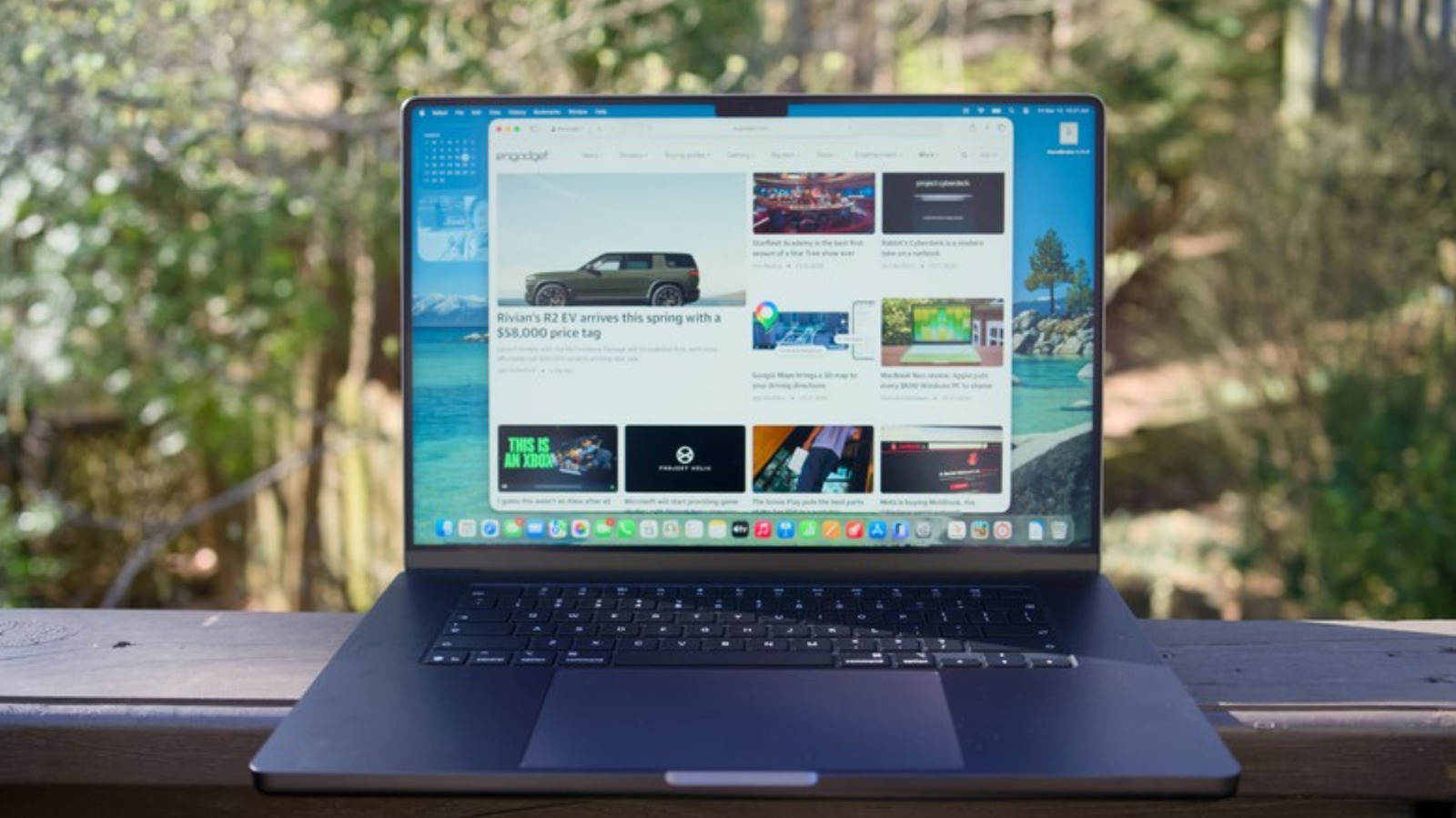
The 16-inch MacBook Pro with Apple's M5 Max chip ran for 30 hours and 46 minutes in Engadget's video rundown test, the publication reported in its MacBook Pro M5 Max 16-inch review, compared with the seven hours a 15-inch MacBook Pro delivered in the same test in 2011. Engadget cited its early 2011 MacBook Pro review, which called that seven-hour result impressive at the time, and said the newer machine lasts more than four times as long.
The comparison is the fairest one available on physical size, pairing the 2011 model's 15.4-inch display with the 2026 model's 16.2-inch screen. The battery itself grew only about 30%, from 77.5 watt-hours to 99.6 watt-hours. According to Engadget's analysis, nearly all of the added endurance comes from more efficient hardware rather than a larger pack.
Charging improved as well. The standard power adapter rose from 85W to 140W, so the new model not only runs far longer but also charges much faster. The older machine's 77.5 watt-hour battery sat about 22 watt-hours below the FAA limit, yet that laptop was heavier and thicker at 5.6 pounds and 0.95 inches. The M5 Max model weighs 4.7 pounds and measures 0.66 inches, meaning Apple fit a bigger battery into a body roughly 16% lighter and 31% thinner. Unless FAA rules change, Engadget concluded, efficiency is essentially the only remaining way to extend runtime.
Both ratings come from Apple using the same basic method: browsing 25 popular websites over Wi-Fi. The 2011 test ran the screen at 50% brightness, while the 2026 test set it eight clicks up from the bottom. Dividing each battery's capacity by Apple's stated runtime gives an average draw of about 11W for the 2011 model and about 6.2W for the M5 Max, by Engadget's math. Engadget's own rundown results show a steeper drop, from roughly 10.4W in 2011 to about 3.2W now; the publication cautioned that its testing has changed over 15 years, so the two figures are not a perfect like-for-like comparison, though they point in the same direction as Apple's.
Apple says the batteries in both models are designed to manage 1,000 charge cycles before falling to 80% of original capacity. That figure has little practical meaning for a 2011 model, which cannot run anything newer than 2017's macOS High Sierra; Mojave requires a MacBook Pro from mid-2012 or later.
More hardware news from TechManNews.