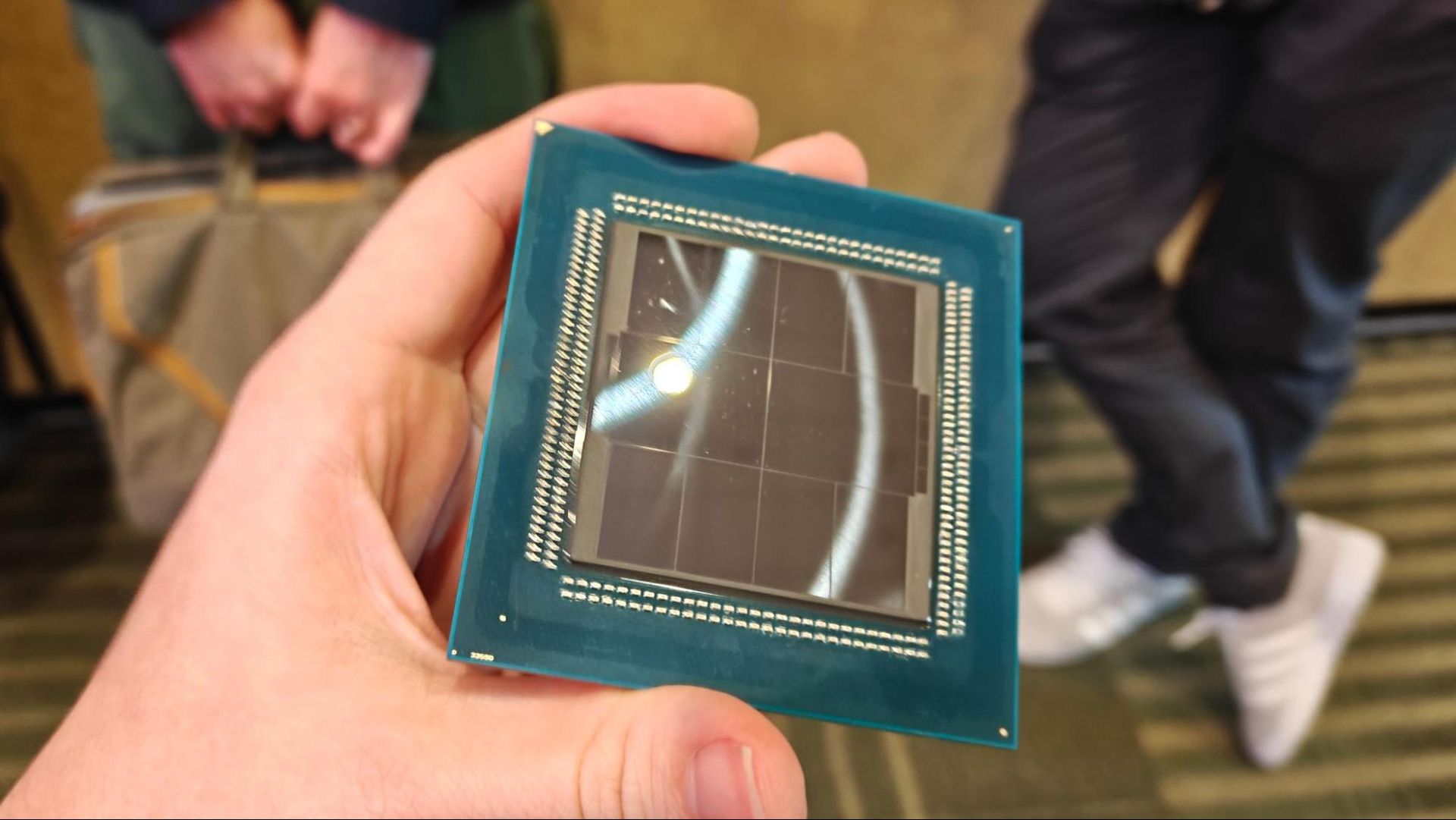
A leaked AMD EPYC 9996 server processor carrying 256 Zen 6c cores has posted single-threaded Geekbench 7 scores that beat a Zen 5 desktop chip, according to results published by overclocker 326 and reported by Tom's Hardware. The comparison pits the eight-CCD server part against a Ryzen 7 9700X, a desktop CPU with eight Zen 5 cores and 32MB of L3 cache. The EPYC chip scored 2847 in the single-threaded test, while the Ryzen part reached 2483 under CachyOS Linux and 2318 under Windows 11.
The EPYC 9996 spreads its 256 cores across eight Monarch CCDs of 32 cores each. Every CCD carries 128MB of L3 cache, reportedly divided into two 64MB domains serving 16-core CCXs, for 4MB of L3 per core, the same ratio AMD has kept since Zen 2. The full chip consequently holds 1GB of L3 cache. A 1024-bit memory bus, likely running at 12,800 MT/s, gives it 1.64 TB/second of bandwidth, though the single-threaded tests are unlikely to be limited by memory bandwidth on either system. Both chips were matched at 4.1 GHz for the core-to-core comparison.
In the Linux results, the widest gap was 24% in the HTML5 Browser test, which is typically sensitive to memory latency and could reflect the EPYC part's large L3 cache. The article notes other margins are harder to attribute to configuration differences: 19% in asset compression, 21% in video encoding and 17% in photo editing. Those gains point to architectural differences between Zen 5 and Zen 6, which the report describes as promising for the desktop debut next year.
The benchmark is marked AVX2, so the results do not exercise the AVX-512 units in either CPU, and Geekbench has historically made light use of SIMD. Most of the tests therefore measure integer arithmetic and memory subsystem performance more than raw number-crunching. The report cautions against concluding that Zen 6 carries a 15% IPC advantage over Zen 5, citing too many confounding factors for now.
One of those factors is that the EPYC 9996 uses Zen 6c, the dense core design built for area efficiency at the expense of high clock scaling, and 4.1 GHz is not a high clock rate, particularly on a 2nm-class process. The article notes that Zen 6c is not the core desktop CPUs will receive. Zen 5 delivered a modest IPC uplift over Zen 4, including some regressions, alongside a modest clock gain.
The report states that Zen 6 may hold a significant IPC advantage and, if rumors hold, a fairly extreme clock jump over current parts. It adds that these parts are confirmed for the AM5 socket, with a launch expected early next year.
More hardware news from TechManNews.