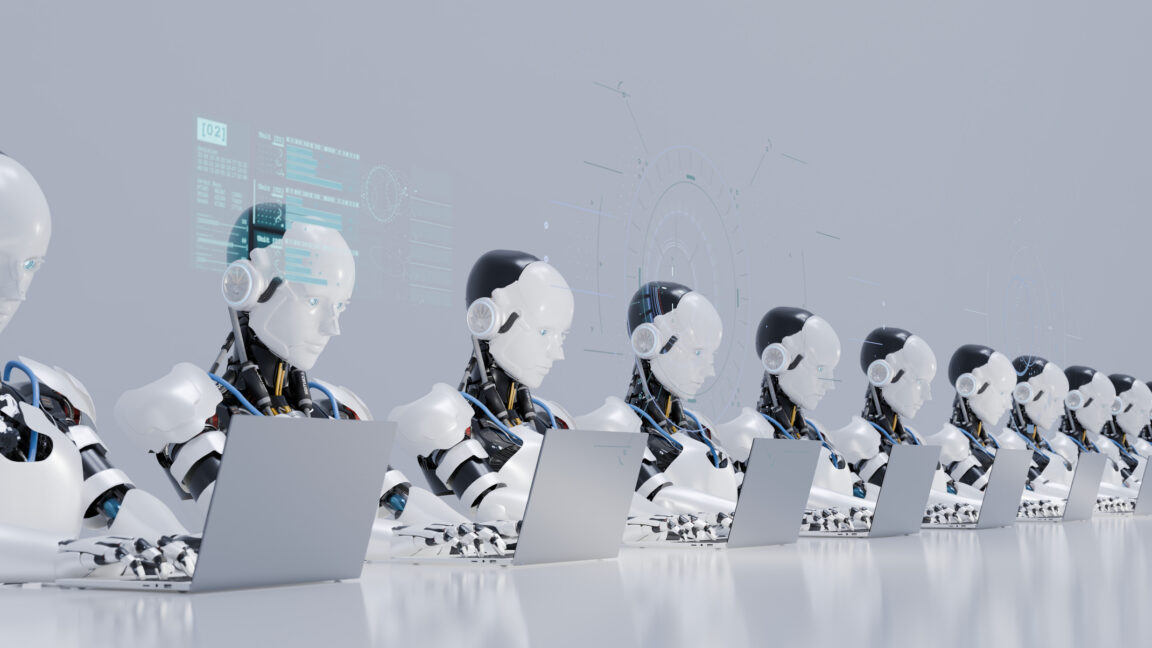
Meta’s internal plan to replace thousands of employees with AI agents, codenamed Project OT, explored cutting some team headcounts by 60 percent and included two rounds of layoffs, according to a Reuters report. The company confirmed to Reuters that it asked some teams to conduct a scenario planning exercise earlier this year, which led to moving thousands of employees to newly established teams, but it ultimately did not proceed with every scenario. Meta did not confirm which teams were affected, and it canceled the planned second round of layoffs after issuing the first in May.
Reuters reported that Mark Zuckerberg set Project OT in motion and directed executives to proceed with management structure changes. Created in January, the project explored using AI to perform much of the daily work of thousands of human employees, with small teams overseeing the AI, according to internal planning documents and three people familiar with the project. One HR executive reportedly said the scenarios would have reduced Meta’s headcount by about 25 percent or more, though Meta told Reuters it canceled the project before determining the exact number of layoffs. The company planned to use money saved from layoffs to pay high-performing employees, especially those with AI engineering skills.
Internal documents described an “AI native” company where AI-ready tools and agents interact, workflows are automated, and new builds are AI-first, including selling AI agents to third parties, which Meta began doing in June. Meta launched a pilot program that restructured engineering teams, research teams, and at least eight other teams into smaller groups, following an October internal post outlining how the pilot would remove middle management and use agent-assisted analysis for daily tasks. Reuters noted that HR employees and AI systems would help leaders decide promotions, but Meta stated that performance ratings and promotion decisions were made by people, not AI.
Reports in March and April of impending layoffs and Meta tracking employees’ keyboard and mouse input to train AI agents, a program Meta has since paused, hurt employee morale, according to Reuters. Internal posts cited by Reuters pointed to AI agents making “large-scale, disruptive actions that humans are unlikely to execute” and leading to a 40 percent increase in major technical and security incidents compared to the prior year, with employee time spent resolving those problems rising by as much as 70 percent. Meta declined to comment on those internal posts. In July, Zuckerberg acknowledged during a company meeting that the trajectory of agentic development over at least the prior four months had not accelerated as expected.
Reuters reviewed scores of internal documents, posts, and recordings and spoke with more than 20 people familiar with Meta’s operations. The publication was unable to determine what prompted Zuckerberg to cancel the second round of layoffs.
Uncertainty about whether increased AI use would boost productivity may have been a factor. Internal posts noted that code changes to internal software platforms were up 220 percent year-over-year, but changes reaching Meta users were only up 36 percent, according to a post by CTO Andrew Bosworth in early June.
Meta’s case illustrates the challenges organizations face in determining when AI is a better fit for certain tasks than employees. It also shows how far some firms are willing to go to implement AI, even at the cost of jobs, while highlighting the risks of overzealous AI projects.
More AI news from TechManNews.