Three stories logged on this desk, taken together, describe something larger than any one of them. Intel is arguing it can get close to TSMC on performance, China's CXMT is mass-producing 12nm-class DRAM, and China's EV charging infrastructure is pulling ahead on speed. The common thread is that America's assumed technical lead in core hardware is no longer assumed by anyone, and in several categories the US is now the party doing the catching-up.
Intel's Claim Is a Tell
Intel's Naga Chandrasekaran now claims that Intel's 14A node will deliver performance "within 5%" of TSMC's A14 technology, as Tom's Hardware reported. Read that number carefully. A company that believes it is ahead does not frame its roadmap as being nearly as good as someone else's. The 5% band is a promise that Intel can arrive at technological parity, not superiority, and only on a future node that does not yet exist in volume. That is the tell.
For years Intel's pitch to US customers was that it had the best process, full stop. The current pitch is competitive sufficiency: close enough that it may not matter. That is a different product. It is also a defensive posture dressed as confidence, and it arrives at a moment when the US government and US cloud operators have spent heavily to onshore leading-edge manufacturing on the premise that Intel would hold the frontier, not trail it by a defensible margin.
Meanwhile the Memory Floor Is Moving
On the same desk is a story that gets less attention than it deserves. China's CXMT has begun mass production using its 5th-generation DRAM process, hitting a 12nm-class milestone, as Tom's Hardware reported. The process uses quadruple-patterning and boosts die capacity by 50%.
Memory is not glamorous the way logic is, but it is foundational. DRAM sits in every server, every laptop, every phone, and increasingly in AI accelerators where memory bandwidth and capacity are the binding constraint. A 50% die-capacity improvement at a 12nm-class node is not a laboratory result. It is mass production, and mass production is where pricing power comes from.
The US has no comparable domestic DRAM champion operating at this cadence. That matters to US buyers not in the abstract but in procurement: memory supply and memory prices are set globally, and a credible Chinese supplier at scale changes the negotiating position of every US hyperscaler, every PC maker, and eventually every consumer who buys a device with DRAM in it. The strategic concern about dependence runs in both directions. The US has spent years worrying about relying on foreign suppliers for logic; memory is the same problem with a different label.
The Charging Gap Is the Consumer-Visible One
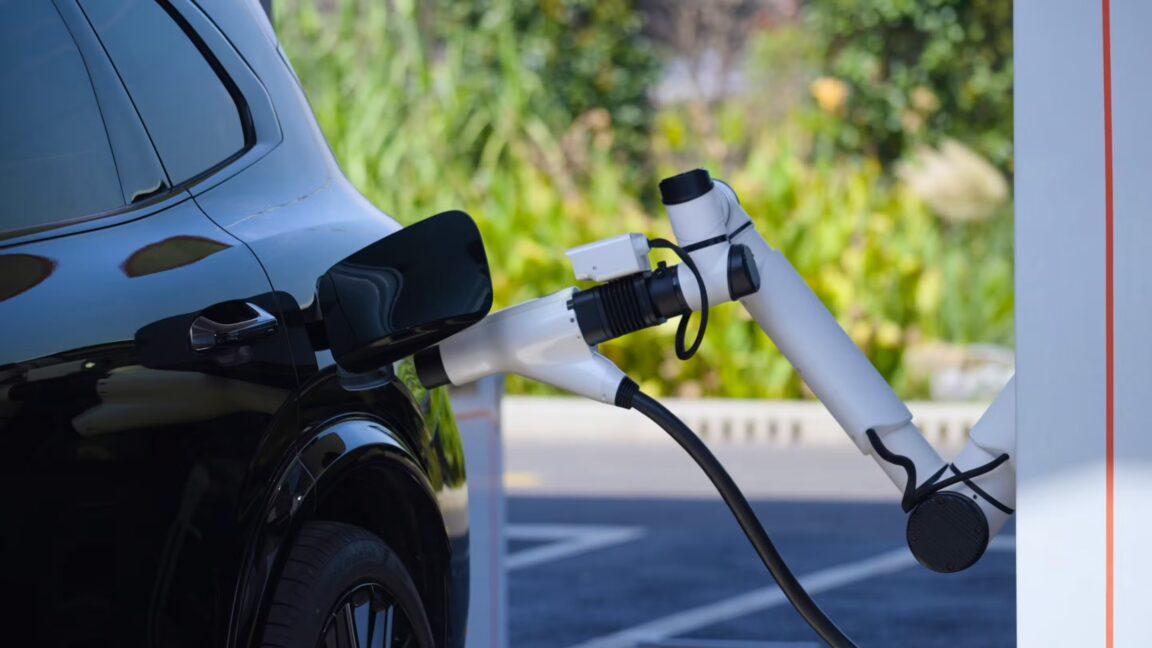
Of the three stories, the EV charging one is the most legible to an ordinary American. As Ars Technica reported, a new LFP battery charges from 10% to 70% in 4.5 minutes at just 65˚C, and the US is being left behind as China goes sub-5-minute to 70%.
The specific numbers matter less than the direction. Sub-five-minute charging to 70% changes what an EV is. It collapses the difference between refueling a car and plugging in a device, and it does so at a battery chemistry that is cheaper than the nickel-rich cells US automakers have leaned on. The temperature detail is equally important: 65˚C is a manageable thermal target, not an exotic one.