The iPhone Duo Tests Apple's Retail Playbook
Article

The iPhone Duo Tests Apple's Retail Playbook

Apple's first foldable is generating early hardware complaints and comparison shopping at the same time, exposing how much of the iPhone Duo's case now rests on hands-on retail demos.

NagiOctober 26, 20265 min read

Photo: TechCrunch

The early iPhone Duo story is not really a story about cracked screens or about which Android phone matches it. It is a story about where the product's case is being made. Apple's first foldable is arriving with a small cluster of durability complaints from early adopters, a live comparison conversation with Android alternatives, and a retail experience that, by one reviewer's account, does more persuasive work than the specification sheet. Taken together, the stories logged on this beat point to a single thread: the iPhone Duo is a product whose appeal is being decided in the store and in the first weeks of ownership, not in the launch presentation.

A Small Crack Is a Large Signal

As TechCrunch reported, a small number of early adopters of the much hyped new foldable phone from Apple have complained of screens cracking. The operative word is small. This is not a reported wave of failures, and nothing in the material establishes how widespread the problem is, what causes it, or how Apple is responding. But for a foldable, even a handful of cracking complaints carries outsized weight, because the screen is the part of the device buyers are least able to evaluate before purchase and most likely to worry about afterward.

For US consumers, the practical question is asymmetric. A conventional slab phone that fails is a warranty annoyance. A foldable that fails at the crease or in the display layer is a reminder that the category's core engineering tradeoff has not disappeared. Early adopters are, by definition, the people most willing to absorb that risk, and the fact that some of them are unhappy is the signal that matters. It suggests the tolerance window for a first-generation foldable from Apple is narrower than the company's reputation might otherwise buy.

That has a specific US market implication. Apple's position in the American smartphone market rests heavily on repeat purchase and on the assumption that buyers are not taking on meaningful risk when they upgrade. A foldable introduces a new kind of risk into that relationship, and it does so at the top of the lineup, where the most loyal and highest-spending customers sit.

The Android Comparison Cuts Both Ways

Engadget's question, which Android phone is the closest equivalent to the iPhone Duo, is a familiar genre of coverage, but it is more revealing than it looks. The mere fact that the comparison is being framed as a search for an equivalent rather than a verdict implies that the iPhone Duo has not yet established a category of its own. When a product is genuinely new, the comparison story is about what it does that nothing else does. When the comparison story is about finding a match, the product is being evaluated on a field where rivals already play.

For US technology companies, this is the interesting part. Foldables are not a form factor Apple invented, and the Android ecosystem has been the place where the category's design questions have been worked out in public. The iPhone Duo therefore enters a market where informed buyers already have reference points, and where the review conversation can immediately anchor the new device against existing alternatives rather than against Apple's own previous phones.

That dynamic is unusual for Apple in the US, where its phones are typically the default against which other devices are measured. Here, the direction of comparison is reversed. The company is not setting the terms of the foldable conversation on this beat; it is joining one. That does not settle the commercial outcome, but it does mean Apple has to win an argument it did not get to frame, and it has to do so with a device whose early durability signals are mixed.

The Demo Is Doing the Persuading

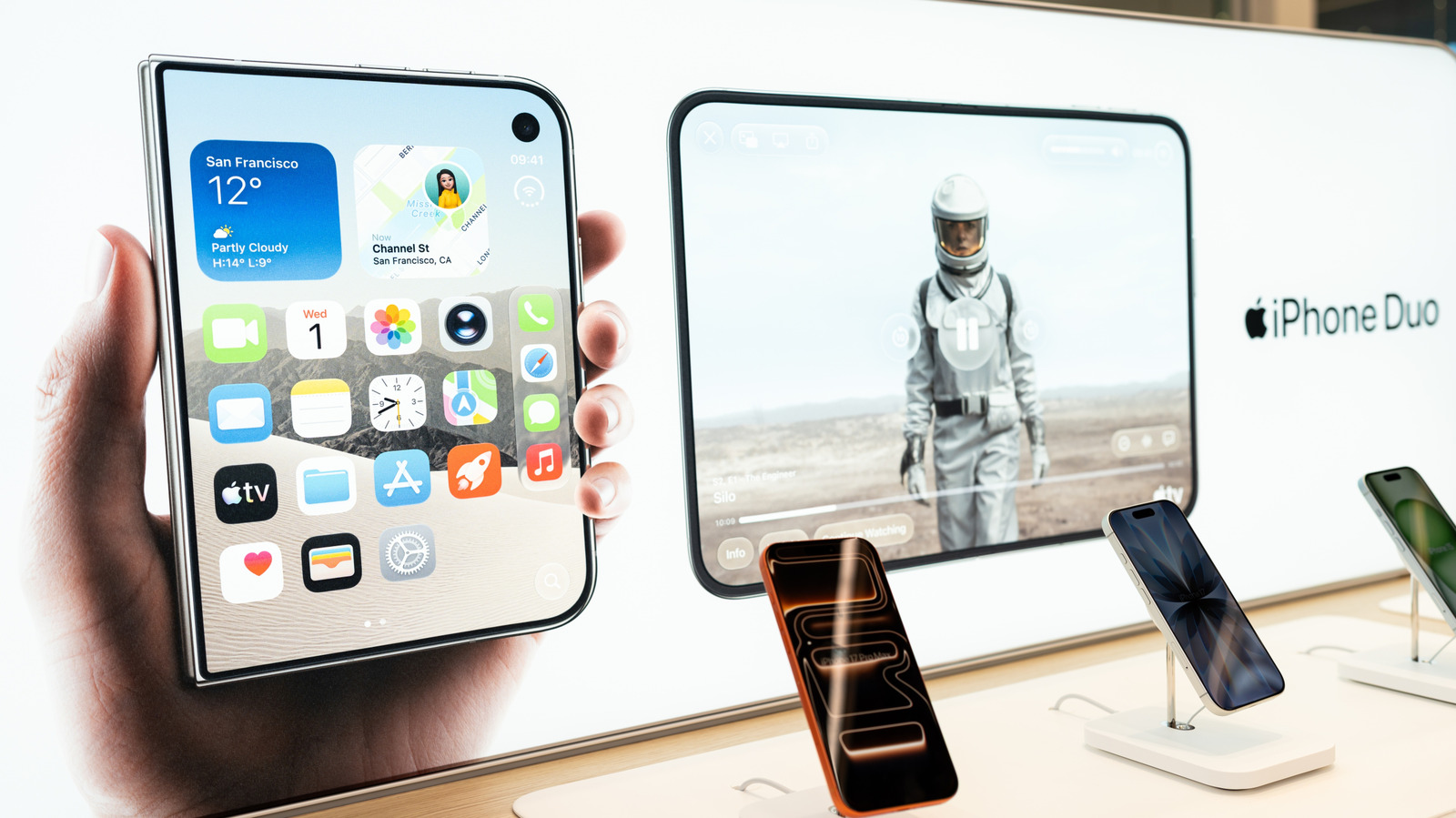
CNET's account of an in-store experience is the third leg of the pattern, and arguably the most important. The reviewer's conclusion, that playing with Apple's folding iPhone is what makes its appeal understandable, is a statement about where the product's value actually lives. If the appeal only lands in the hand, then the launch keynote, the spec list and the marketing imagery are all doing less work than the physical demo unit.

This matters for US consumers in a concrete way. The iPhone Duo is not a purchase that can be fully evaluated from a web page. The hinge, the crease, the way the display behaves when opened and closed, the size of the thing when folded. These are all questions answered by a few minutes at a retail counter. A buyer who never handles the device is being asked to take a great deal on faith, and the early cracking reports give that faith a reason to hesitate.

It also matters for Apple's US retail footprint, which is one of the company's genuine structural advantages. A product that requires hands-on demonstration plays directly into a store network built for exactly that. But the same logic is a vulnerability: if the persuasive moment is physical, then the durability complaints attach to the exact touchpoint the product depends on. A cracking screen on a demo unit, or a widely shared report of one, does more damage in this category than in any other part of the lineup.

What the Pattern Says About Apple's Position

The three stories, read together, describe a company entering a mature hardware category with a device that is neither obviously safer nor obviously better than what already exists. The durability complaints put pressure on trust. The Android comparison puts pressure on differentiation. The retail experience carries the burden of making the case in person. None of these is a crisis, and the material does not support characterising the iPhone Duo as a failure. But the combination describes a launch where Apple is not coasting on brand alone.

For the US market, the consequence is a more genuinely contested premium tier. Buyers considering the iPhone Duo now have two reasons to pause, one about reliability and one about whether an Android foldable does the same job, plus one reason to visit a store. That is a different purchase funnel than the one Apple's US customers are used to, and it puts more weight on retail execution and early reliability signals than on the launch itself.

What to Watch

The things worth tracking are all grounded in what these stories actually surface. First, whether the cracking complaints stay small and isolated, as TechCrunch's framing currently suggests, or whether they accumulate into a pattern that changes the durability conversation. Second, how the Android-equivalence question resolves: if the closest match keeps being a device that already exists, the iPhone Duo's differentiation problem is real; if the comparisons start breaking down, the product has found its own ground. Third, whether the in-store demo continues to be described as the decisive factor, as CNET found, because that would confirm the iPhone Duo as a retail-led product and put Apple's stores at the centre of its US launch strategy. Fourth, whether the durability complaints and the demo experience ever meet, in a store unit or in a widely shared account, since that intersection is where this launch's reputation is most exposed.

More on this beat: Gadgets on TechManNews.

#iPhone Duo#foldable phones#Apple#smartphone durability#US smartphone market#retail

Newsletter

Get Tech News in Your Inbox

The latest AI, gadgets, software and startup stories from TechManNews, delivered every morning - free.