The GPU market is increasingly being shaped by forces other than new-product launches. A political fight over data centers, a warning that a flagship gaming card may not see a successor until at least 2028, and a $35 mining rig running a large language model all describe the same thing: the value and the constraints in AI hardware are migrating away from the newest silicon and toward politics, scarcity, and salvage. For US technology companies and consumers, that shift changes the calculus for buying, building, and planning.
Scarcity as product strategy
Tom's Hardware reports that with no new Nvidia 5090 replacement anticipated before at least 2028, this could be the last opportunity to get hands on the RTX 5090. That is an unusual thing to say about a flagship graphics card: the normal expectation is that a successor is always coming. A multi-year gap between a top-end part and its replacement turns a consumer product into something closer to a fixed asset. Buyers are effectively being asked to judge a card not against next year's model but against whatever they already own, because next year's model may not exist.
The effect on US consumers is straightforward. Anyone building or upgrading a high-end gaming or workstation system now faces a decision with an unusually long horizon. Waiting has less value when there is nothing concrete to wait for. That tends to sustain prices for existing stock and makes the high end of the market less about competition between generations and more about allocation. For US companies that sell systems built around these cards, the constraint is planning: they cannot assume a refresh cycle that resets demand and pricing.
The secondhand market absorbs the demand
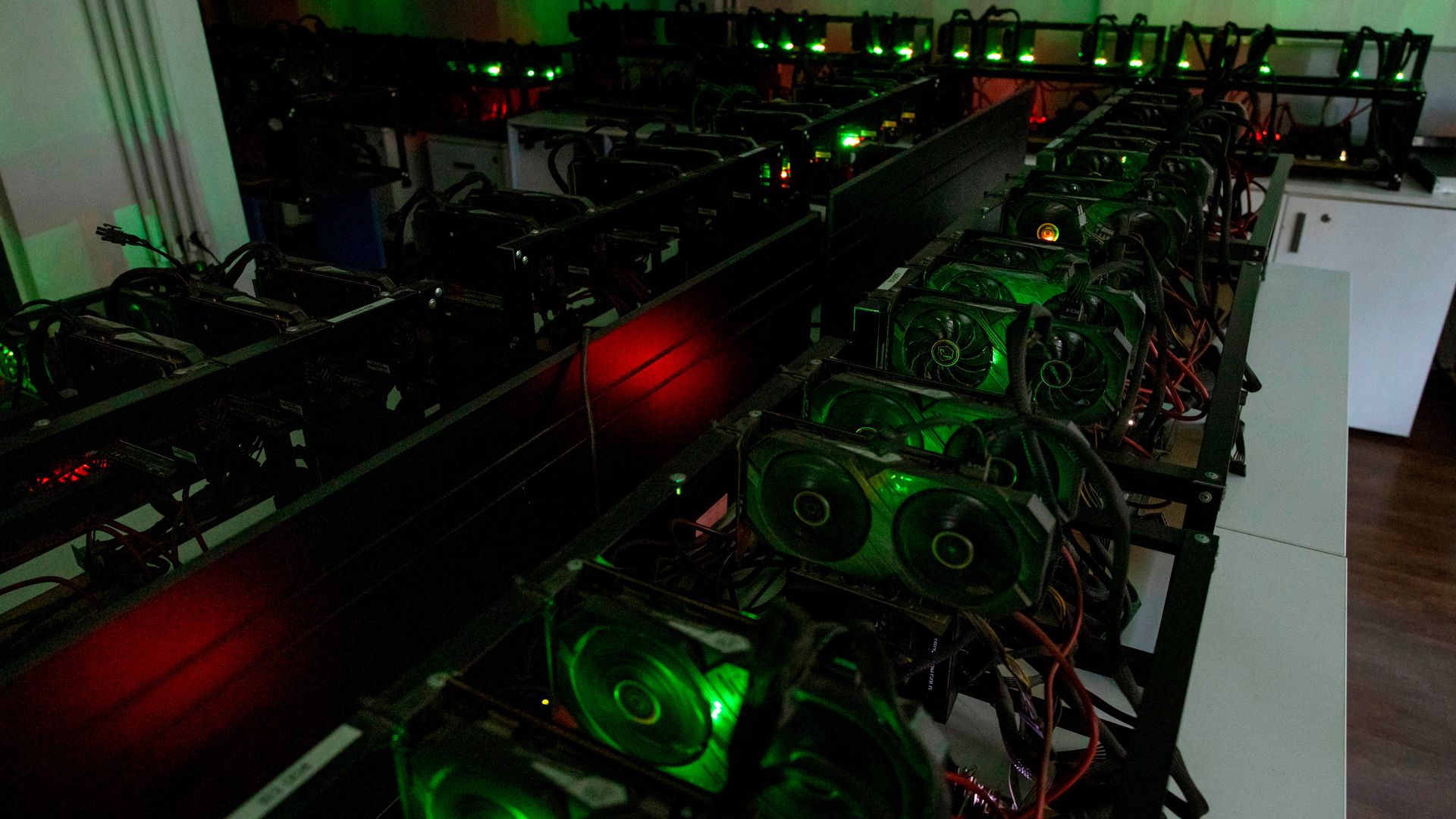
The most vivid evidence that demand does not disappear when new hardware is expensive comes from Tom's Hardware's report of a Reddit user who paid $35 for a crypto mining rig left in a garage and got 54GB of VRAM at 65 cents per GB. The rig held nine Nvidia P106-100 GPUs, and the buyer ran Qwen3.6-35B-A3B on it locally.
The specific components matter less than the arithmetic. Fifty-four gigabytes of video memory for $35, even spread across nine old mining cards, is a price point that new hardware does not approach. AI inference has a property that gaming does not: it can be spread across many modest devices, and older cards with enough memory remain useful for it. That makes the crypto-mining hangover a standing inventory of AI-capable hardware. Those cards were built for a market that collapsed, and they are finding a second life running models locally.
For US consumers, this is a genuine alternative to buying new or renting cloud capacity, with obvious tradeoffs in power draw, reliability, and the expertise required. For US vendors, it is a reminder that the low end of the AI hardware market has a competitor made of salvage. It is not a threat to data center deployments, but it does undercut the assumption that every AI workload needs new silicon.
Data centers become a political question
The politics of AI hardware are now local. Wired reports that from the Senate to governors' mansions, candidates are trying to outcompete each other to be the most anti-data center in races across the US, ahead of midterm contests that will decide data centers' political fate.
This is a category shift. Data centers were treated as infrastructure and economic development; they are now treated as a campaign issue. The hardware implications are direct. GPUs and the facilities built to hold them depend on power, land, water, and local permits. If candidates across a range of offices compete on opposing data centers, the regulatory path for new capacity becomes less predictable, and predictability is what capital-intensive hardware buildouts require.