The recent run of gadget coverage points to a single thread: the technology industry is no longer selling devices so much as selling the absence of device management. Foldables are being reframed as ordinary phones rather than exotic hardware, Alexa's listening behavior is presented as something the owner configures rather than something the company explains, and Windows is being positioned as a place where the phone quietly recedes. In each case, the product's success is measured by how little attention it demands.
Foldables Move From Spectacle to Default
Engadget's retrospective on the Royole FlexPai and the iPhone Duo frames the foldable's history as a march toward normalcy. The FlexPai arrived as a demonstration of what was mechanically possible; the iPhone Duo, by contrast, is discussed as a likely forecast of a market shift toward foldables becoming more common. That is a meaningful change in framing. A device category that once existed to be noticed is now being judged by whether it can stop being noticed at all.
The commercial logic for US companies is straightforward. Novelty hardware sells to early adopters and then stalls, because every foldable that requires the owner to think about hinge care, screen creases, or unusual aspect ratios is a device that has not finished its job. Apple's presumed entry, as Engadget characterizes the iPhone Duo's market effect, matters less as a product than as a signal that the form factor has been absorbed into ordinary expectations. US carriers and retailers benefit when a new shape becomes a routine upgrade choice rather than a specialist purchase, because routine upgrades are what sustain installment plans and trade-in programs.
For US consumers, the implication is that the foldable decision may soon stop being a decision about technology and become a decision about size and price, the same way choosing between phone tiers works today.
Alexa's Listening Becomes a User Settings Problem
Engadget's explanation of why Alexa devices are always listening is careful to note that the microphones are always on, and that what Amazon does with the resulting data is, in the outlet's framing, up to the user. A companion piece on the yellow light treats a flashing Echo as a notification-management question, complete with instructions for clearing it and adjusting notification settings.
Taken together, these two stories describe a deliberate distribution of responsibility. The always-listening microphone is presented as an inherent property of the product, not a choice; the choices that remain are pushed into settings menus. This is a familiar pattern in US consumer technology, and it carries a specific consequence: privacy becomes a skill rather than a guarantee. Households that never open the settings app get the default configuration, and the default configuration is the one the company prefers.
The yellow-light story is the tell. A notification indicator is a small piece of interface, but it is also the point where the device asks its owner to do maintenance. The framing assumes the owner wants to clear the light, tweak the settings, and return to not thinking about the device. That is the same goal as the foldable: reduce the number of moments when the hardware intrudes on attention.
Windows Wants the Phone to Fade Out
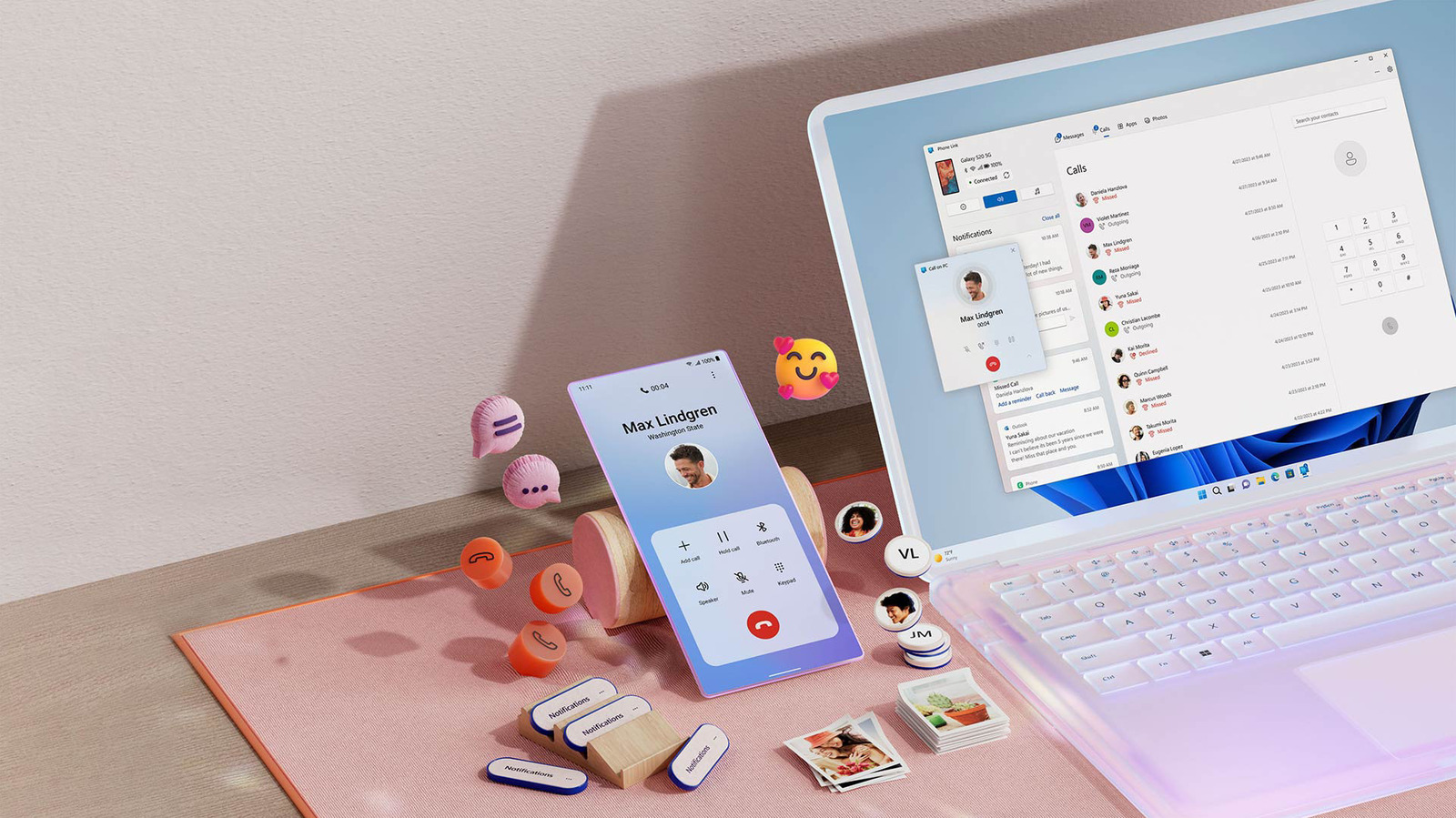
Engadget's guidance on using a Windows PC to make and receive phone calls through a Windows 11 connection describes a feature whose entire value is consolidation. Calls get managed in one place instead of requiring the owner to pick up the phone. On its face this is a convenience feature. As a market signal, it is an admission that the boundary between the PC and the phone is an annoyance users would rather not manage.