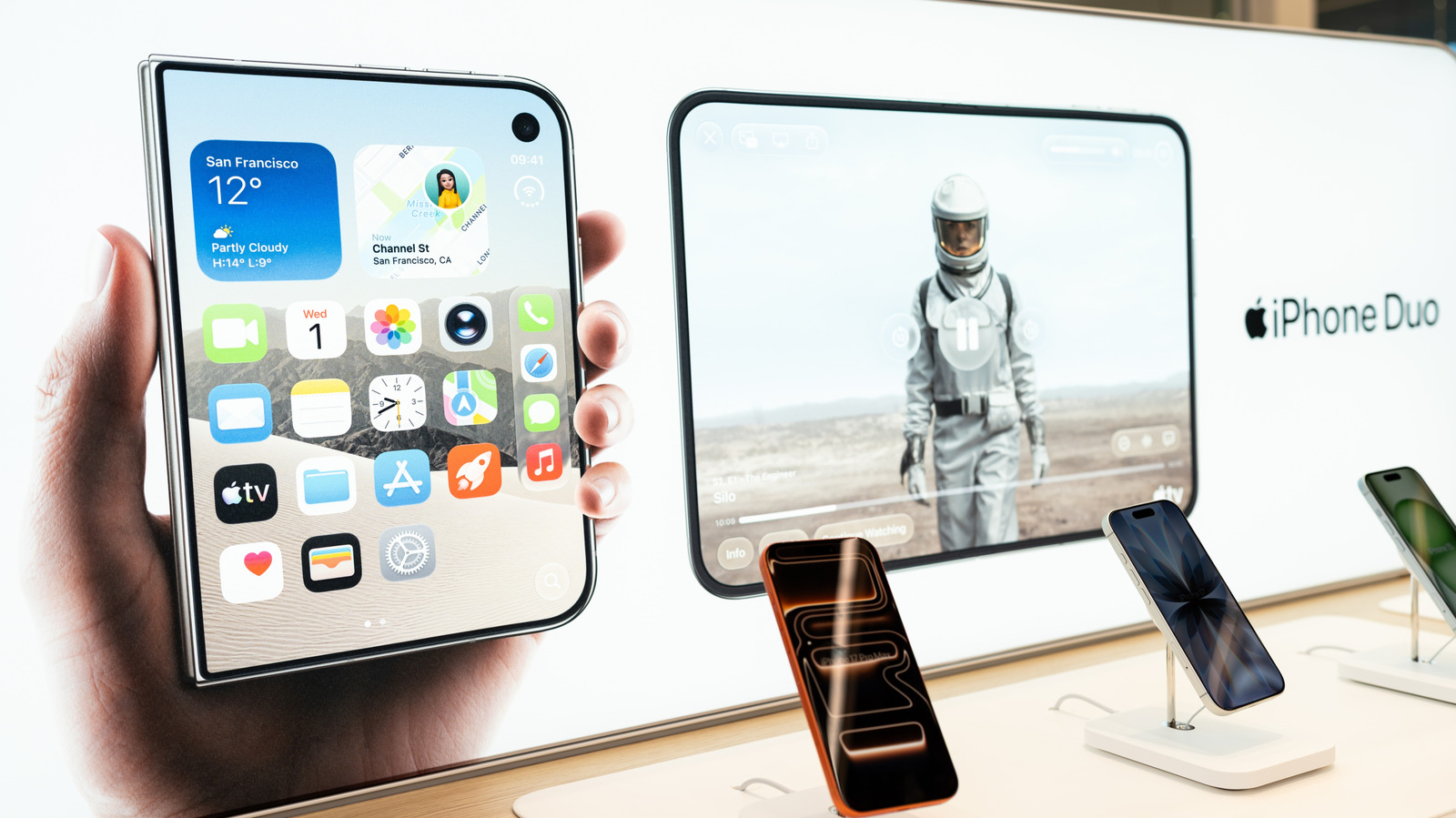
The week's gadget news is not really a set of product stories. It is a set of scheduling stories. Apple has fixed September 18th as the day the AirPods 5, Apple Watch Series 12 and Ultra 4, and the iPhone 18 Pro and Pro Max all arrive together, per The Verge, while Meta's Project Phoenix headset has surfaced just ahead of a Meta Connect that begins September 23rd, and Ikea has quietly put a $59.99 Bluetooth speaker on US shelves with no launch event at all. Read together, the pattern is that the calendar, not the spec sheet, has become the organizing principle of the consumer hardware business in the United States.
One Date, Many Products
Apple's decision to launch the AirPods 5 on the same day as the Apple Watch Series 12, the Watch Ultra 4, and the iPhone 18 Pro and Pro Max is the clearest expression of the pattern. The Verge reports that the AirPods 5 bring active noise cancellation to the masses, and that preorders are already open at a variety of retailers ahead of the September 18th launch.
That is a lot of hardware landing on a single day. For US consumers, it collapses an entire upgrade cycle into one decision point, and it means the question in a household is not whether to buy a given device but how many of them to buy at once. For Apple, it concentrates attention into a window it controls completely, and it makes the preorder period the real sales event rather than the launch itself.
The consequence for competitors is that they are not fighting a product. They are fighting a date. Anything that ships in the same fortnight is competing for the same wallets and the same coverage, and anything that ships outside it has to manufacture its own reason for existing in the news.
Meta Picks Its Own Week
Meta appears to understand this, which is why the timing of the Project Phoenix leak is more interesting than the leak itself. The Verge notes that UploadVR posted images seemingly revealing the design two weeks before Meta Connect starts on September 23rd, and that UploadVR says the images were found in the HorizonOS Prescription Lens firmware package.
Meta is not on Apple's September 18th date. It has effectively built a second September event, close enough to ride the same news cycle but far enough away not to be buried under it. The leak, wherever it came from, does the work that a teaser campaign used to do, and it arrives precisely when the audience is already paying attention to hardware.
The product itself points somewhere specific. According to The Verge, the images suggest Meta may be looking to compete with devices like those from Xreal or Viture. That is a different fight from the one Meta has been in with Apple, and it is a fight about lightness and wearability rather than about cameras and apps. If that framing holds, Meta is using the September news window to reposition rather than to escalate.
The Unlaunched Product
Ikea's Badkruka speaker, now available in the US for $59.99, is the counterexample that proves the rule. The Verge reports that it is reminiscent of the colorful, tiny $10 Kallsup speaker Ikea debuted earlier this year at CES 2026, but that at almost seven inches tall it is not designed with portability in mind, and it lacks a rechargeable battery.
There is no event, no preorder window, no coordinated embargo. There is a price, a shelf, and a deliberate set of trade-offs. Ikea is betting that a cheap speaker with an optical input does not need a moment because it has a place in the room, and that the United States market will reward the price rather than the launch.
Whether that bet works is a question about retail rather than about technology. But it is a useful reminder that the calendar-driven model is not universal. It applies to categories where consumers are already primed to upgrade, and it applies less well to categories where the purchase is incidental.