Four stories logged on this desk describe unrelated products and people, but they share a single thread: the people who own and operate computing hardware are steadily losing control over it, and the workarounds are becoming more elaborate. Two stories come from the entertainment end of the spectrum, one man jokingly reporting his RAM usage to a celebrity, another jailbreaking a car to set its clock. Two come from the industrial end, Nvidia capping how its cloud partners sell AI GPUs in China, and a lawyer building a private server rather than trusting a rented one. Read together as Tom's Hardware reported them, they show the same tension from both directions. Individual users face systems that will not do simple things without reverse engineering, while institutions face vendors tightening the terms on which their hardware can be used. And the lawyers and researchers, at least, are answering the same way: keeping the machine, or the data, close.
Two flavors of locked doors
The simplest version of the pattern is a script that watches RAM usage on a PC and emails the results to Sam Altman, OpenAI's chief executive, if utilization drops below 90 percent. As Tom's Hardware reported, a GitHub repository dubbed ram-altman does exactly this. It is a joke, but jokes are telling. Nothing in that description requires exotic hardware, only a willingness to instrument a machine and an internet connection to report what it finds. The same willingness, pointed at a car, produced the second story: a security researcher who had to use reverse engineering techniques to update the clock on their infotainment system because the normal route was unavailable. These are minor annoyances, not crises. But they describe a class of device where the owner cannot perform a trivial task without defeating the manufacturer's intended path, and where the only recourse is to treat the product as a problem to be solved rather than a tool to be used.
The cloud stops being neutral
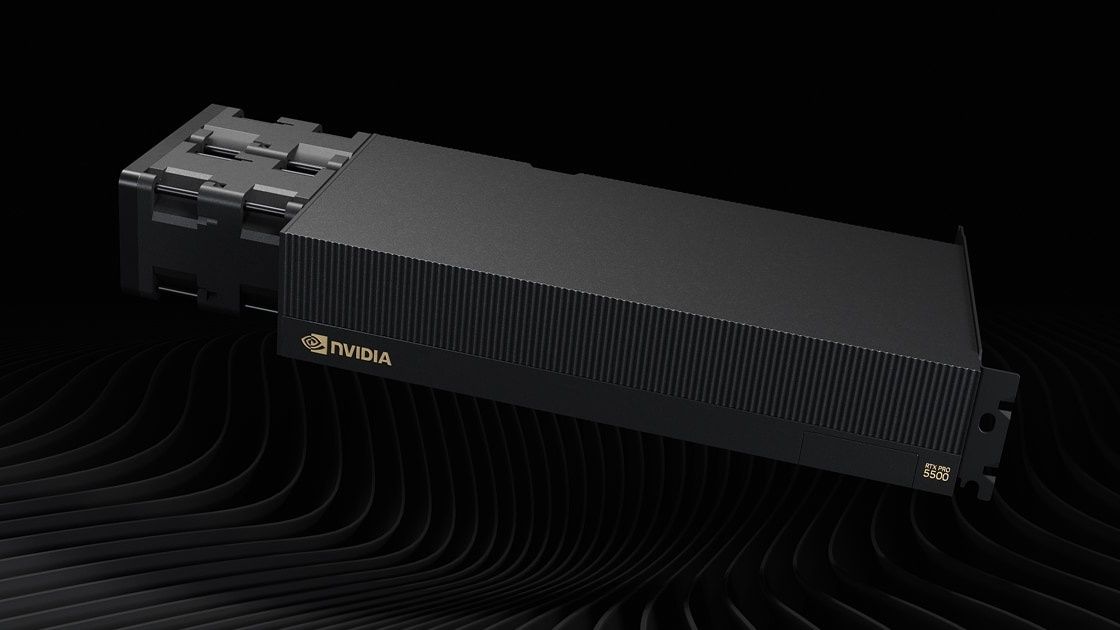
The third story moves the same logic to a much larger stage. Nvidia may cap its cloud partners' Chinese business at 49 percent, according to Tom's Hardware, as Chinese firms buy up more than one million gaming and workstation GPUs. The number matters less than the mechanism. The hardware is sold, but the vendor retains leverage over how it is rented, to whom, and in what proportion. That is the same instinct as the infotainment lockout, scaled to geopolitics: the seller decides what the buyer may do with the thing after the transaction. For US cloud providers and their customers, this is a reminder that access to AI compute is now a policy instrument, not merely a product. A company planning around rented capacity has to plan around the possibility that the terms can change on a vendor's schedule rather than its own.
Why the lawyer built a server
The fourth story is the countermove. A lawyer runs DeepSeek V4.1 Flash on eight used 2018-era Nvidia V100 GPUs at up to 215 tokens per second, keeping case files in the office, as Tom's Hardware reported. The striking detail is that the hardware is old. These are not current-generation accelerators, and they are still fast enough for the workload. The deciding factor was not performance but location: case files stay in the office. Read one way, that is a story about privacy. Read another, it is a story about contractual and legal risk. Attorneys have obligations about client data that a cloud provider's terms and a foreign vendor's model do not automatically satisfy. The lawyer solved a compliance problem by owning the machine, and the machine was cheap enough, in used form, to make ownership the easier answer.