The Trust Premium
The most consequential pattern in this week's technology news is not the hardware itself, but the strategic repositioning around a single, fragile asset: user and enterprise trust. From Palo Alto Networks paying $500 million for an AI IT service automation firm to DJI adding data-privacy features to robot vacuums, and from Xiaomi's passport-style foldable to Belkin's IFA earphone lineup, the underlying story is that trust has become a differentiator, a liability, and a market force. For US technology companies and consumers, this shift means that the battle for market share is no longer purely a contest of specs and prices, but a contest of credibility.
The Enterprise Pivot to Trusted Automation
The acquisition of Thrive-backed Console by Palo Alto Networks, as TechCrunch reported, is a clear signal that US enterprise security is moving beyond perimeter defense into the realm of AI-driven IT operations. The $500 million price tag is not for a hardware box or a license renewal; it is for the trust that a machine can be allowed to fix your network without human supervision. The fact that the deal leaves Sequoia-backed Serval as the de-facto startup leader in AI IT service automation suggests a market that is consolidating around a few proven players rather than a fragmented field of contenders. For US enterprises, the implication is direct: the question of which AI vendor to trust with internal infrastructure is becoming more important than the question of which one has the best benchmark scores. Palo Alto's move is a bet that trust, earned through security pedigree, is a moat that startups without that pedigree will struggle to cross.
Privacy as Hardware, Not Just Software
Across the consumer gadget aisle, DJI's new ROMO 2 robot vacuums, as Engadget reported, explicitly market a focus on data privacy. A robot vacuum is a device that maps your home's floor plan, sees your pets and children at ankle level, and runs microphones for voice commands. DJI's decision to foreground privacy in a product category not traditionally associated with enterprise data security is a recognition that US consumers have learned to ask where the data goes. The inclusion of LiDAR-enabled mopping arms and improved obstacle avoidance is important, but the headline is that DJI, a company that has faced its own trust challenges with US regulators over drone data, is now applying that lesson to home appliances. For US consumers, this means that privacy is no longer a premium add-on for high-end phones; it is becoming a baseline expectation in everyday appliances. The risk for US firms is that they see data collection as a revenue stream, while foreign competitors like DJI use privacy as an entry wedge into American homes.
Form Factor as a Statement of Intent
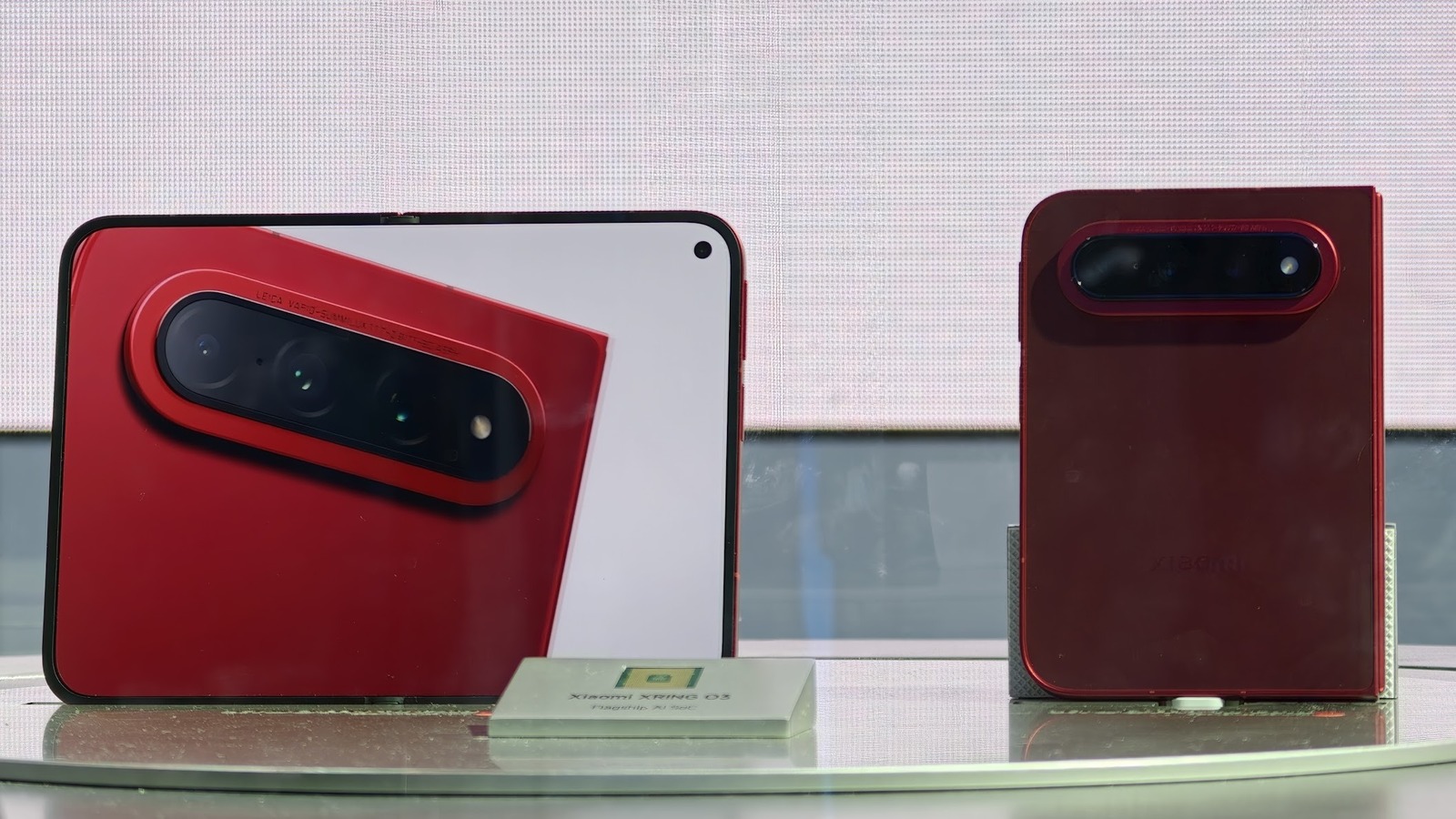
The mobile phone market is witnessing a similar trust-driven shift, albeit with a different vector. Engadget's report on Xiaomi's new passport-style foldable, described as shorter and wider than the Galaxy Z Fold 8, shows that the traditional vertical-folding phone is being replaced by a design that mimics a physical passport. This is not merely a cosmetic change. A passport is a document of identity and permission. The passport-style foldable implies a device that you carry as an extension of your identity, one that is meant for opening and closing frequently, for quick transactions and short reads. For US consumers, who have historically been the lead market for Samsung's foldables, Xiaomi's entry into this form factor is a challenge to the assumption that a foldable must be a phone that unfolds into a tablet. Instead, it is a phone that unfolds into a more credible version of itself. The success of this form factor will depend on whether US users trust a smaller, wider screen enough to replace their existing habits. Xiaomi's timing, with the passport-style format dominating a significant share of foldable launches, suggests that the market is converging on a design language that prioritizes portability and resemblance to a trusted travel document over the novelty of a large internal display.