📣

Advertisement

Google Ad - 970×90 Leaderboard  TOP_LEADERBOARD_4

The Chip Supply Chain Is Now a Defense Problem
Article

The Chip Supply Chain Is Now a Defense Problem

From orbital fabs to ASML's new lithography, the chip industry's future depends on infrastructure resilience against security and geopolitical risk.

Arjun NairSeptember 9, 20265 min read

Photo: TechCrunch

📣

Advertisement

Google Ad - 970×90 Leaderboard  TOP_LEADERBOARD_4

The four stories logged on this desk over the past two days are not separate items. They are one story: the semiconductor supply chain, already the most strategic industry on the planet, is being reshaped by two forces - physical scarcity and digital insecurity. Every move toward more chips, more advanced chips, or more redundantly produced chips is shadowed by the recognition that the current infrastructure, both on Earth and in orbit, is fragile. The industry is not merely scaling; it is defending.

The Orbital Question

Besxar’s plan to build an orbital semiconductor factory, as TechCrunch reported, is the most literal expression of this pattern. The scarcity of vehicles that can carry a wafer fab into space and bring it back is not a detail; it is the core constraint. A start-up that wants to manufacture in space and return the product can only wait for the ISS or contract with the handful of companies running return-capable spacecraft. That bottleneck is not about technical ambition. It is about control over the entire envelope of production - launch, orbit, reentry, and recovery. For a US company, this is also a strategic hedge: if terrestrial fabs are concentrated in a few regions and vulnerable to disruption, then having another option off-planet is attractive precisely because it is less accessible to geopolitics.

The fact that Besxar is building this capability “one SpaceX rocket at a time” is telling. SpaceX is the only US player currently able to provide the heavy lift and the cadence. But the dependence on a single launch provider is itself a fragility. The orbital factory story is not about novelty; it is about the long, expensive, and risky road to making chip manufacturing less Earth-bound.

The Modder as Canary

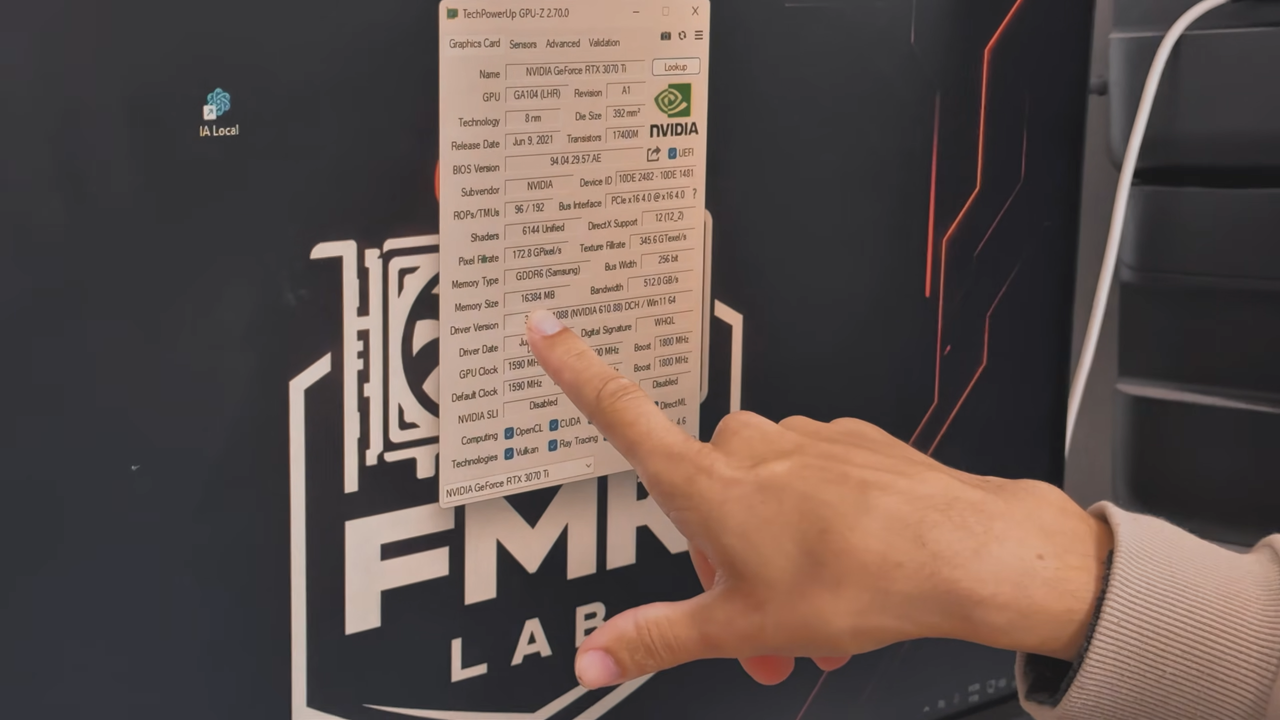
Tom’s Hardware reported a modder who took an RTX 3070 PCB, soldered in 16GB of GDDR6 VRAM, and paired it with an RTX 3070 Ti GPU to recreate a card Nvidia never released. That is remarkable, but not because of the technical achievement. The point is that this is what happens when the official supply chain fails to deliver what the market wants. Nvidia shipped the RTX 3070 Ti with 8GB of GDDR6X memory, and some users felt that was too little for the price. The modder’s Frankenstein card is a consumer-level protest against memory pricing and product segmentation.

For US consumers, this is a direct signal of a shortage that persists in high-end memory. GDDR6X is more expensive and harder to source, so a modder’s choice to substitute GDDR6 is a workaround born of necessity. The fact that the card works at all demonstrates that the industry’s allocation of memory chips, not its engineering, is the binding constraint. When individual enthusiasts are forced to reverse-engineer products that Nvidia chose not to produce, the consumer is telling you that the market is not clearing.

Bigger Masks, Same Fragility

Engadget reported that Samsung and TSMC are expecting help from ASML’s new machines, which use larger chip photomasks. Those bigger masks improve manufacturing yields and lower costs, which may address the continuing chip shortage. But note the dependency: Samsung and TSMC are the only two foundries that can produce the most advanced logic chips, and they both rely on ASML for the lithography systems that make those chips possible. ASML has a near-monopoly in extreme ultraviolet lithography. A disruption in ASML’s supply chain, whether from geopolitics or a fire at its factory, would halt the entire world’s advanced chip production.

Advertisement

📣

728x90

MID_CONTENT_2

The adoption of larger photomasks is a positive development, but it does not remove the structural vulnerability. It actually concentrates more value in a single manufacturing step. If you want to solve the shortage, you need more capacity or higher yield, but both still flow through the same narrow funnel. The US market, which imports most of its advanced chips, is the most affected by that funnel’s stability.

The Insecurity of Distribution

BleepingComputer reported that over 36,000 Plex Media servers exposed online are unpatched against security flaws. That number is small relative to the total installed base, but it is significant because Plex is a widely used consumer product in the United States. The vulnerabilities were disclosed recently, and patches exist, but a large portion of the installed base has not applied them. This is not a hack of a semiconductor fab; it is a weakness in the endpoint devices that connect to home networks and, by extension, to the internet at large.

The connection to the chip supply chain is indirect but real. A Plex server is a computer, often running on consumer-grade hardware with a CPU and memory that were subject to the same allocation pressures as everything else. More importantly, the story points to a systemic pattern: hardware reaches the market faster than the security updates that protect it, and consumers do not apply the updates in a timely manner. The same issue applies to routers, webcams, and any other network-attached device. When the supply chain is stressed, manufacturers may cut corners on security, and consumers may stick with older, vulnerable devices for longer.

What to Watch

All four stories point to a few things to watch in the coming months. First, watch Besxar’s launch schedule and whether it can secure a contract with a return-capable vehicle. If it succeeds, it will prove a second path for US chip manufacturing. If it fails, the orbital ambition will remain a niche experiment. Second, watch Nvidia’s memory allocation in its next GPU. If the modder’s work becomes a proof-of-concept that forces Nvidia to offer a higher-memory card at a lower price point, that is a direct consumer benefit. Third, watch TSMC and Samsung’s adoption of ASML’s larger photomasks. If they come online without major yield issues, the shortage could ease. If installation times slip, expect continued scarcity. Finally, watch the number of unpatched Plex servers. If it does not decline after the recent disclosure, expect more attacks on consumer devices - and that may push regulators to require better update mechanisms.

The thread is not about the future of chips alone. It is about the resilience of the entire ecosystem - from orbital factories to lithography tools to consumer-grade network devices. Every layer is exposed, and every layer is being forced to adapt. The US market, which depends on this ecosystem for both industrial production and home entertainment, will feel the consequences first. The next twist may come from an unexpected corner: a modder, a launch provider, a Dutch machine builder, or a media server vulnerability. The common denominator is that none of them can be taken for granted.

More on this beat: Hardware on TechManNews.

Advertisement

📣

728x90

IN_ARTICLE_5

#semiconductors#supply chain#space manufacturing#security#US market

Newsletter

Get Tech News in Your Inbox

The latest AI, gadgets, software and startup stories from TechManNews, delivered every morning - free.