The Thread: Specialization Over Integration
The most telling hardware stories of the past two days share a single, quiet but profound pattern: the industry is abandoning the idea that one device should do everything. From a two-kilogram power station that now comes in a lunchbox size, to a graphics card that offloads its most complex work to a second GPU, to a server chip architecture that lets a customer assemble cores and cache like Lego bricks, the direction is clear. The future is not a bigger box. It is a set of smaller, dedicated boxes that are designed to be combined. For US technology companies, this shift reshapes everything from supply chains to software licensing. For US consumers, it means buying systems instead of single products, and learning to manage a new kind of complexity where the sum of the parts matters more than any individual component.
The Miniaturization of Everything, Even the Battery
Start with the most consumer-facing story. EcoFlow, as The Verge reported, has shrunk its River line again. The River 260 Gen4 carries 256Wh of capacity, and the 520 Gen4 carries 512Wh. These numbers are not just smaller versions of a bigger product. They represent a doubling of energy density in a form factor that already felt small. The key fact is not the watt-hours, but the word Gen4. This is a mature product line, not an experiment. A company that once sold a power station the size of a small fridge now sells one that fits in a backpack and still stores more energy than a car battery. The pattern here is that the unit of computation - or in this case, the unit of stored power - is getting smaller while staying functionally complete. That is a necessary precondition for the rest of the story. If you cannot make the raw material small, you cannot make the systems that use it modular.
The Chip That Learns to Share
The hardware world is seeing the same logic at the chip level. Tom's Hardware reported on Arm's new Neoverse CSS N4 platform, a compute subsystem that can pack up to 128 cores and 256MB of L3 cache on a single die built on TSMC's N3P process. That is a massive number of cores, but the important word is subsystem. Arm is not selling a CPU. It is selling a building block that a cloud provider or an OEM can combine with other blocks - memory, I/O, accelerators - to build a server. The previous generation, CSS N2, is a point of comparison. The N4 is not just faster; it is more flexible. The semi-custom nature of the platform means that a US-based hyperscaler can order a chip with exactly 96 cores and a specific cache hierarchy, rather than buying a fixed product. This is the antithesis of the old Intel model, where a server chip had one configuration for everyone. Now the configuration is the product.
The Second GPU: Rendering as a Service
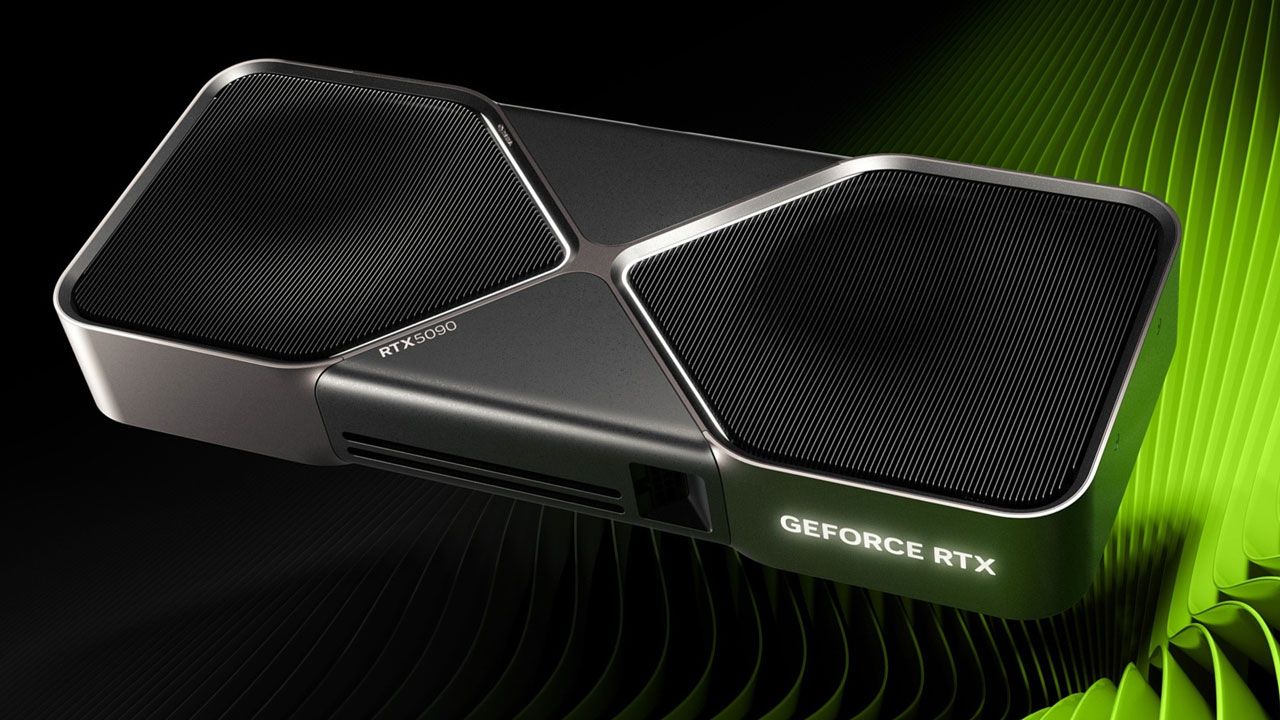
The most dramatic example of specialized, talking units comes from a modding community, not a chip vendor. Tom's Hardware also covered a ReShade add-on that runs Nvidia's DLSS 5 Neural Rendering on a second GPU. The game renders on the first card, while the neural post-processing - the AI-powered upscaling and frame generation - runs on the second. The modder reports up to 127% higher frame rates in some scenarios. The historical parallel is the old PhysX GPU, a dedicated card that handled physics calculations so the main GPU could focus on drawing triangles. That model failed two decades ago because PCIe bandwidth was too slow and the market was too small. It is back now, not because of physics, but because neural networks are a fundamentally different kind of workload. They are dense matrix math, not parallel polygon filling. Running that on a second card over a high-speed link is a reasonable engineering choice, not a hack. For US gamers with a spare GPU left over from an upgrade, this is a low-cost way to double performance. For Nvidia, it is a quiet admission that their flagship card can only go so far alone.
The Common Architecture: Heterogeneous Computing
Put those three stories next to each other and a single architecture emerges. EcoFlow is separating the battery from the device that uses it, so a phone or a drone can charge off a unit that stays behind in a bag. Arm is separating the compute core from the system logic, so a cloud customer can rent exactly the amount of computation they need. The DLSS mod is separating the render engine from the neural engine, so each can run at its own optimal clock speed and memory configuration. In all three cases, the system is a network of peers, not a master-slave hierarchy. The power station is not a backup to the phone; it is a partner that delivers power on demand. The second GPU is not a helper that awaits instructions; it is a co-processor that handles a complete, distinct workload. This is a radical departure from the PC architecture of the last thirty years, where one central processing unit controlled everything else. That era is ending.