Startup Capital Is Converging on Hard Assets, Not Software
Article

Startup Capital Is Converging on Hard Assets, Not Software

Three recent startup deals show investors and acquirers favoring companies that own factories, chips and cash-generating security products over pure software stories.

NagiSeptember 27, 20264 min read

Photo: SiliconANGLE

The three startup stories on this beat over the past weeks point in one direction: capital is flowing toward startups that own something physical, embedded or already paying for itself, rather than toward software narratives alone. A machine vision acquisition, a plastics recycling plant deal and a nine-figure security extension all share that trait. For US startups and their backers, the premium is shifting from code to capacity.

The RealSense exit is the clearest signal

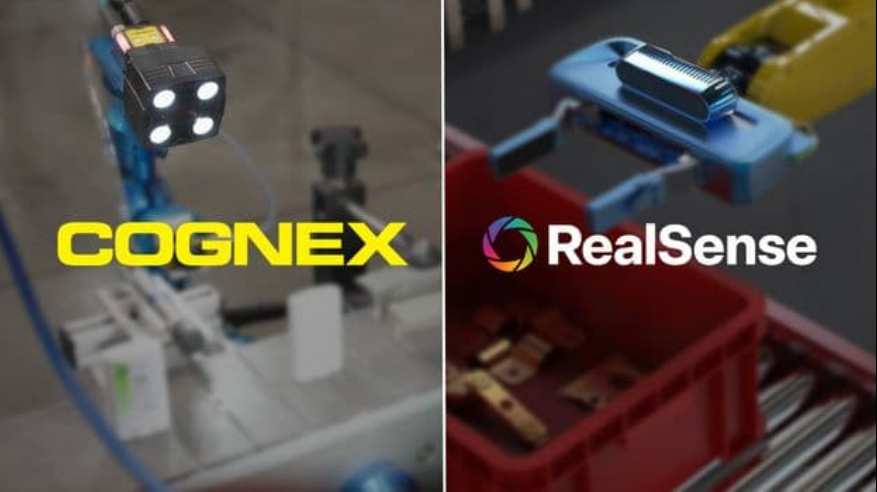
Cognex Corp. said it intends to buy RealSense Inc. for around $600 million, as SiliconANGLE reported. RealSense was spun out of Intel only 14 months earlier. The structure matters: roughly $500 million in cash, plus a three-year arrangement whose details are not in the material. A Nasdaq-listed industrial buyer paying cash for a 14-month-old spin-off is not a typical venture outcome. It is an industrial acquisition of a startup asset, and it suggests that vision hardware and robotics perception are now treated as strategic inputs rather than speculative bets. RealSense did not need to reach scale independently; it needed to become a component that a larger machine vision company could integrate. That is a different path to liquidity than the one venture investors usually underwrite, and it is becoming more common as US industrial buyers look to buy capability instead of building it.

MacroCycle shows the plant is the product

TechCrunch reported that Meta is giving plastics recycling a boost in a new deal with startup MacroCycle, which is building its first commercial plant. The sentence is short but the implication is large. A recycling startup's central asset is a factory, not an app. Meta's involvement is a demand-side commitment as much as a financial one; the material does not specify the terms, but the structure is recognisable. For a US startup in materials and industrial processing, the first commercial plant is the milestone that separates a pilot from a business. That kind of capital intensity once pushed such companies toward strategic partners or project finance. Now it is pulling them toward large corporate counterparties that can anchor output. The pattern is the same as in the Cognex deal: a big incumbent reaching into the startup layer to secure a physical capability.

Cyera shows the security budget still clears the bar

Cyera Ltd. raised $400 million from Goldman Sachs as an extension to a Series G round that closed in June, according to SiliconANGLE. That round valued the company at $12 billion; the company now says it is worth over $12 billion, though it did not specify a new figure. Two things stand out. First, a major investment bank is writing a nine-figure extension, which is not typical venture behaviour and suggests that late-stage security assets are being treated as durable infrastructure. Second, the stated rationale is AI agent security. That is software, but it is software attached to a problem that buyers cannot defer. The common thread with RealSense and MacroCycle is not hardware for its own sake. It is that the money is going to companies whose product sits directly in the path of something a large organisation must operate, secure or supply.

Why this matters for US startups

The practical consequence is a narrowing of the funding funnel. A US startup with a compelling software demo and no proprietary operational asset will find the late-stage market more selective than it was a few years ago. A startup with a factory, a chip-adjacent module or a security product embedded in enterprise workflows has multiple routes: acquisition by an industrial buyer, an anchor customer deal, or a large extension from a non-traditional investor. The RealSense outcome in particular shows that a 14-month-old spin-off can reach a $600 million exit if its technology is strategically scarce. But it also shows that the exit may come early and at a price set by an incumbent's roadmap, not by a startup's growth curve. Founders should read that as a trade-off, not a pure win.

What it means for the US market

For the wider US market, the signal is that capital is being allocated to capacity. A machine vision acquisition consolidates perception technology under a US industrial company. A recycling plant deal ties a US platform company to physical materials infrastructure. A large bank extension into security keeps a late-stage company private and funded rather than pushed into a public listing. None of these moves expands the pool of publicly traded US startups; if anything, they delay it. That matters for US consumers only indirectly, through the availability and cost of the underlying capabilities: industrial automation, recycled materials and secure AI agent deployment. The material does not give figures on any of those outcomes, and it would be wrong to project them. What it does show is where the decision-makers are placing their chips.

What to watch

Three things are grounded in what these stories actually say. First, whether the Cognex-RealSense deal closes on the stated terms and what the three-year component turns out to be, since that will set the template for other industrial spin-off acquisitions. Second, whether MacroCycle's first commercial plant reaches operation and whether Meta's role expands from a deal into recurring offtake, which would validate corporate anchoring as a financing model for US industrial startups. Third, whether Cyera's extension is followed by other bank-led late-stage rounds or remains an outlier, and whether the AI agent security thesis holds up as a distinct category. Each of those outcomes will tell US founders and investors whether the hard-asset preference is a durable shift or a moment. On the evidence logged so far, the bias toward tangible, embedded and cash-generating assets is the clearest pattern in startup dealmaking right now.

More on this beat: Companies on TechManNews.

#startups#venture capital#machine vision#recycling#cybersecurity#US technology

Newsletter

Get Tech News in Your Inbox

The latest AI, gadgets, software and startup stories from TechManNews, delivered every morning - free.