Developer Tools Are Now Sold as Ecosystems, Not Products
Article

Developer Tools Are Now Sold as Ecosystems, Not Products

Three unrelated developer stories this week share one pattern: the tool is no longer the point. The surrounding ecosystem is.

JaysuryaSeptember 27, 20265 min read

Photo: The Verge

The three stories logged on this beat this week look unrelated: a laptop preorder perk, a PlayStation 3 emulator workaround, and a workflow orchestration update. The thread running through them is that developer-facing technology in 2026 is being sold and maintained as an ecosystem rather than a standalone product. The bundle, the workaround, and the platform update are all versions of the same move: value now sits in what surrounds the code, not in the code alone.

The Laptop Bundle Is a Developer Onboarding Funnel

The Verge reports that Best Buy is offering free Pixel Buds 2A to customers who preorder a Googlebook, with the perk running until October 25th, 2026. On its face this is consumer retail promotion. On the developer beat it reads differently. The Googlebooks are Android-powered laptops arriving soon, with specs the report describes as rivalling Windows Copilot machines, and they are landing from familiar brands.

For US developers, a new laptop category is not just hardware. It is a question about toolchain. An Android-powered laptop positioned against Copilot machines implies a different default stack: different terminal behaviour, different container story, different assumptions about what runs natively. The earbuds are the inducement, but the real acquisition is the developer's next machine, and by extension the environment their next several years of code is written in.

What is notable is the timing. Shipping free accessories with a preorder is an old retail tactic. Applying it to a laptop class explicitly framed against Microsoft's AI-forward Windows line suggests the competition is not about specs alone. It is about which platform developers reach for first when they start a new project. Companion hardware is one way to lower the switching cost.

For US technology companies, this matters because developer mindshare on laptops is sticky. If a meaningful share of American developers adopt Android laptops as their daily machines, the tooling vendors follow. And for US consumers, the immediate effect is simple: a preorder perk that expires on a fixed date. The longer effect is whether a third laptop platform becomes normal in American software teams.

Emulator Coders Fix What Vendors Do Not

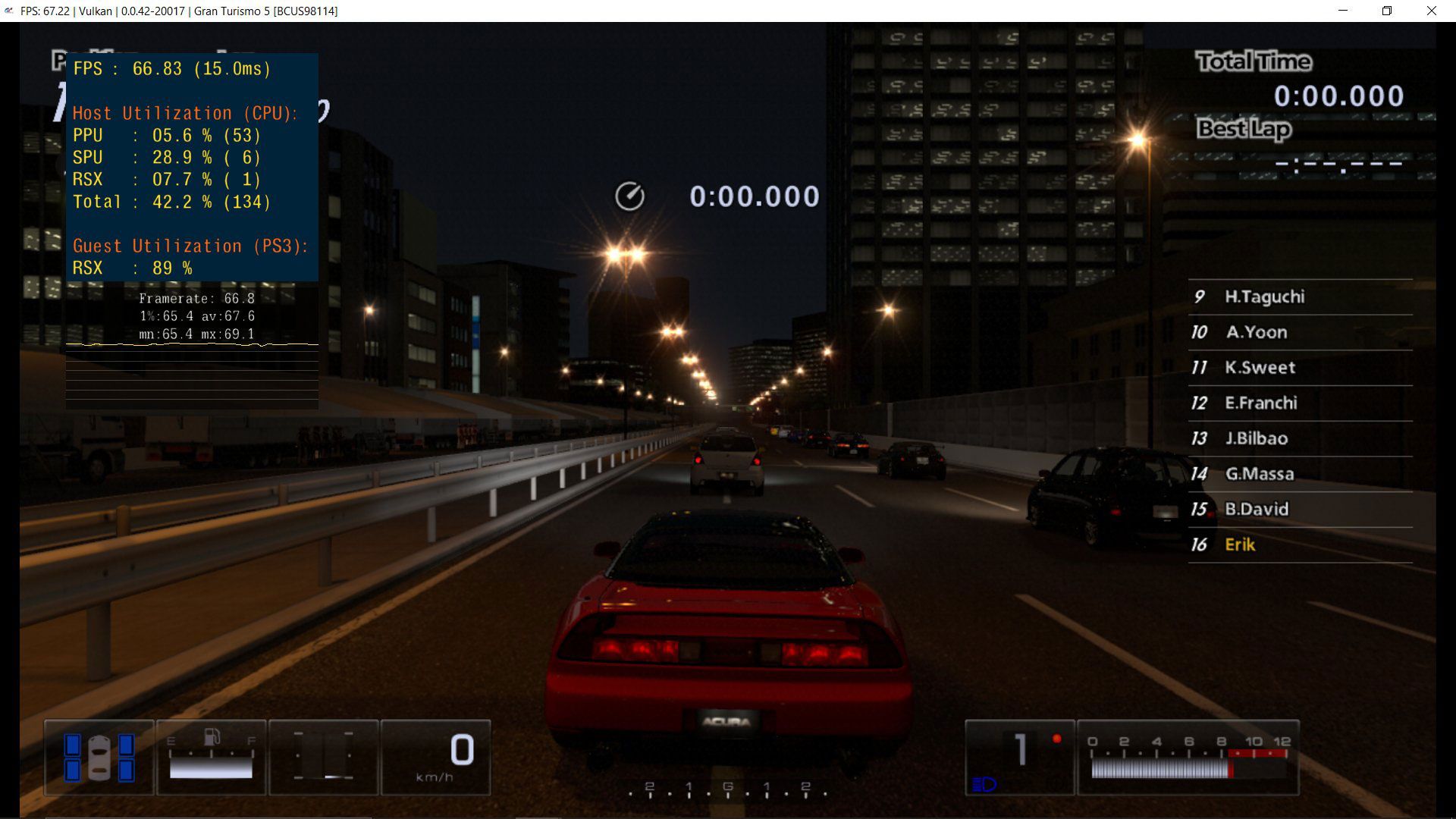
Tom's Hardware reports that the developers of RPCS3 found a workaround for an Nvidia driver bug and are claiming up to 37% performance gains. The detail that should interest anyone writing code for a living is not the number. It is who found the problem and who did not.

An open-source team, working on emulation, discovered a driver-level defect and routed around it. The report says the coders reached out to Nvidia about the uncovered bug. That sequence - workaround first, vendor notification after - is a familiar one in open-source development. The people closest to the workload are often the ones who find the defect, because they run code the vendor's own test suites do not exercise.

This is the ecosystem pattern in its purest form. The product is the driver. The value is in the ecosystem of projects that exercise it in unusual ways. When those projects find a fault, they do not wait for a patch. They ship a workaround, and their users get faster performance today.

For US software companies, the lesson is about where quality signals come from. A driver bug surfaced by an emulator team is a reminder that the most demanding consumers of a graphics stack are frequently not the ones the vendor planned for. Companies that treat open-source projects as free QA tend to get more of this work for free. Companies that treat them as downstream consumers of finished products get surprises. For US consumers, the immediate benefit is measurable: RPCS3 users on the affected configuration may see up to the reported 37% gain once the workaround is in place.


Orchestration Vendors Sell the Control Plane

SiliconANGLE reports that LittleHorse Enterprises released version 1.3 of its Saddle Command Center, adding no-code agent deployment, prebuilt task workers, a JavaScript software development kit, and a free serverless trial. The company describes the platform as Business-as-Code, coordinating artificial intelligence agents alongside conventional software.

The list of additions is the story. A version 1.3 that ships a JavaScript SDK, prebuilt workers, a no-code deployment path, and a free trial is not shipping a feature. It is shipping an on-ramp. The JavaScript SDK speaks to the largest pool of working developers. The prebuilt workers reduce the amount of code a team must write before seeing value. The free serverless trial removes the infrastructure conversation from the first evaluation. The no-code path widens the addressable user base beyond people who write code at all.

This is what ecosystem selling looks like on the enterprise side. The orchestration engine is table stakes. What differentiates is how quickly a US engineering team can go from curiosity to running code, and how many people on that team can participate. A platform that requires a dedicated infrastructure project before the first workflow runs loses to one that starts free and serverless. That is a sales argument, but it is also a developer experience argument, and in 2026 the two are hard to separate.

For US technology companies evaluating orchestration vendors, the practical question is whether the free tier is a real evaluation path or a lead-capture form. The report describes a free serverless trial, which is a concrete claim that can be tested. For the vendors, the risk is that bundling no-code and SDK paths into one product muddies who it is for.

The Common Thread

All three stories describe the same shift. The Verge's laptop perk treats hardware as the entry point to a platform relationship. Tom's Hardware's emulator workaround treats a driver as one component in a wider open-source supply chain that self-repairs. SiliconANGLE's orchestration update treats the orchestration engine as the hub for SDKs, workers, trials, and non-coders.

In each case, the nominal product is not where the value is being competed for. The competition is over the surrounding layer: the tools, the workflows, the defaults, and the people who never touch the code directly.

For US developers, this cuts both ways. On one hand, ecosystems are more forgiving. A free trial, a workaround, and a bundled accessory all lower the cost of trying something. On the other hand, ecosystem lock-in is harder to see than product lock-in. A team that adopts a laptop for its toolchain, a driver workaround as a patch habit, and an orchestration platform for its SDK is making three separate decisions that compound.

What to Watch

Three concrete signals follow from the material above. First, whether the Googlebook preorder perk at Best Buy, which runs until October 25th, 2026, is followed by developer-specific positioning rather than consumer retail framing. Second, whether Nvidia responds to the bug the RPCS3 developers raised, and whether the workaround remains necessary once a driver patch ships. Third, whether LittleHorse's free serverless trial and JavaScript SDK produce measurable adoption, or whether the no-code and SDK paths serve different buyers than the platform's core orchestration users.

None of these stories is about a product launch in the ordinary sense. Each is about the perimeter around a product, which is where developer decisions increasingly get made.

More on this beat: Software on TechManNews.

#developer tools#open source#platform strategy#orchestration#hardware#emulation

Newsletter

Get Tech News in Your Inbox

The latest AI, gadgets, software and startup stories from TechManNews, delivered every morning - free.