Three stories on this beat this week look unrelated at first glance: a rack-scale system designed for orbit, a vendor firmware update that bricked graphics cards, and a reported relationship that moved billions of dollars of Nvidia GPUs. The pattern running through all three is that control over GPU hardware - who designs it, who certifies it, who can obtain it - is increasingly concentrated and increasingly hard to see into. Each story shows a different layer of the stack where the same dynamic plays out.
The Rack as the New Unit of Design
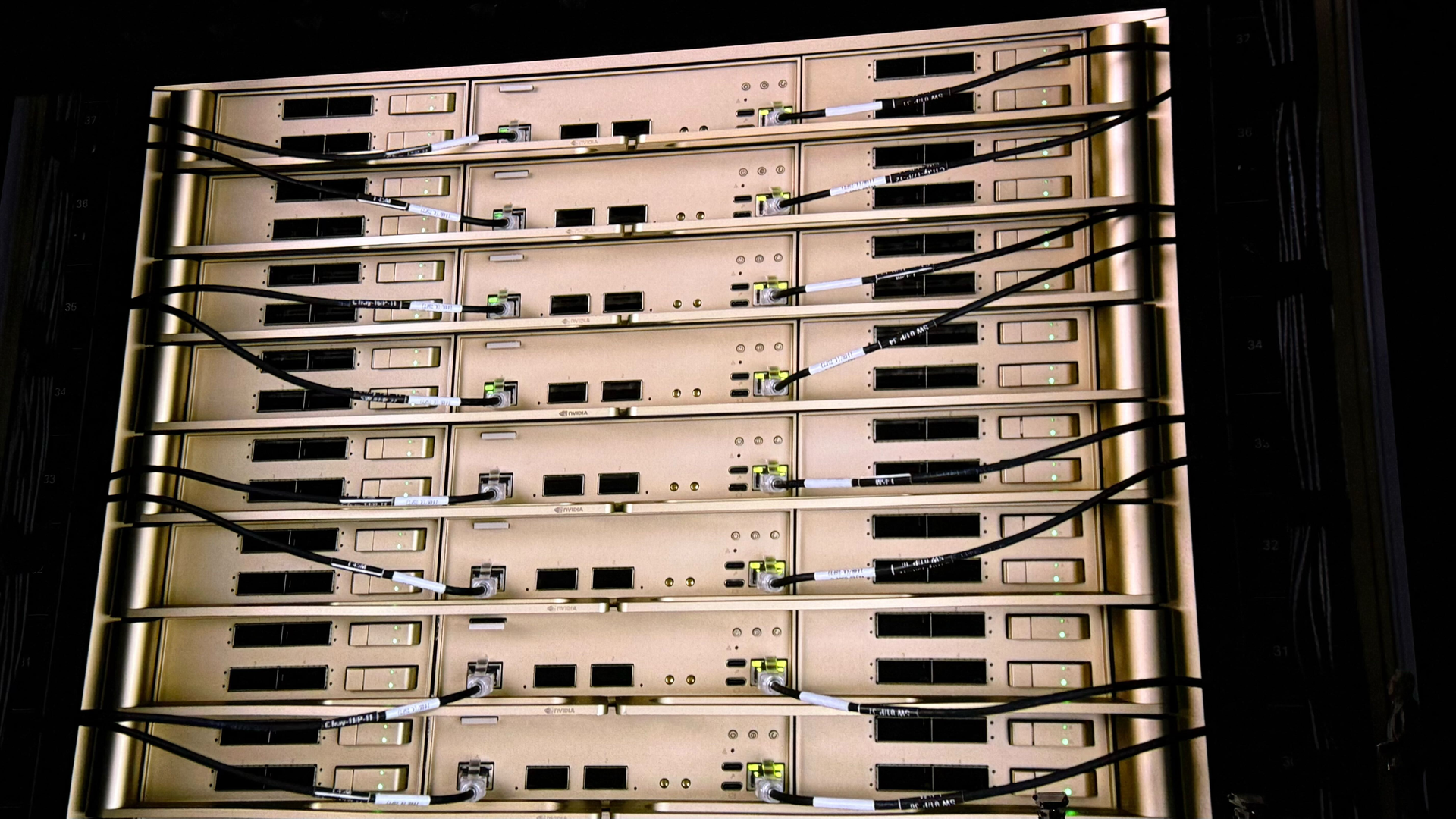
The SpaceX report, as covered by Tom's Hardware, describes a "Kessel" rack-scale system built around 72 Nvidia Rubin GPUs and an 84-layer PCB midplane. The specific application - data centers in space - is unusual, but the architecture is not. The unit of design has moved from the board to the rack, and the supplier of the GPU increasingly sets the terms of the system around it. A midplane of that complexity is not something a buyer swaps out casually; it binds the rack to a particular generation of accelerated compute.
For US technology companies, this matters because the rack-scale approach raises switching costs at exactly the moment competition in accelerators is supposed to be widening. Even a customer with the engineering resources to design its own system faces a supply chain shaped by one vendor's roadmap. The Kessel report is a reminder that Nvidia's influence now extends past the chip into the physical architecture of the data center, including designs intended for orbit.
Firmware Is a Single Point of Failure
The ASRock episode is the consumer-facing version of the same problem. According to Tom's Hardware, ASRock quietly rolled out new firmware after its previous VBIOS 1.0.6 update followed reports that Radeon RX 7900 XT and XTX cards failed to boot after installing the earlier firmware. The cards are AMD-based, but the failure originated with the board partner's software, not the GPU vendor's silicon.
That division of responsibility is the point. A US consumer who buys a graphics card is buying into a chain of custody - GPU designer, board partner, firmware team - and the failure modes do not respect those boundaries. The fix arrived quietly, which is also instructive: the vendor that shipped the bad update controls both the timing and the framing of the remedy. The user, meanwhile, holds a card that will not boot.
Access Mediated by Relationships
The third story operates in a different register but lands in the same place. As reported by Tom's Hardware, Alice Huang is reportedly connected to a web of Chinese companies that leveraged her closeness to Jensen Huang to gain access to billions of dollars' worth of Nvidia GPUs, with more than $7.5 billion of AI GPU imports secured during a three-year relationship.