The operating system is no longer where the important action happens. In three recent stories on this beat, the decisive developments occur at the platform's edges: in browser-delivered attacks that bypass the OS entirely, in a third-party driver that reroutes rendering work to a different processor, and in a phone whose speed is defined by its Android skin rather than the OS underneath. The common thread is that the boundaries that once defined an operating system's security, performance, and identity are being set by parties other than the OS vendor.
Attacks That Skip the Platform
The watering hole campaign reported by BleepingComputer is the clearest example. A large-scale operation associated with Russian hackers has been targeting iOS and Android users through compromised sites and fake portals impersonating legitimate ones, using n-day exploits in zero-click attacks. Two features of that description matter for the operating systems beat. First, the delivery vector is the web, not the app store or the OS update channel, so the patch cadence that vendors control is not the cadence that governs exposure. Second, the exploits are n-day, meaning the vulnerabilities were known and presumably fixed before the campaign used them. The gap being exploited is the distance between a fix existing and a user's device receiving it.
That reframes a question US platform vendors have spent years answering with process. Apple and Google have built their security stories around curation, notarization, and rapid update distribution. None of those levers reaches a user who visits a compromised site on an unpatched device. For US consumers, the practical consequence is that the security of an iPhone or an Android handset now depends substantially on how quickly intermediaries and carriers move updates, and on browsing behavior that no OS vendor controls. For US companies, it means the competitive claim of a "secure platform" is increasingly a claim about ecosystem logistics rather than about code.
The Driver as Platform Extension
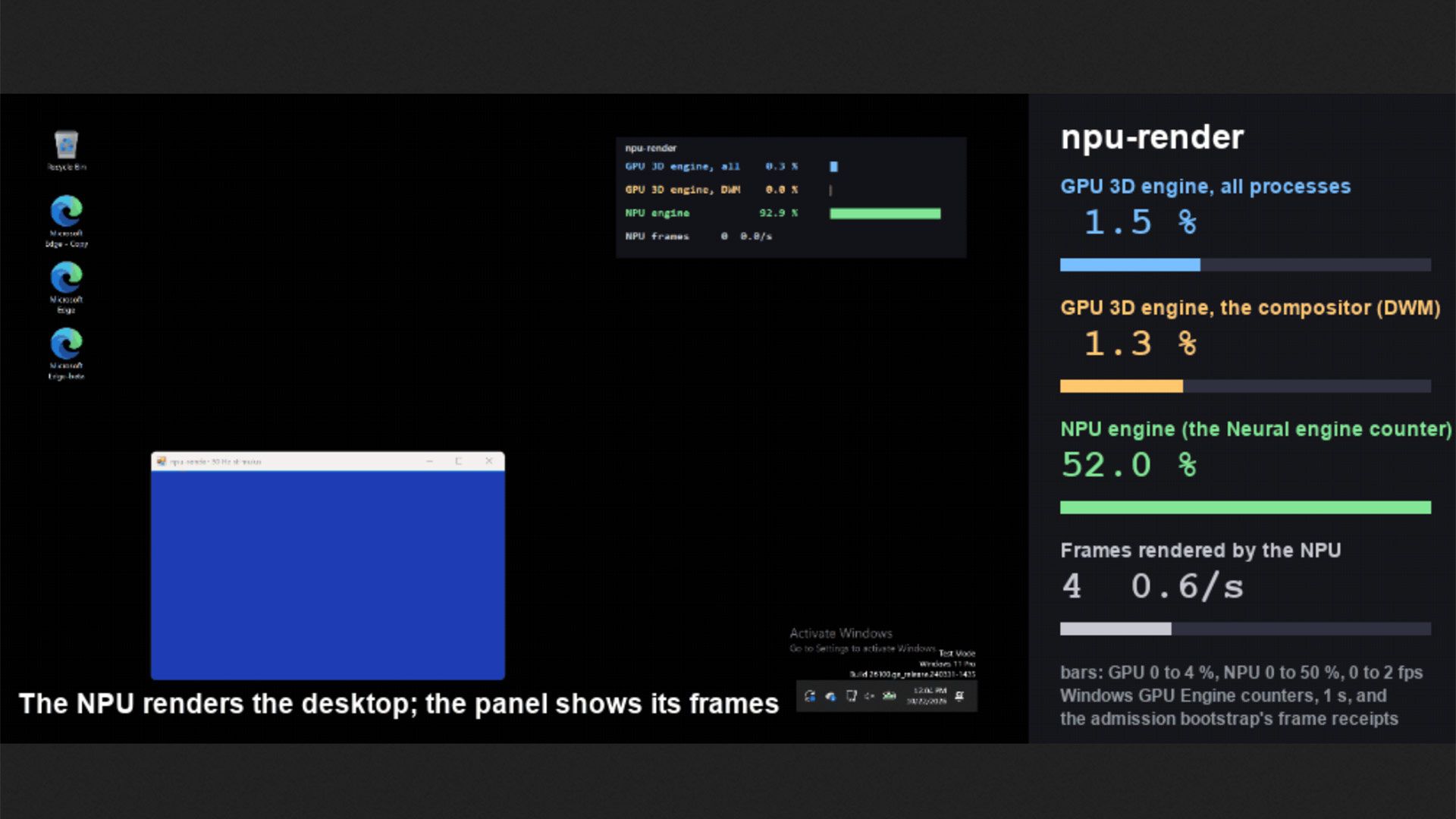
The prototype NPU-based desktop renderer for Windows 11, reported by Tom's Hardware, is a different edge but the same pattern. Open source developers released a driver that renders the Windows 11 desktop using the neural processing unit instead of the integrated or discrete GPU. It runs at 2 to 3 Hz and targets 30 Hz. The performance numbers are unimpressive by design of the experiment, and the story is not really about whether an NPU should draw a desktop.
What matters is that a small external team can retarget a core OS function to hardware the OS vendor did not designate for it. Windows has always had a driver model, and third-party drivers have always been able to change behavior. But the desktop compositor is closer to the identity of the operating system than a printer driver is, and the hardware being repurposed is the component vendors are currently marketing as the center of local AI workloads. If that component can be commandeered for ordinary rendering by anyone with the driver skills and the inclination, then the allocation of silicon to tasks is no longer purely a vendor decision.
For US technology companies, this cuts both ways. It is evidence that the PC ecosystem remains unusually open to experimentation, which has historically been an advantage. It is also a reminder that an open driver model creates a surface that vendors must reason about when they make architectural bets, particularly as NPUs ship in volume and sit idle during most desktop work.


