The binding constraints in AI hardware are migrating away from the processor itself. Three recent items on this beat - a new thermal interface material from Thermal Grizzly, AMD's projected first-ever quarterly sales lead over Intel, and xAI's use of converted jet engines to power a Mississippi data center - describe the same pattern from different angles. As compute demand rises, the problems that matter are heat, power delivery and the physical plant around the rack, and US hardware companies are being sorted by how well they address those problems rather than by chip specifications alone.
Silicon Is No Longer the Whole Story
AMD's trajectory, as reported by Tom's Hardware, is the clearest signal that the compute buildout has real momentum: the company expects to outsell Intel in Q4 for the first time in history, driven by data center demand for Epyc processors and Instinct accelerators, with client hardware sales declining only slightly. That is a demand story, but it is also an infrastructure story. Epyc chips and Instinct accelerators do not sell into a vacuum; they sell into racks that must be cooled and fed with power. The fact that AMD's data center business is strong enough to offset a softer client market tells you where the money and the engineering attention are going. For US technology companies, the competitive question is shifting from who has the fastest part to who can actually deploy it at scale.
The Heat Problem Becomes a Product Category
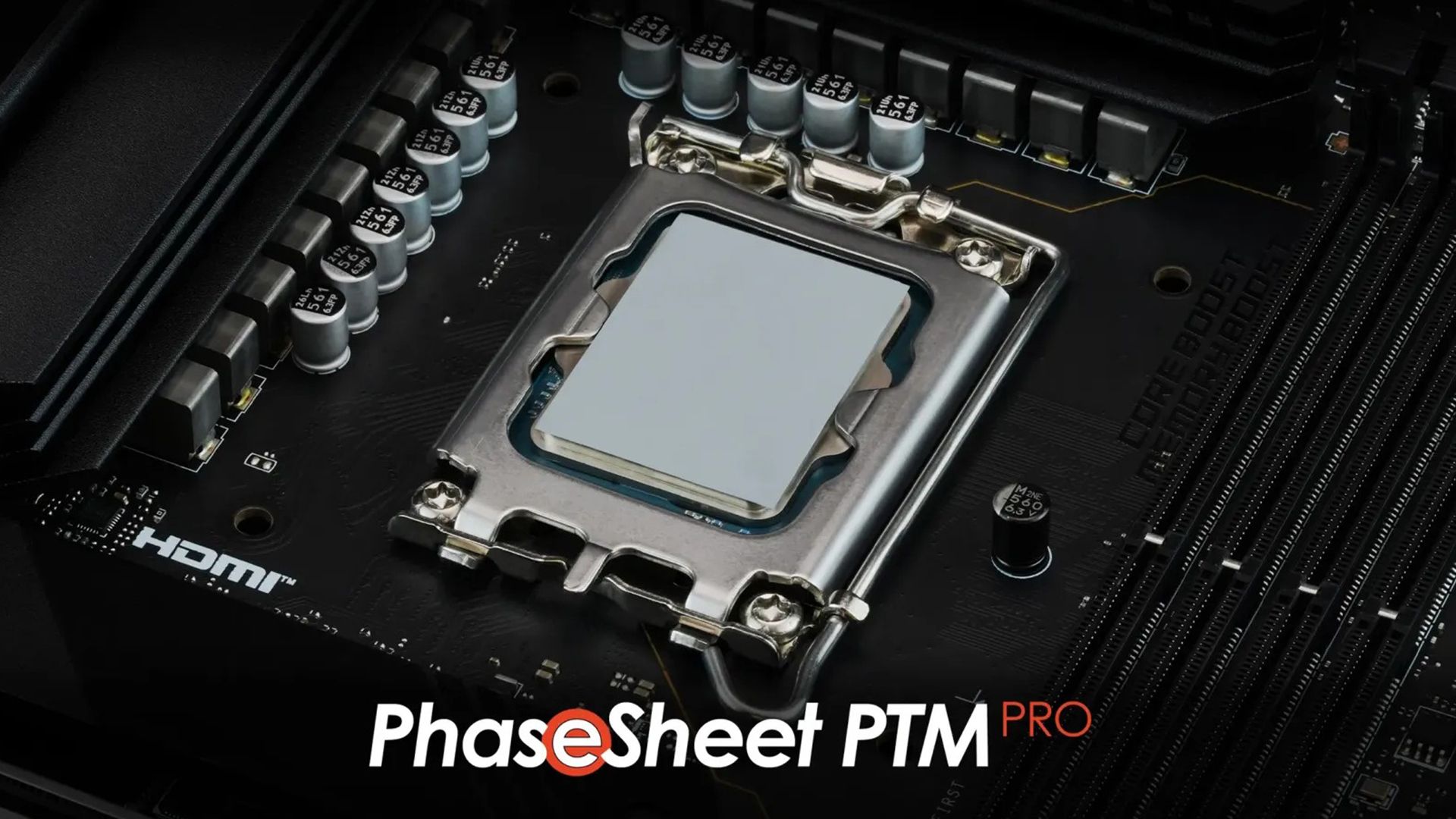
Thermal Grizzly's PhaseSheet PTM Pro, also via Tom's Hardware, looks like a minor accessory launch, but it is evidence of where pain is showing up. The pad is designed for CPUs, GPUs and other components without an integrated heat spreader, is reusable, electrically non-conductive, and is pitched as less susceptible to the pump-out effect that degrades traditional thermal paste. Every one of those details is a response to real deployment conditions: repeated thermal cycling, tight assembly tolerances, and the cost of servicing hardware that runs hot. When a consumable like thermal interface material gets a Pro-tier refresh with claims about conductivity and reusability, it means buyers are pushing thermal budgets hard enough that small gains matter. For US consumers and system builders, that is mostly good news - better, more forgiving materials at the component level - but it also underscores that the cooling layer is now a place where performance is won or lost.
Power Becomes the Gating Factor
The most striking item is xAI's use of eight converted jet engine turbines to power a Mississippi data center, as Tom's Hardware reported, despite the known health risks of the carbon monoxide and volatile organic compounds they produce. Whatever one thinks of that specific choice, it is a loud admission that grid power is not arriving fast enough for the pace of AI buildout. When operators reach for aviation-derived turbines, the constraint is no longer chip supply or capital - it is electrons and the permitting, siting and public-health questions that come with them. That has direct consequences for the US market. Data center siting decisions increasingly become local political decisions, and the emissions profile of on-site generation becomes a reputational and regulatory exposure for the companies relying on it.