๐Ÿ“ฃ

Advertisement

Google Ad - 970ร—90 Leaderboard ย TOP_LEADERBOARD_4

Hardware's New Scoreboard: Cost, Noise, and Raw Speed
Article

Hardware's New Scoreboard: Cost, Noise, and Raw Speed

Three unrelated hardware stories this week point to the same shift: performance claims, repair costs, and even data-center culture are now consumer-facing battlegrounds.

Arjun NairSeptember 18, 20264 min read

Photo: Tom's Hardware

๐Ÿ“ฃ

Advertisement

Google Ad - 970ร—90 Leaderboard ย TOP_LEADERBOARD_4

Three stories logged on this desk in the past two days look unrelated on their face: AMD's first official benchmarks for its EPYC 'Venice' CPUs, a rise in battery replacement prices for Apple's iPhone 18 Pro models, and a plush toy that screams like a data center. The common thread is that hardware competition in 2026 is being fought less on spec sheets and more on the terms that ordinary buyers and operators actually feel, whether that is per-core performance against a named rival, the cost of keeping a phone alive, or the cultural distance between the server room and the living room.

The Benchmark as a Direct Shot

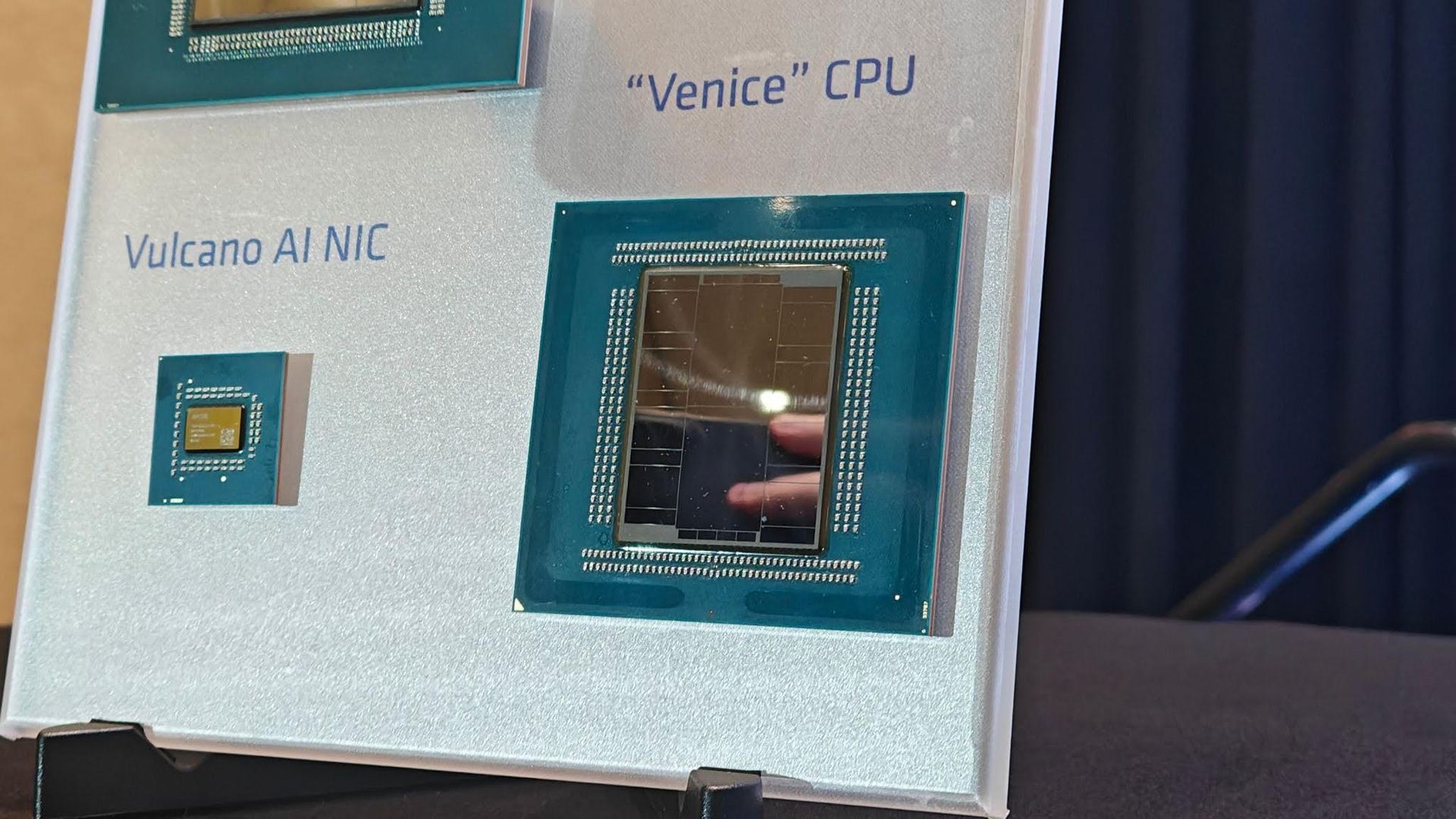
AMD released several benchmarks for its EPYC 'Venice' CPUs in what Tom's Hardware framed as a clear shot at Nvidia. The company claims its 256-core chip is more than twice as fast as Nvidia Vera, and that its 96-core model is 20% faster per-core. The specifics matter less than the posture: AMD is not waiting for independent reviews to set the terms of comparison. It is naming a competitor, putting numbers next to that name, and letting the market argue about methodology later. For US enterprise buyers, that is a useful development in a server market where procurement cycles are long and switching costs are high. A public, head-to-head claim gives buyers something concrete to demand in vendor conversations even before third-party testing confirms or complicates the picture.

Per-Core Claims and the Cloud Bill

The 96-core model's 20% per-core advantage, as reported by Tom's Hardware, is the detail that speaks most directly to how US companies actually buy compute. Cloud and on-premises workloads are often licensed, scheduled, or constrained in ways that reward per-core efficiency rather than raw core counts. A 256-core part that wins on aggregate throughput is one kind of pitch; a part that wins per-core is a different pitch, aimed at buyers who cannot simply add sockets. AMD is making both arguments at once, which suggests it sees the market splitting between customers who scale out and customers who scale up. Either way, the claim lands in a US market where hyperscalers and mid-sized enterprises alike are under pressure to justify every dollar of infrastructure spend.

The Other Side of the Hardware Bill

On the consumer side, CNET reports that battery replacement has gotten pricier for Apple's latest iPhone 18 Pro models. Most phone batteries degrade faster than users would like, and the cost of replacing one is now a more visible line item in the total cost of ownership. This is the same logic as the server benchmark, inverted. In the data center, buyers compare performance per dollar. In the phone market, buyers increasingly compare longevity per dollar. A higher replacement price makes the phone's useful life a financial decision rather than a purely technical one, and it puts pressure on the trade-in and resale calculus that US consumers already navigate. It also raises a question Apple's competitors can exploit: if keeping a flagship alive costs more, the case for stretching a device's life weakens, and the case for upgrading on schedule strengthens.

Advertisement

๐Ÿ“ฃ

728x90

MID_CONTENT_2

When the Data Center Becomes a Character

Wired's report on 'Bezzy,' a satirical collaboration between a creative studio and the music producer behind Big Data, describes a plush doll that spews the sounds of real data centers. The toy is cute, and its scream is piercing. That juxtaposition is the point. Data centers have become culturally legible enough to be merchandised, which means the infrastructure that powers AI and cloud services is no longer invisible to the people who use it. For US technology companies, that is a double-edged development. Familiarity can build tolerance for the physical reality of compute, but it can also turn noise, power draw, and land use into consumer-facing reputational issues rather than abstract operational ones.

What the Three Stories Share

Each story treats hardware as something with a public accounting. AMD is publishing numbers that invite scrutiny rather than hiding behind architecture diagrams. Apple's battery pricing turns a component into a visible cost of ownership. The Bezzy doll turns server-room noise into a consumer artifact. The common thread is that hardware is being judged on terms that reach beyond the engineering team: procurement managers, phone owners, and anyone who encounters a data center through culture rather than a spec sheet. That is a shift from the way hardware was discussed a decade ago, when the interesting arguments happened inside vendor roadmaps and the public mostly saw the results.

What This Means in the US

For US technology companies, the practical consequence is that every hardware claim now has a second audience. A benchmark aimed at enterprise buyers will be read by investors and competitors. A battery price change aimed at consumers will be read by repair advocates and resellers. A novelty toy aimed at culture will be read by people who live near data centers. None of these audiences is new, but the speed at which a claim travels between them is. AMD's numbers will be tested by independent reviewers; Apple's pricing will be compared across models and generations; the plush's reception will say something about how willing the public is to treat data centers as a normal part of the landscape rather than an abstraction.

What to Watch

The next signals to watch are concrete. Whether AMD's Venice benchmarks hold up under independent testing, and whether the per-core claim survives scrutiny, will determine how much of the pitch is durable. Whether Apple's battery replacement pricing becomes a broader pattern across its lineup, or remains specific to the iPhone 18 Pro models CNET described, will shape how US consumers think about upgrade timing. And whether the data-center plush remains a novelty or becomes part of a wider cultural conversation about infrastructure will indicate how much the physical footprint of compute has entered public consciousness. The thread running through all three is that hardware's scoreboard is now kept in public, and the numbers on it are no longer only about speed.

More on this beat: Hardware on TechManNews.

Advertisement

๐Ÿ“ฃ

728x90

IN_ARTICLE_5

#hardware#semiconductors#consumer tech#data centers#repairability

Newsletter

Get Tech News in Your Inbox

The latest AI, gadgets, software and startup stories from TechManNews, delivered every morning - free.