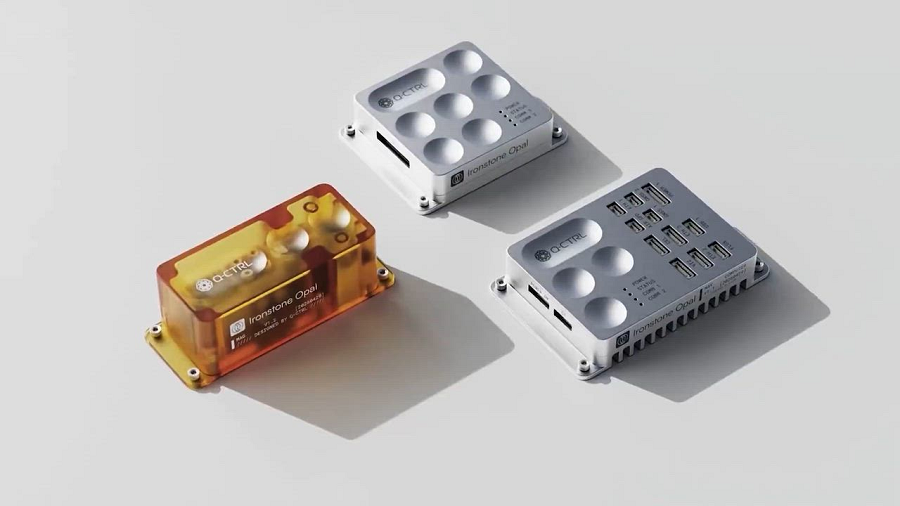
The money moving through this week's venture headlines is not chasing the flashiest layer of the technology stack. It is going to the companies that make complex systems trustworthy and productive: quantum control software, factory-floor computer vision, and the corporate venture arms placing strategic bets across both. Read together, Q-CTRL's $290 million Series C, Tristar AI's $12.4 million Series A and Crunchbase's account of Nvidia's record startup investing describe a market that has decided reliability, not novelty, is where the next returns live.
The Unsexy Layer Gets Paid
Q-CTRL is the clearest case. As SiliconANGLE reported, the company provides quantum sensors and software for managing qubits, and it raised $290 million in an oversubscribed Series C led by Salesforce Ventures, with more than a dozen other participants including Bullhound Capital and Affinity Partners. That is a large check for a software-and-hardware vendor whose product exists to keep fragile quantum systems stable. The size of the round, and the fact that a strategic investor in enterprise software led it, says something about where sophisticated capital sees durable value: not in a quantum breakthrough narrative, but in the tooling that determines whether quantum hardware behaves predictably enough to be sold to customers.
Tristar AI follows the same logic at a much smaller scale. The computer vision startup pulled in $12.4 million in early-stage funding, a Series A, to automate quality control for manufacturers, SiliconANGLE reported. The pitch is explicitly about defects slipping past human eyes and high-speed production lines turning into expensive scrap. This is not a consumer-facing application. It is process infrastructure, and the round is sized for proving out deployments on factory floors rather than for building a brand.
Why This Pattern Makes Sense in Late 2026
The common thread is that each of these companies sells a reduction in operational risk. Quantum computing has spent years in a cycle of announcements, and the gap between laboratory demonstrations and dependable machines remains the binding constraint. Software that manages qubits and sensors that measure physical conditions are how that gap gets closed, one deployment at a time. Manufacturing has an analogous problem. Automation has advanced faster than inspection, so defects become the cost center, and vision systems that catch them are a direct margin play.
Investors appear to be pricing this in. The Q-CTRL round was described as oversubscribed, which in a market that has been selective about late-stage deals is a signal. Sponsors are not writing $290 million checks indiscriminately. The presence of Salesforce Ventures suggests an enterprise-software read on the opportunity, while the breadth of the syndicate, more than a dozen participants, suggests a shared view that the category has crossed from speculative to investable.
Corporate Venture Is Doing the Scouting
Crunchbase News reported that Nvidia was continuing its pace as one of the busiest startup investors, backing many of the biggest venture deals of 2026 before it was thrust into crisis this week, and the outlet examined where Nvidia and its venture arm NVentures have been investing and what the future could hold. That framing matters for the pattern. Corporate investors, whether Nvidia or Salesforce Ventures, are no longer peripheral checks written for strategic signaling. They are among the most active allocators in the market, and their participation shapes which categories get funded at scale.
That introduces a dependency worth naming. When strategic investors are anchor participants in rounds like Q-CTRL's Series C, the funding environment for a whole category becomes tied to the capital plans and priorities of a small number of large technology companies. That is a concentration risk, and Crunchbase's own question about what comes next after a crisis at one of those investors is a fair one. A slowdown in corporate venture activity would not just reduce check sizes. It would remove the validation that pulls in the financial syndicate alongside it.