The recent run of processor news points to one pattern: AMD's EPYC Turin line is becoming the default host silicon for commercial AI agents, and the workloads running on it are being deliberately metered down to a handful of cores per user. OpenAI's dots and Meta's Muse, reported by Tom's Hardware, both run on EPYC Turin hosts. Meanwhile Qualcomm's Snapdragon Sound Elite, covered by Engadget, shows the same shift at the opposite end of the device spectrum. The through-line is that agentic AI is reshaping where processors sit in the stack, and how much of them any single user is allowed to touch.
The Server Side Consolidates on One Line
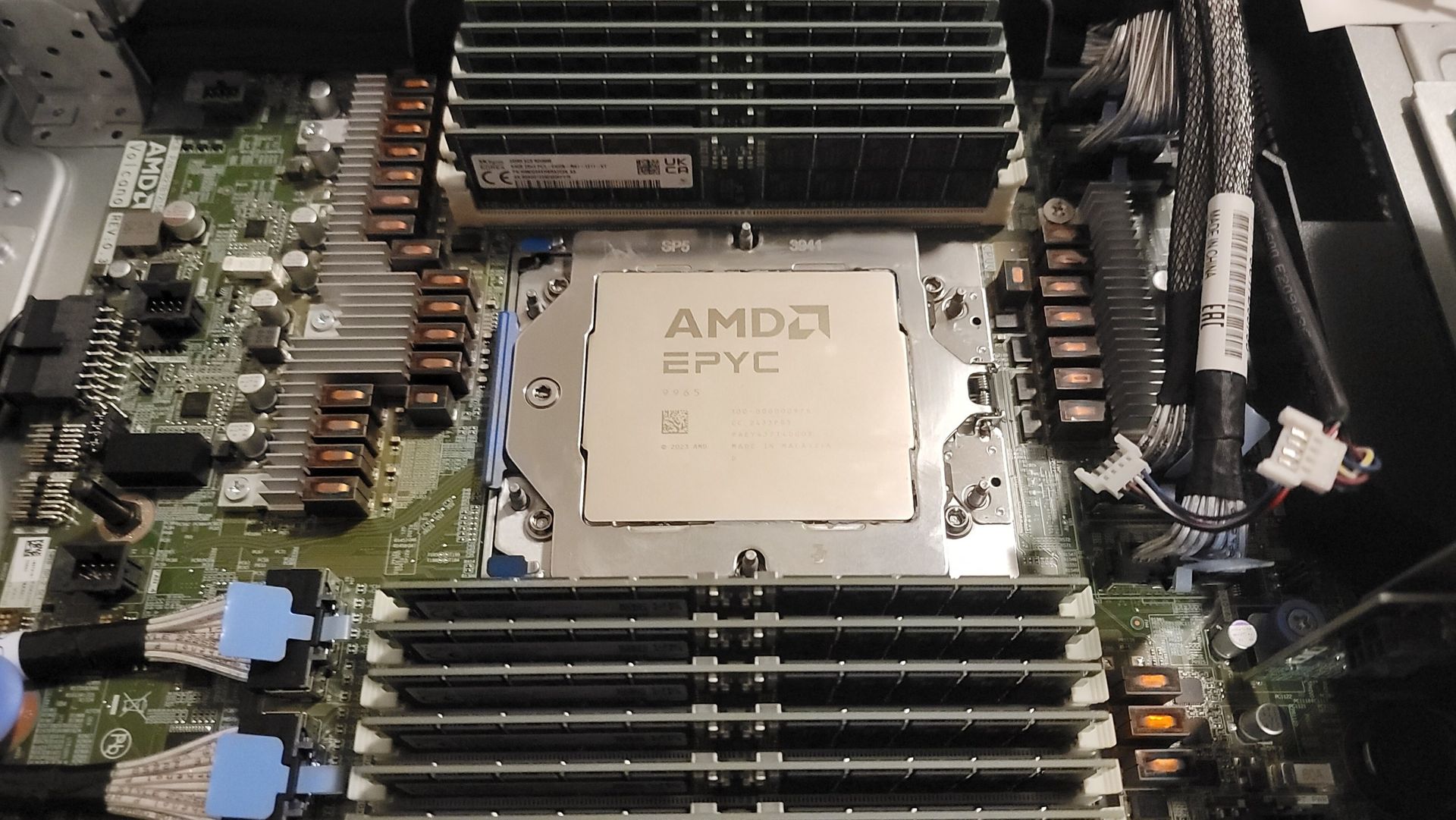
Two unrelated agent products landing on the same server processor family within a short window is not a coincidence. OpenAI's dots and Meta's Muse both run on AMD EPYC Turin hosts, according to Tom's Hardware. Neither is a hyperscale training run. One is a consumer-facing chat product; the other is an AI agent that gives each user a private sandbox. Both are inference and orchestration workloads, and both sit on Turin.
For years the server CPU conversation in AI was about not being the bottleneck. Training clusters grabbed the headlines, and accelerators grabbed the budget. What is happening now is different: the CPU is not competing with the accelerator, it is hosting the orchestration layer that surrounds it. Agent workloads spend their time scheduling, sandboxing, moving context, and running tool calls. That is general-purpose work, and it lands on a general-purpose core.
AMD benefits when that core is EPYC. The company has spent multiple generations building a data center story around core density and memory bandwidth, and Turin is the current expression of that. The fact that two of the most visible agent launches of the period both sit on it suggests the choice has already been made at the infrastructure level, before the products reach users. That is a meaningful position for a US chipmaker, because it is sticky: once a cloud region standardises on a host CPU family, agent runtimes get tuned to it.
The Sandbox Is Where the Economics Live
The more revealing detail is the shape of the allocation. Meta's Muse gives each user a private sandbox with two vCPUs and 8GB of memory, as Tom's Hardware reported. That is not a server. It is roughly the footprint of a mid-range laptop, carved out of a machine that almost certainly has far more capacity than that.
The message is that the unit of agent compute is small and fixed. Providers are not selling users a slice of a big machine and letting them use it as they wish. They are selling a spec: this many cores, this much memory, per session. That turns processors into a metered product rather than a pooled resource, and it shifts competition toward who can deliver reliable per-user sandboxes at the lowest cost per core.
For US consumers, that framing matters more than any benchmark. Two vCPUs and 8GB is enough for an agent to browse, run tools, and keep state. It is not enough for a user to do anything heavy inside the sandbox. The processor specification effectively defines the ceiling of what a consumer agent can be asked to do, and it also defines the floor of what the provider must pay to serve each user. Cheap cores at scale become the whole business case.
OpenAI's Dots Show How Fast the Spec Changes
The OpenAI dots story adds a second layer. Post-launch Geekbench 7 runs show Debian Linux rather than the Ubuntu seen in the earlier leak, according to Tom's Hardware. It is a small detail with a large implication: the host image changed between the leak and the launch.
Benchmark results are a lagging indicator of a deployment that is still in motion. When the operating system under a public agent product shifts within that short a window, it tells you the provider is optimising the image, not just the model. Linux distribution choice is a driver and library question as much as a taste question, and it interacts directly with the host CPU. Nine-core AMD EPYC VMs, as the Geekbench 7 results suggest, are an unusual configuration, which is itself evidence that the allocation is being shaped to the workload rather than inherited from a standard instance type.