The Thread: AI’s Center of Gravity Is Moving
Across the last two days of reporting, a single pattern emerges: the most consequential AI stories are no longer about raw model intelligence. They are about where AI is allowed to sit in human workflows, whose labor and content feed it, and who gets to say what is legal. OpenAI’s sudden reversal on a California safety bill, Anthropic’s push to embed agents inside Slack conversations, a DeepMind-alumni lab claiming its agent outperforms rivals at replicating research, a class-action lawsuit against Twitch and Amazon, Google’s awkward entry into AI-first laptops, and a messy legal debate over copyrighted books - all point to the same shift. The frontier has moved from model quality to model governance, from benchmarks to boundaries. For US technology companies and consumers, this means the next fights will be about permissions, defaults, and accountability, not just performance.
The Corporate Pivot: From Opposing to Embracing Regulation
OpenAI’s reported call for California to strengthen SB 53, a bill it previously opposed, is the clearest signal of a strategic turn. As TechCrunch reported, the company now wants the state to tighten the AI safety law it once fought. That is not a confession of error; it is a recognition that regulation can become a moat. Larger firms with compliance teams and legal budgets can absorb stricter rules more easily than startups. By endorsing a stronger bill, OpenAI positions itself as a responsible incumbent, potentially raising barriers for smaller rivals. For US consumers, the practical effect may be slower deployment of frontier models but clearer rules about catastrophic risk. For US tech companies, the message is that public posture on regulation is now a competitive weapon, not just a matter of principle.
The Enterprise Shift: From Chatbots to Uninvited Teammates
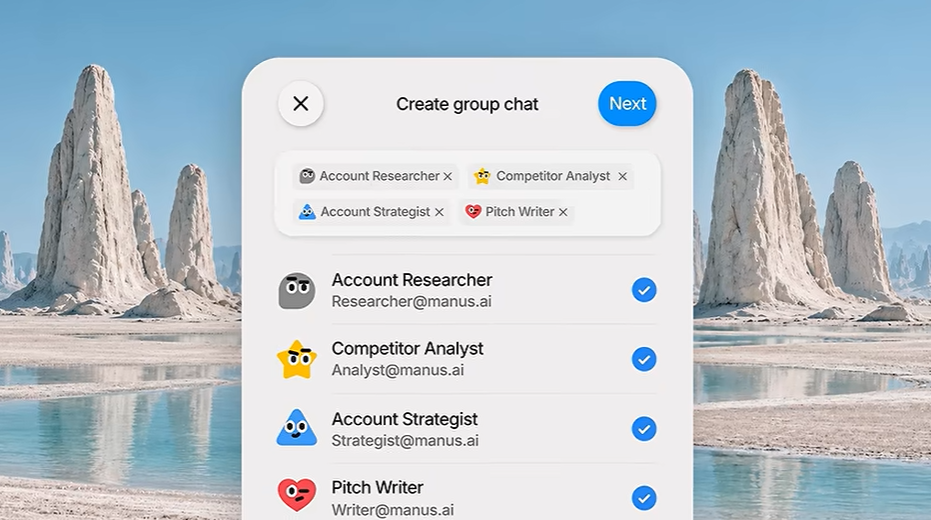
Anthropic’s new Claude Tag update, as detailed by VentureBeat in an exclusive interview, reveals a deliberate move beyond the single-user chatbot. The company’s head of product for enterprise argues that the bottleneck in enterprise AI is not intelligence but isolation: most people still use AI alone. The update lets its Slack agent read the full conversation and jump in unprompted. That is a profound change in user expectations. No longer will AI wait for a direct prompt; it will observe group context and act. Anthropic calls this “multiplayer AI.” The risk is obvious: an agent that interrupts or acts without being asked could cause friction, errors, or mistrust in team settings. But the upside is that AI becomes embedded in organizational memory rather than a series of disjointed queries. For US businesses, this could redefine what “productivity” means, but it also raises questions about consent, oversight, and the limits of autonomy - questions that have no settled answers.
The Research Rivalry: Capability as a Stepping Stone, Not an End
The story from TechCrunch about Inherent, a British lab founded by DeepMind alumni, adds another layer. Its AI “teammate,” Faraday, allegedly outperformed Anthropic and OpenAI at replicating research papers. The framing is telling: the benchmark is not a trivia test or a coding challenge but the ability to reproduce scientific work. That is a form of procedural knowledge, not just pattern matching. If true, it suggests that the next generation of AI will be judged on its ability to follow multi-step, context-heavy tasks that humans currently perform. For US research institutions and companies, this could accelerate innovation cycles, but it also intensifies competition with foreign labs. The story is a reminder that the center of AI capability is no longer exclusively American - and that the measure of success is shifting from “what can it answer” to “what can it do.”