ICEYE, the Finnish radar satellite company, has made an all-cash voluntary tender offer to shareholders of Italian rocket builder Avio, according to an announcement from an ICEYE subsidiary in Italy. Avio's board said it has taken note of the notice and is considering the proposal. Avio is controlled by the Italian defense conglomerate Leonardo.
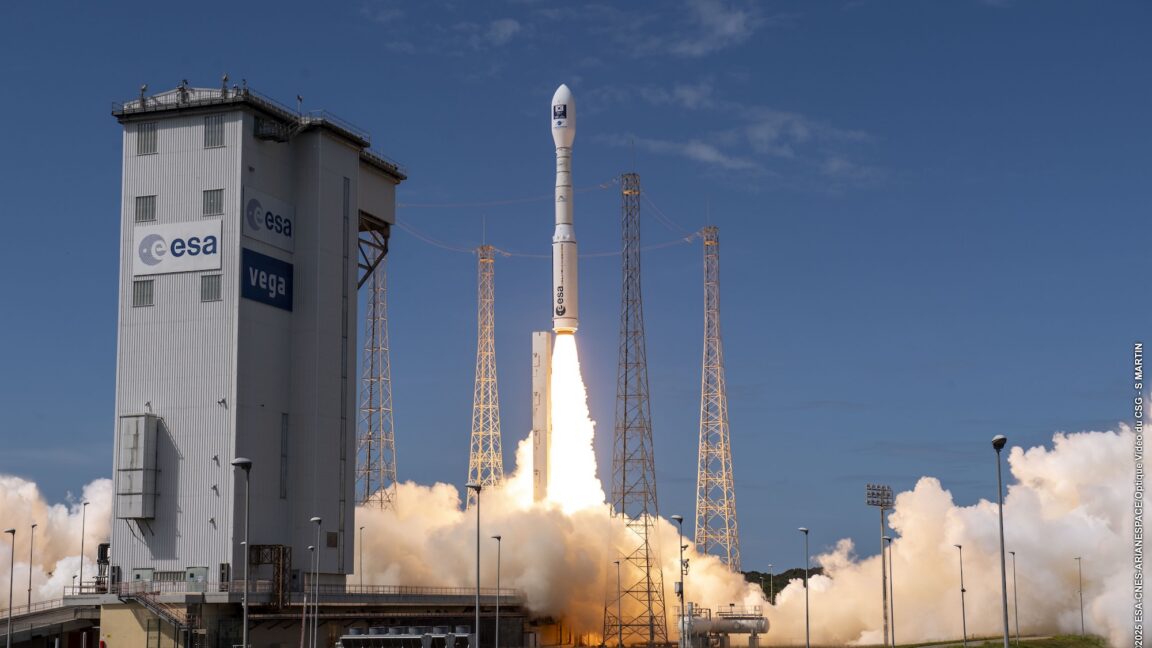
Avio builds the Vega C, a solid-fueled rocket that can carry up to 3.3 metric tons of payload to low-Earth orbit. The launcher has succeeded seven times in eight flights since 2022, following an earlier Vega version that compiled a 20-for-22 record since its 2012 debut. Avio leads the European consortium that produces the rocket and performs final assembly of its stages at a factory near Rome, and it recently brought marketing, sales and launch operations in-house after years of handing those duties to Arianespace.
ICEYE, which the Organization for Economic Cooperation and Development describes as Europe's most successful space startup, was valued at more than $12 billion after a June fundraising round. The company has built and launched 84 radar reconnaissance satellites and sells imagery to commercial customers and governments, including Ukraine, which uses it for targeting and tracking Russian troop movements. ICEYE has also sold turnkey satellites to Finland, Poland, Germany, Sweden, Portugal, Greece and the Netherlands.
ICEYE said it wants to combine with Avio to serve Europe's need for sovereign space and defense capabilities. CEO and co-founder Rafal Modrzewski said governments require control of critical space infrastructure and that pairing ICEYE's long-term capital with Avio's launch and propulsion capability would allow the companies to build, launch and operate sovereign space systems end-to-end in Europe. The deal would give ICEYE more access to launch services and Avio investment to raise production and flight rates for a rocket family that averages fewer than three flights a year.
The tie-up would follow a pattern set by US companies, where combining launch and satellite operations has proven advantageous. SpaceX's Starlink network and Falcon 9 rocket are cited as mutually reinforcing, and Rocket Lab expanded into satellite manufacturing after establishing its Electron rocket. Most US launch providers now have a role in satellite production or in-space services, with United Launch Alliance a notable exception.
A dedicated Vega C launch sells for approximately $55 million, just below the commercial price of a dedicated SpaceX Falcon 9, according to recent data. Nearly all of ICEYE's satellites have flown on Falcon 9 rideshare missions, which SpaceX intends to phase out after 2028; rideshare slots for satellites of ICEYE's size cost about $700,000. ICEYE has said it intends to work with Nokia on a low-Earth orbit constellation for European connectivity, particularly in defense and security, with a goal of beginning to launch 50 satellites per year starting in 2028.
More technology news from TechManNews.