Consumers shopping for a soundbar this holiday season face a market stretching from roughly $100 to well over $1,000, and the biggest jump in quality comes early. Moving from a TV's built-in speakers to an entry-level soundbar delivers the most noticeable improvement, after which buyers pay for more capable hardware, extra features and refinements that may be less apparent to the average listener.
At the low end, models under $100 are stripped down, with limited connectivity and fewer sound modes, and they cannot reproduce deep bass. Buyers in this tier typically get a 2.0 or 2.1 setup; the Hisense HS2100, at around $120, pairs two channels with a wireless subwoofer for fuller sound than a standalone bar. For just under $200, the Hisense HS5100 offers a 5.1-channel system with a dedicated subwoofer and satellite speakers that place audio behind the listener, though it does not support Dolby Atmos.
Mid-range systems add height channels and more elaborate processing. The Polk Signa S4, at around $449, is a 3.1.2 system, while Sony's Bravia Theater Bar 5 offers a 3.1-channel configuration with a dedicated subwoofer for $350 and virtualizes overhead and directional effects. Neither includes separate rear speakers. At the top of this band, the Hisense AX5140Q provides 5.1.4 channels with a wireless subwoofer, two satellite speakers and four upward-firing drivers, plus a graphic equalizer, independent channel adjustments and dialogue enhancement.
Higher price points bring more capable surround hardware. The Samsung HW-Q800F offers 5.1.2-channel audio with a wireless subwoofer and up-firing drivers for Dolby Atmos, using side-firing drivers for virtual surround because it lacks rear speakers. Samsung's 3.1.2-channel HW-QS700F adjusts automatically based on whether the bar sits on a TV stand or is wall-mounted. The JBL Bar 1000MK2 steps up to a 7.1.4 configuration with detachable, battery-powered satellite speakers, a subwoofer, upward-firing drivers, room correction and a graphic equalizer.
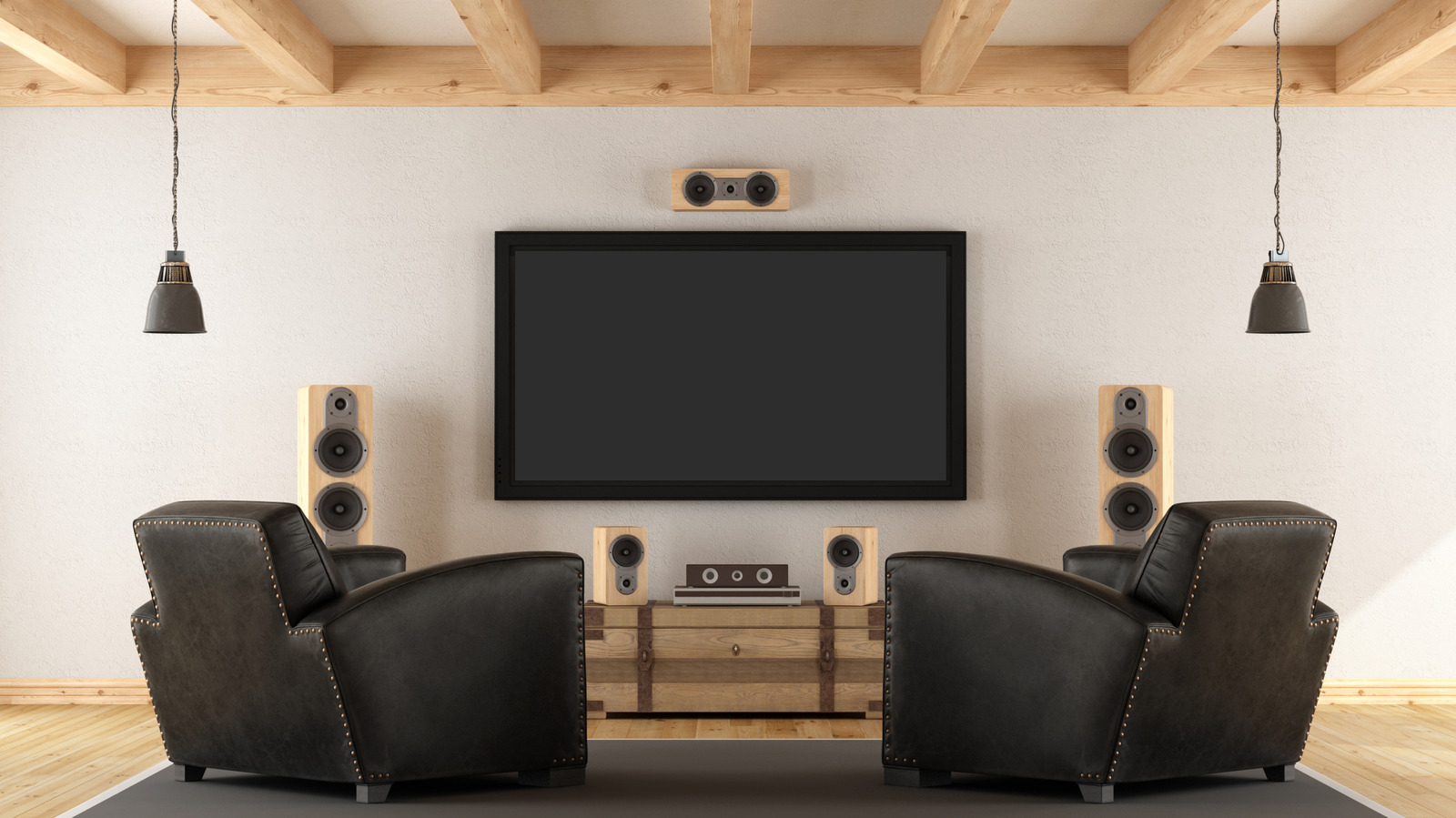
Buyers who want maximum control can turn to receiver-based home theater systems, in which an AV receiver sends audio to individual speakers. Home Audio Advice assembled a roughly $1,300 setup using a Yamaha RX-V4A receiver and a Klipsch Reference Cinema 5.1.4 speaker package, which includes four height-effect speakers usable after upgrading to a compatible receiver. Samsung's 11.1.4-channel HW-Q990D soundbar and LG's Dolby Atmos FlexConnect system offer surround experiences without traditional wired placement.
Sound accuracy separates inexpensive and premium speakers. An uneven frequency response emphasizes some frequencies while obscuring others, while balanced response sounds more natural. Better equipment also extends deeper into low frequencies, which is why a subwoofer matters, and maintains consistency at higher volumes. Room acoustics still limit what expensive gear can do. For clearer dialogue and better everyday TV audio, buyers likely need to spend no more than $150 to $200 on a basic 2.1 soundbar, which suits small and medium rooms.
More gadget news from TechManNews.