Vinci4D Inc. has raised $250 million in a Series B funding round that values the Palo Alto, California-based company at $1.5 billion. The round was jointly led by Advent, Temasek and Xora, with participation from several startup funds, including AMD Ventures. Vinci sells a software platform for engineering simulations, and the new capital arrives as hardware teams look for faster ways to test their designs.
Hardware engineers rely on simulations to uncover problems in product designs before they are built. A car designer, for instance, might simulate fog to see how adverse weather affects a vehicle sensor. Setting up those simulations has traditionally demanded highly specialized skills and large amounts of time, so many hardware teams use the technology only intermittently.
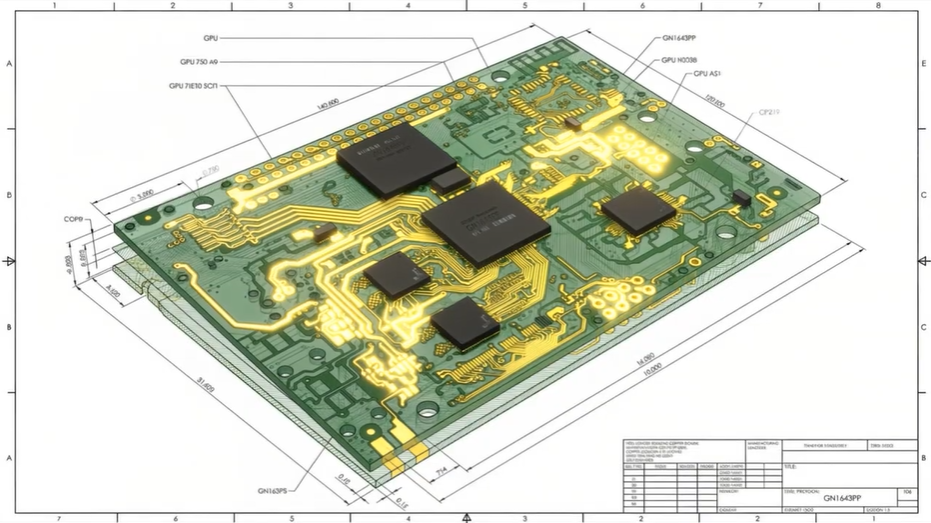
Vinci aims to change that by running simulations after every major change to a product blueprint. Detecting an issue the day after a design change, rather than two weeks later, shortens product development times. The company's first focus is accelerating chip projects, where its platform simulates the thermal properties of processors, memory modules and interconnects. A chip team could use it to study whether a graphics card might overheat while running near its peak frequency.
The platform runs on a physics-focused artificial intelligence model. Developers upload a CAD drawing of a chip and input related data, and the AI converts it into a simulation automatically. Vinci also handles meshing, the time-consuming step of breaking a product blueprint into many small three-dimensional shapes so the design can be processed faster than a continuous surface. It then uses custom graphics card kernels to speed convergence, the finalizing of simulation calculations.
Vinci measures simulation complexity in degrees of freedom, or DOFs, which are data points describing narrow physical observations such as how well a single transistor conducts heat. The company says its platform can complete simulations containing hundreds of millions of DOFs in a few minutes, workloads that usually take several hours or days. Co-founder and Chief Executive Hardik Kabaria said Vinci begins by letting engineers understand physical behavior while they are still designing, and is working toward systems that can identify what should change, combine increasingly complex engineering domains and help engineers create things they could not create before.
Beyond chips, Vinci plans to extend the platform's simulation capabilities to vehicles, aircraft and satellites. The company's chip work gives it an early foothold in the US semiconductor design market, where engineering teams face pressure to shorten development cycles.
More company and startup news from TechManNews.