The U.S. Space Force confirmed last month that the final two surviving satellites of the Defense Support Program have been retired, ending a military early-warning effort that stretched back more than half a century. The two spacecraft, presumed to be DSP-20 and DSP-22, took part in an on-orbit maneuvering exercise in early September. Independent orbital tracking showed both satellites then raised their orbits by a few hundred kilometers, a step typically linked to moving a spacecraft into a graveyard orbit above geostationary space. The Space Force statement marked the program's formal retirement.
The retired satellites trace their lineage to a top-secret payload launched in November 1970, which the U.S. government later identified as a Defense Support Program satellite. The first block of these satellites, launched from 1970 to 1973, weighed about 1 metric ton and carried roughly 2,000 infrared detectors apiece. Functioning as highly sensitive telescopes, each was placed in geosynchronous orbit to watch for the launch of a nuclear warhead. They became one of the central pillars of American military space power during the Cold War.
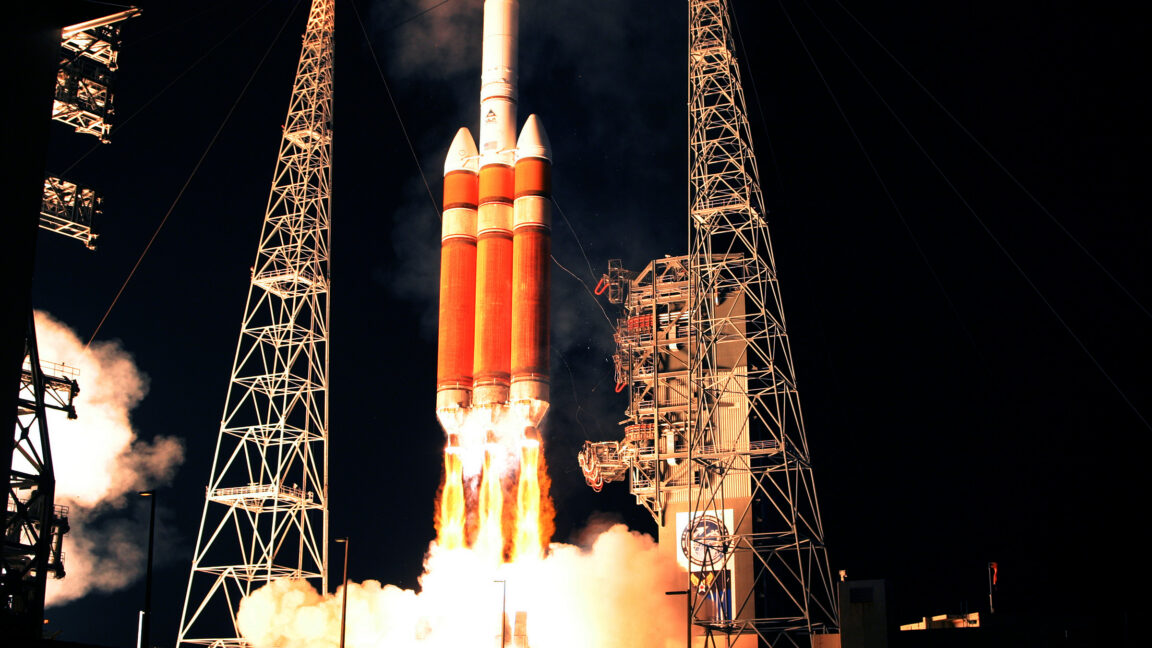
The program grew more capable over the decades. Each satellite eventually carried more than 6,000 infrared detectors and had a mass of about 2.5 tons. Originally built to spot Soviet intercontinental ballistic missiles, the satellites later proved useful in conventional warfare, including the detection of Iraqi Scud missile launches. They flew on a wide array of launch vehicles, from various Titan rockets to the Delta IV Heavy and NASA's space shuttle, with DSP-16 launching aboard Atlantis in 1991. Satellites in the program kept launching until 2007.
"The DSP constellation was foundational to the defense of our nation," said U.S. Space Force Col. Brandon Davenport, Mission Delta 4 Commander. He said the last two satellites capped more than a half century of space-based early warning. According to Davenport, the constellation provided deterrence throughout the Cold War and protected deployed warfighters from the Gulf War until their retirement last month.
The United States is not left without missile-warning coverage. In 2011, the military began launching a new generation of infrared satellites known as the Space Based Infrared System. Those satellites carry better sensors, allowing them to detect generally dimmer events and offer longer warning times. The military is also developing Next-Generation Overhead Persistent Infrared satellites, the first of which could launch within the next 12 months on a Vulcan rocket.
The Defense Support Program's long run reflected the broader transformation of spaceflight since its first launch. Titan IIIC rockets flew the early missions before the vehicle was retired in 1982 after dozens of launches. Various Titans kept launching from Space Launch Complex 40 until 2005, when the U.S. Air Force turned the pad over to SpaceX through a competitive process that United Launch Alliance hotly opposed. Cape Canaveral is now a Space Force station.
More technology news from TechManNews.