A Department of Energy laboratory is reviewing whether Chinese-made lidar sensors could introduce security vulnerabilities if widely adopted in vehicles across the United States. The Idaho National Laboratory is conducting the review, according to two people familiar with the effort, and the work is funded by a company or group of companies in the electric and autonomous vehicle industries. The identities of those backers are not clear. Several automakers and autonomous vehicle firms that have been reported to be considering Chinese lidar, including Rivian, General Motors, Ford, Kodiak, Lucid Motors, Nuro, and Uber, said they were not aware of the review. Nvidia, Zoox, and Aurora did not respond to questions about involvement.
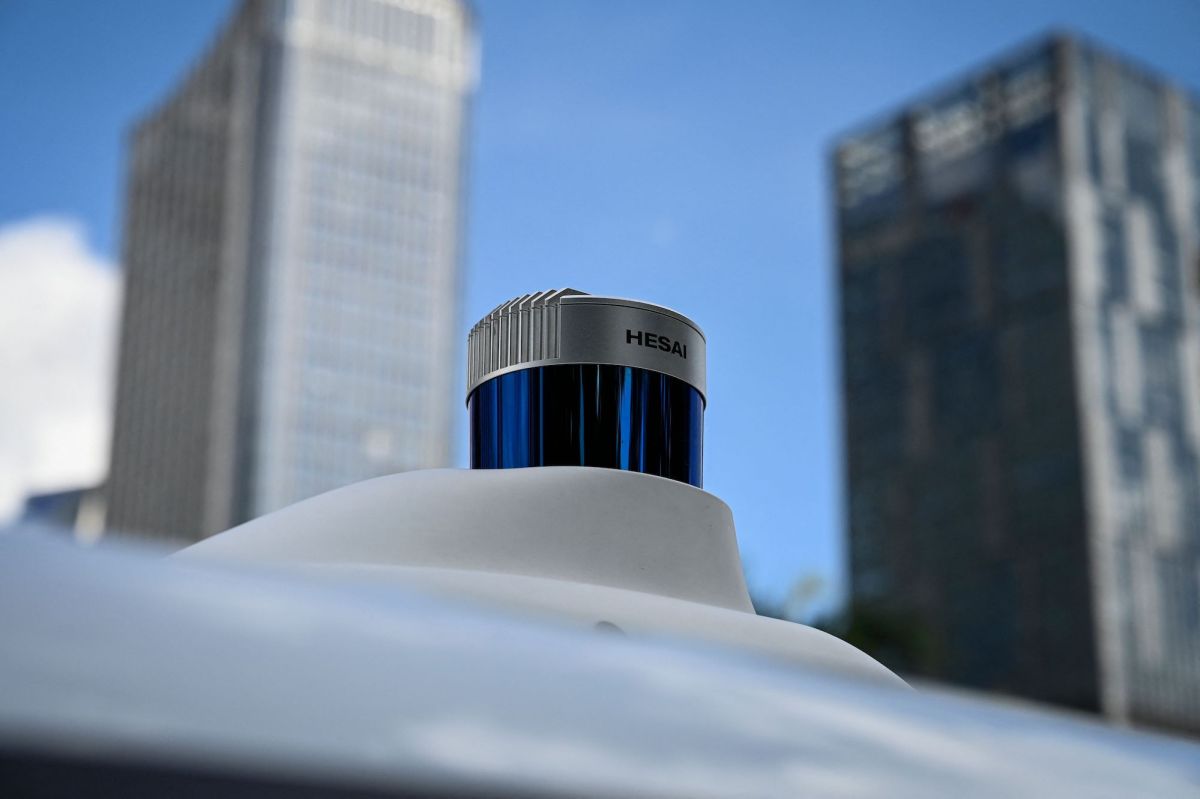
The Idaho National Laboratory declined to comment, with a spokesperson saying in June and again in July that the project was not something they could discuss with reporters. Chinese lidar suppliers Hesai and RoboSense did not respond to requests for comment. The review comes as lawmakers push bills to restrict Chinese lidar use on American roads. Senator Tammy Baldwin, a Democrat from Wisconsin, who is leading the Securing Infrastructure from Adversaries Act with Republican Senator Ted Budd of North Carolina, said her main worry is Chinese lidar being used for military or industrial espionage. She said the threat to American communities and national security cannot go unchecked, and that taxpayer dollars should not fund technologies that could spy on Americans. Congressman John Moolenaar, a Republican from Michigan, who co-sponsors a separate ban bill, has said he fears back doors could transmit information to Chinese interests.
The review is focused on cybersecurity risks, and possibly on giving Chinese lidar a clean bill of health, according to the two people familiar with it. Omer Keilaf, CEO of Israeli lidar company Innoviz, who said he had not known about the review before being asked, described two major cybersecurity risks. One is that sensors could be disabled en masse, disrupting moving vehicles and bricking stationary ones. Researchers have shown individual lidar sensors can be disabled with lasers, though it is unclear how China could cause widespread disruption of sensors used by robotaxis. Keilaf also said the detailed data lidar collects about its surroundings could be compressed and transmitted via a cellular chip, something he said would not be difficult for someone with intelligence experience to extract.
Keilaf also noted a supply chain risk, saying China’s government has deemed lidar strategically important. He said an automaker that builds its entire autonomous driving stack around a Chinese supply chain would face huge risk down the road. These concerns are relevant now because lidar costs have dropped dramatically in the last decade. The technology, which uses laser pulses to measure distances to nearby objects, was traditionally far more expensive than radar or cameras. Tesla has avoided it entirely, with CEO Elon Musk calling it a crutch and relying on cameras alone for autonomy.
Chinese firms like Hesai and RoboSense have scaled production and lowered prices, bringing a product that once cost as much as $75,000 down to a few hundred dollars in some cases. American lidar companies have struggled to match China’s economies of scale and lower costs, leading to consolidation and, in the case of Luminar, bankruptcy. That has pushed several U.S. automakers and autonomous vehicle companies to consider using Chinese lidar in their sensor suites. Rivian, which plans to build a version of its R2 SUV with a roof-integrated lidar sensor, is reportedly one of them. In March, CEO RJ Scaringe told Reuters the company was considering making its own lidar in the U.S. using Chinese technology, possibly through a joint venture.
More cybersecurity news from TechManNews.