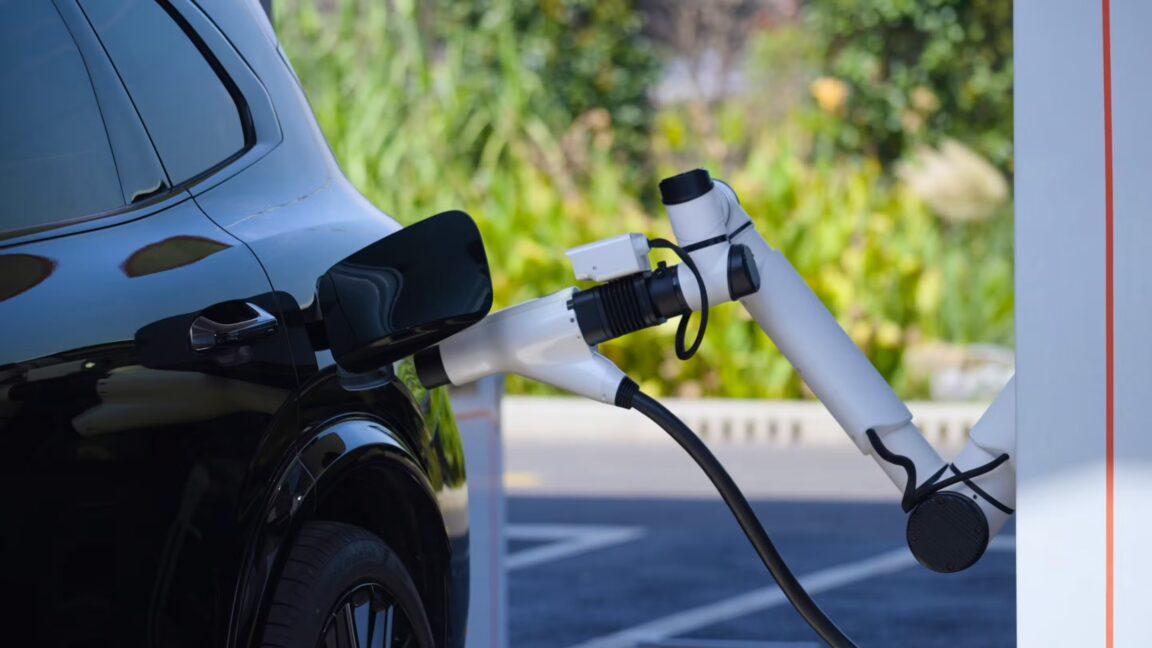
Geely has introduced a battery that can charge at rates up to 2.2 MW, reaching 70 percent capacity from a 10 percent state of charge in 4.5 minutes. A full charge from 10 to 98 percent takes 8 minutes and 40 seconds, according to the company. The Chinese automaker says the pack relies on AI-driven predictive thermal management, maintaining an average pack temperature of 55 degrees Celsius and a peak of 65 degrees Celsius during charging.
Geely claims its AI system counters the wear that rapid charging normally causes by sending micro pulses of current to reactivate lithium ions that build up at the negative electrodes. According to the company, this extends battery life by 20 percent. The pack has been tested in the Zeekr 001 and the Lynk and Co 10, leaving open the possibility that a Volvo or Lotus model could adopt the technology later.
The figures surpass those of BYD, which showed a product in March capable of going from 10 to 70 percent in 5 minutes and from 10 to 97 percent in 9 minutes. CATL, however, remains the benchmark: in April it announced an LFP battery that charges from 10 to 80 percent in 3 minutes and 44 seconds, and from 10 to 98 percent in 6 minutes and 27 seconds.
Charging infrastructure in the United States trails far behind those megawatt figures. All but the newest Tesla Superchargers max out at 250 kW and 400 V. Among 800 V chargers, Electrify America peaks at 350 kW, IONNA's newest machines are rated for 400 kW, and ChargePoint sells a 600 kW charger. American EVs are similarly limited: Hyundai and Kia 800 V models such as the Ioniq 5 and EV6 top out near 240 kW, and the Porsche Taycan accepts up to 320 kW rather than the full 350. Newer 800 V German EVs, including the BMW iX3 and Porsche Cayenne, are arriving with 400 kW DC charging capability.
Megawatt charging in the US remains confined to heavy-duty vehicles such as buses and semis. ChargePoint CEO Rick Wilmer said that pairing two of the company's Express Solo 600 kW chargers on a shared DC bus allows 1.2 MW to flow through a single port. He noted that neither a NACS nor a CCS1 connector can handle that much power, but an MCS connector can, and that this capability is part of the roadmap for the Express architecture, with the Solo as its first product.
More hardware news from TechManNews.