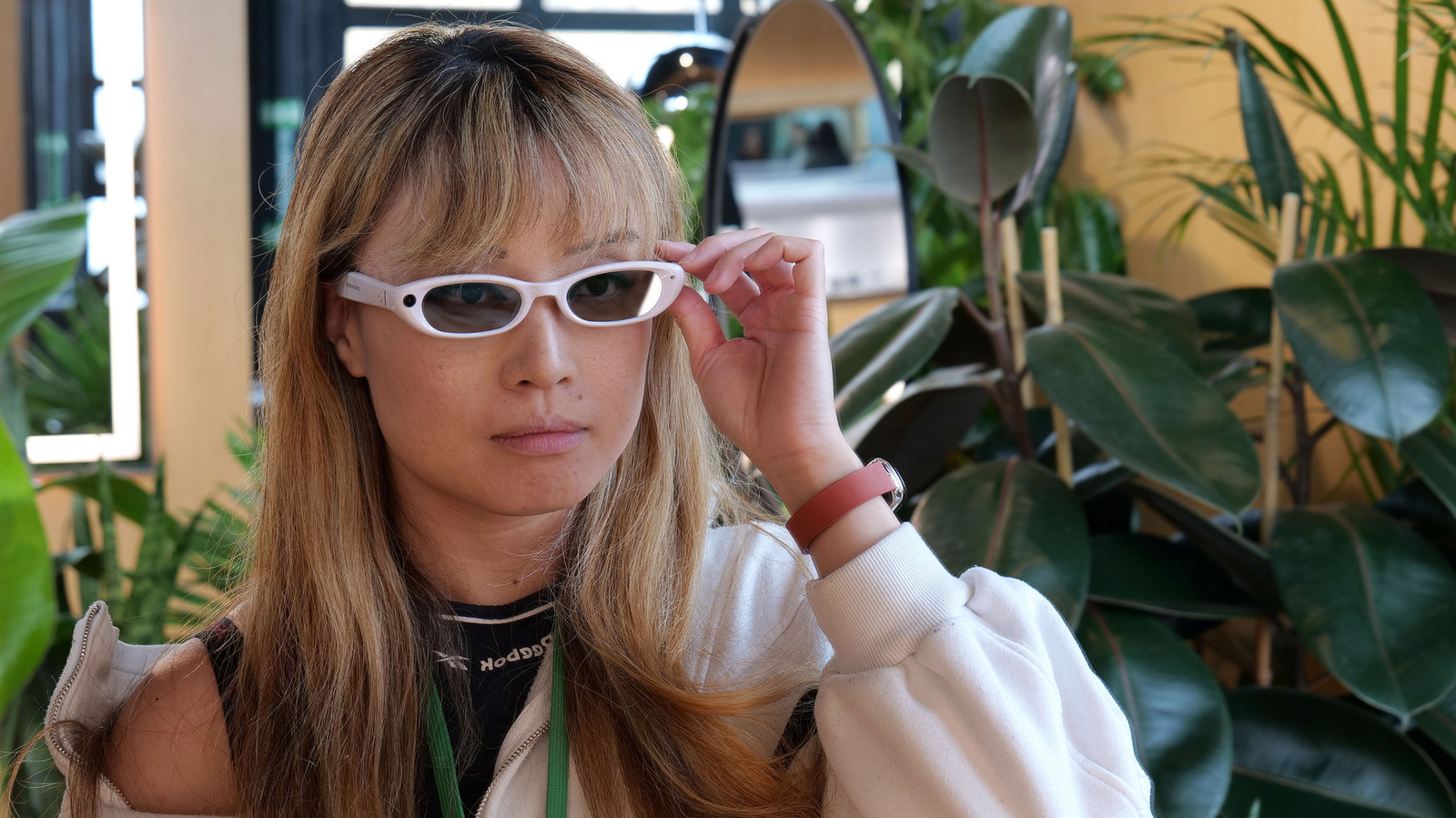
Google is extending its Android XR platform into lightweight smartglasses through partnerships with Warby Parker and Gentle Monster, giving the company its own answer to rivals such as the third-generation Ray-Ban Meta line. The first devices built on Android XR arrived last year with Samsung's Galaxy XR headset. In this new family of eyewear, Google supplies the operating system, Samsung handles the cameras, microphones and touch sensors, and the two eyewear brands are responsible for frame design, lenses, sales and customer support.
The division of labor lets each company focus on its specialty, and the frames are available in a range of styles and color combinations. Gentle Monster's models cost $449 and Warby Parker's cost $395, though both share the same technology: 2GB of RAM, 64GB of storage, a 12MP camera capable of recording up to 3K video, stereo speakers, far-field microphones and a touch sensor. Battery life is about nine hours per charge, and the carrying case holds enough power for multiple full charges. The glasses work with both Android devices and iPhones with feature parity, and no paid Gemini plan is required.
The glasses borrow familiar controls from competing products. A button near the right temple takes a photo with a short press and records video with a long press, and a touch sensor in the right arm handles volume, audio pausing and dismissing Gemini. The glasses connect to a phone over Bluetooth or Wi-Fi for music streaming, notifications, messages and supported apps, while Gemini can be summoned by voice or by a long press on the touch panel.
Gemini's persistent memory between conversations allows more natural back-and-forth dialogue, with users able to specify how long the assistant retains context. Combined with computer vision, the AI can read a physical invitation card and add it to a calendar, suggest a smoothie recipe from ingredients in view, estimate food quantities and add items to a grocery list. The microphones are directed in a cone-shaped space in front of the wearer, which supports live translation that can switch speakers as the user looks at someone else and adjust output to resemble the original speaker's voice.
Google has built privacy measures into the hardware and software. Each pair carries an LED indicator that prevents photos and videos when covered or disabled, and livestreaming video directly from the glasses is not supported. Google says images and information sent to Gemini stay on the device and will not be used to train AI or for ad targeting.
The main limitation is the absence of a built-in display, which means Google has no direct rival to the Meta Ray-Ban Display glasses yet. Using the glasses also depends heavily on talking to Gemini. Even so, the audio-first approach offers more than a stepping stone toward display-equipped eyewear.
More hardware news from TechManNews.