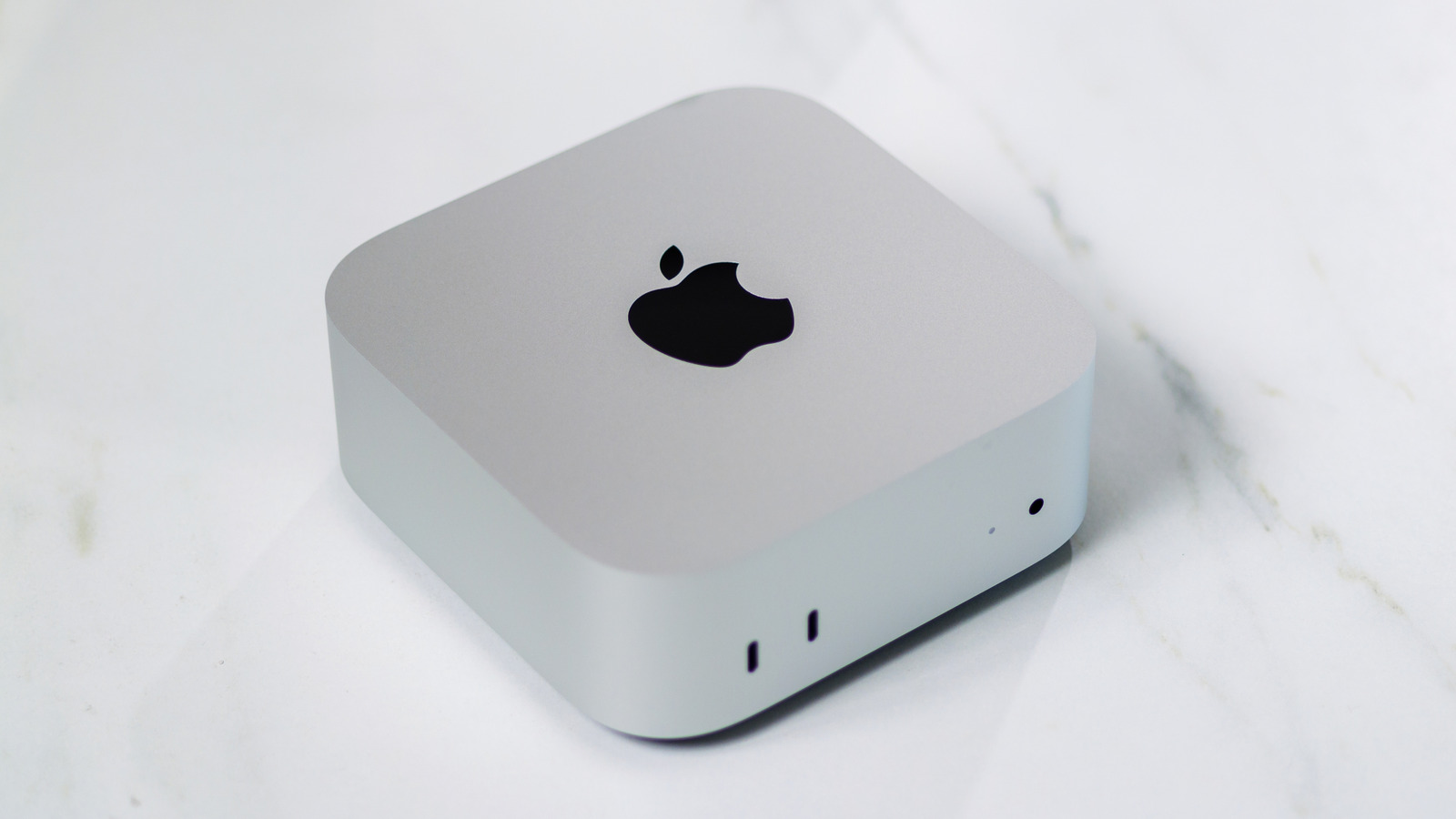
Apple's Mac mini continues to hold its position as one of the more affordable entry points into the company's ecosystem, with the base model priced at $900 and equipped with Apple's M6 processor. That chip outpaces the needs of most everyday applications, though demanding software such as DaVinci Resolve or Resident Evil can still push it. The main shortfall for buyers is the 256GB of base storage, which can fill quickly with synced photo and video libraries.
Cheaper Mac laptops exist, but they arrive with tradeoffs. The MacBook Neo uses the same A18 Pro processor found in the iPhone 16 Pro and includes just 8GB of RAM. Stepping up to the MacBook Air raises the price to $1,100 while still providing an M5 chip and 16GB of RAM. A MacBook Pro sits far outside the affordable range, leaving the mini as the lower-cost option among Apple computers.
Much of that gap comes down to what Apple does not include in the mini. There is no display, no Center Stage camera and no keyboard or mouse or trackpad in the box. A replacement MacBook display alone can run several hundred dollars outside AppleCare coverage, and Apple must also pay for the panel's frame, hinge and cabling. The mini also skips a MacBook battery, which Apple services for between $150 and $250 including labor, and needs only an AC power supply.
Engineering differences add to the cost divide. While the mini uses some laptop-style components, it does not have to be thin, drop-resistant or maximally power-efficient, and its cooling relies on a large circular vent at the base that would not work on a MacBook. Apple's ability to charge $700 for the Neo, against the iPhone 16 Pro's original $1,000 price, reflects how mobility and miniaturization carry their own expense.
The mini makes the most sense for users who work from a TV or already own a monitor and desktop peripherals. In that setup, its two USB-C and three Thunderbolt ports exceed what a MacBook or even a MacBook Pro offers without a dock. A MacBook Air may still be the most affordable choice for anyone who needs to move between home and mobile use.
Configuration options set the mini apart further. Swapping parts is not possible the way it is on a Windows PC, but a fully loaded mini reaches $6,800 with an M5 Pro, 64GB of RAM, 8TB of storage and 10 Gbps Ethernet. Reducing storage to 512GB lowers the price to $3,000, at which point a Mac Studio with an M5 Max chip and 36GB of RAM starts at $2,500.
More gadget news from TechManNews.