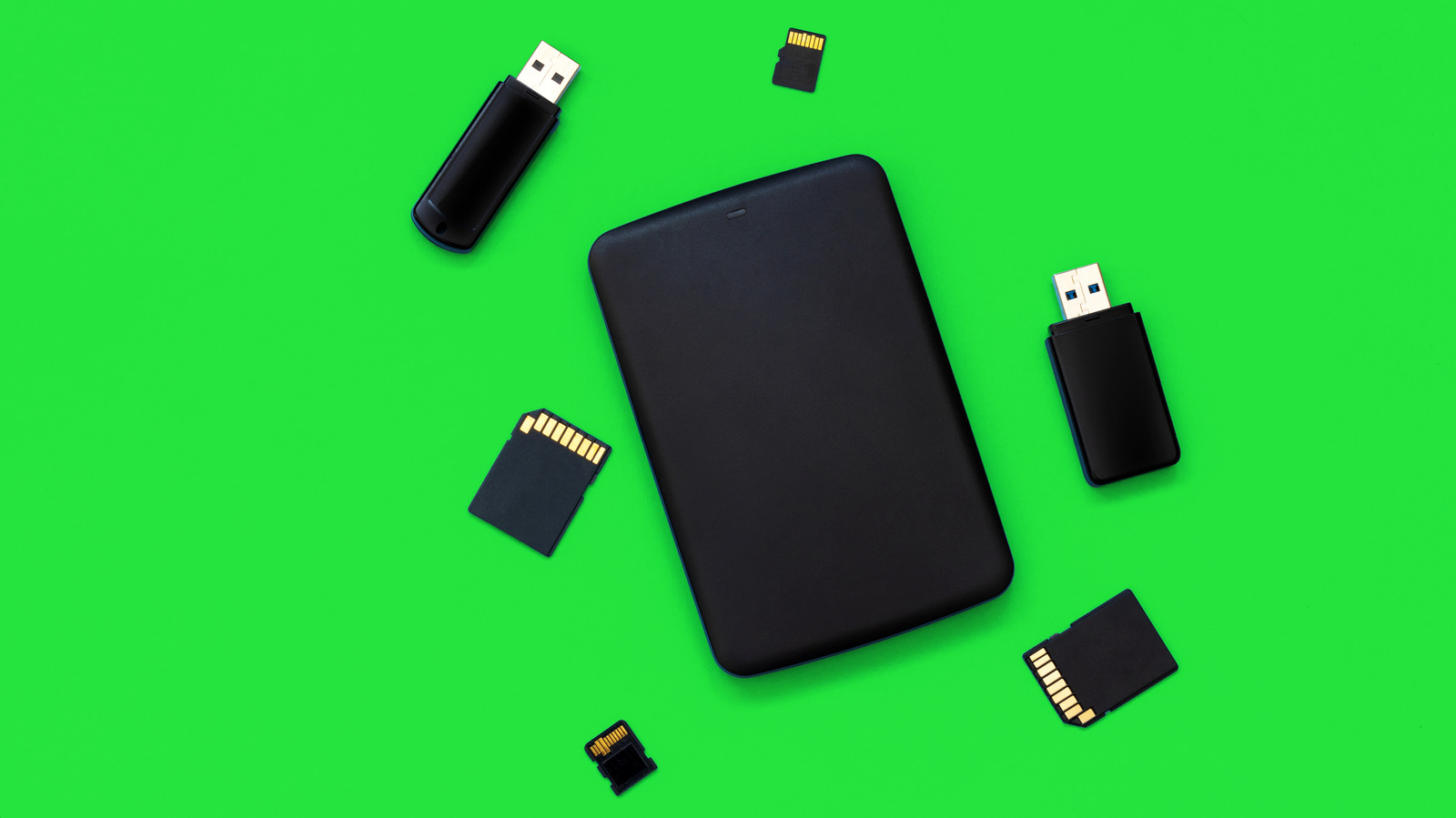
Flash memory remains a staple across US consumer gadgets, from smartphones to SSDs, but its long-standing trade-offs persist even as the technology evolves. NAND flash stores data without power and packs substantial capacity into small spaces, which has made it the standard for solid-state drives, memory cards, and portable electronics. Its main drawbacks have never fully faded: it costs more per gigabyte than a hard drive, degrades with repeated writes and erases, and trails system RAM in speed. Most users rarely notice these limits because modern storage controllers perform extensive background maintenance to compensate.
The core of NAND is memory cells that hold electrical charge in an insulated layer, with voltage states read as data. Recent designs have pushed density by stacking cells vertically in 3D structures and by storing three or four bits per cell, known as TLC and QLC. These approaches increase capacity in roughly the same footprint and lower the cost per gigabyte. The gains have made flash particularly attractive for portable devices, since SSDs lack spinning platters and mechanical read heads, offering lower latency and better resilience to bumps than hard drives. Many US consumers upgrading an older PC to an SSD notice the immediate improvement in boot times and application loading.
Flash still cannot replace system RAM, which is much faster and handles temporary working data, while NAND serves as persistent storage. The term flash ROM is misleading because flash can be erased and rewritten. Each NAND cell supports a limited number of program-and-erase cycles, and storing more bits per cell narrows the electrical margin between data states. That is why QLC NAND generally offers lower endurance and performance than simpler designs.
Modern SSDs mitigate these limits through controller-driven housekeeping. Wear leveling distributes writes across cells, error correction identifies and retires unreliable blocks, and spare capacity is maintained. TRIM and garbage collection address the quirk that data can be written in small pages but erased only in larger blocks. This substantial background work pushes endurance concerns into the background for most consumers. Samsung, for example, warrants its 1TB 990 Pro for five years or 600TB of writes, though it does not claim the drive stops at that threshold and still recommends backups.
Price remains a less cooperative factor. Hard drives still offer cheaper bulk storage for backups, large media libraries, and other speed-insensitive tasks. TrendForce forecast NAND contract prices rising 70 to 75 percent quarter over quarter in Q2 2026, followed by another 10 to 15 percent increase in Q3, citing tight supply and demand from AI and data centers. These cost pressures affect US buyers of flash-based storage.
Proposed replacements have not unseated NAND. Phase-change memory was discussed as a flash alternative as early as 2006, and Intel later positioned Optane between DRAM and NAND as faster and more durable, but Intel wound down Optane in 2022. Research continues into MRAM, ferroelectric memory, and other options, yet no clear successor has emerged. NAND itself keeps advancing, with commercial 3D structures already exceeding 300 layers, indicating the technology remains in active development.
More gadget news from TechManNews.