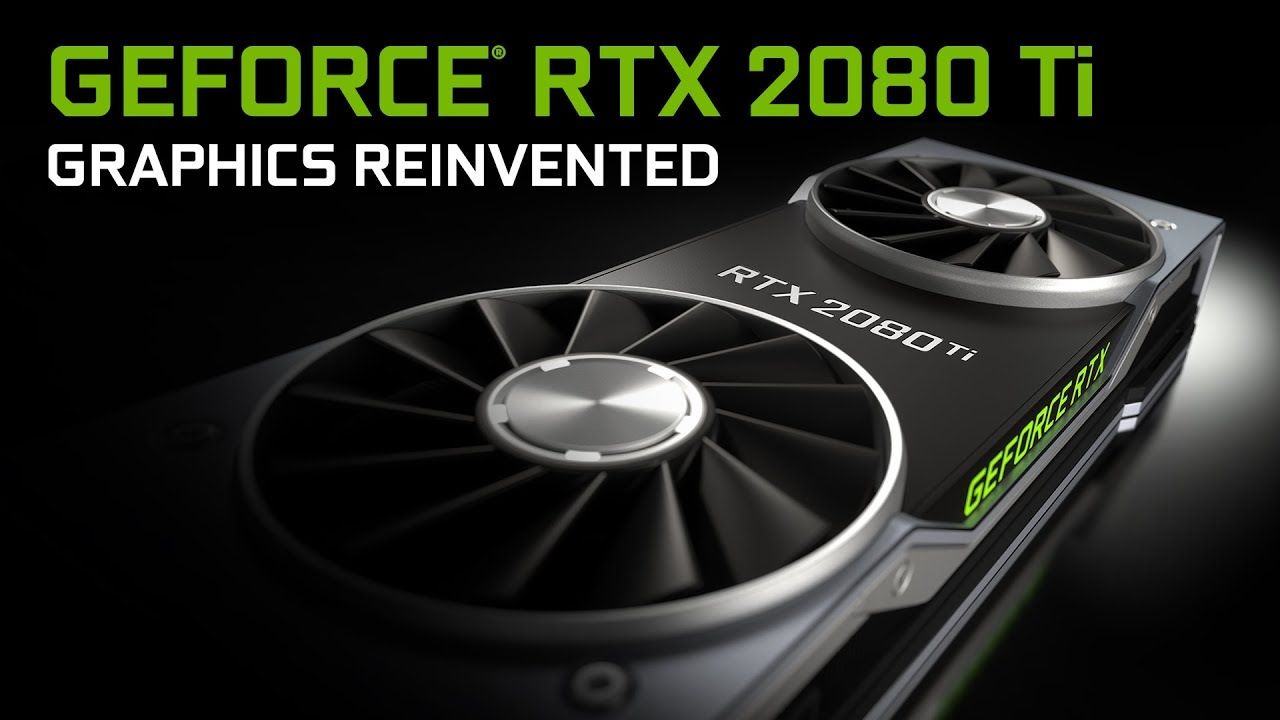
Nvidia marked the arrival of its Turing architecture for PC gaming graphics with the GeForce RTX 2080 and RTX 2080 Ti in 2018, hardware that introduced real-time ray tracing as a consumer feature. In a blog post published a month before release, Nvidia CEO Jensen Huang described Turing as the start of a new golden age of gaming, saying the realism it enabled was something most people expected to remain a decade away. He also said that once someone sees an RTX game, they cannot go back.
The launch suffered from a shortage of games that made ray tracing worth using. For months after release, only a handful of titles demonstrated the feature, with Battlefield V, Metro Exodus, and Shadow of the Tomb Raider among the early showcases that drew attention. Reviewers and players spent considerable time examining the visual differences in those games rather than adopting the technology broadly. Many gamers remain indifferent to ray tracing today and are unwilling to accept the performance cost it imposes, even on current mainstream graphics cards from Nvidia, AMD, and Intel.
Pricing was a central point of criticism at launch. A review of the RTX 2080 Founders Edition found the card faster than the GTX 1080 Ti but noted it cost $100 more than that earlier flagship. Founders Editions carried a premium over base models from board partners at the time, so the RTX 2080 FE listed at $799 while cards from Asus, Colorful, EVGA, Gainward, Galaxy, Gigabyte, Inno3D, MSI, Palit, PNY, and Zotac were available at $699.
The RTX 2080 Ti drew a more favorable review, though the conclusion stated that its $1,200 price tag was out of reach for most gamers. The 71 percent price increase over the GTX 1080 Ti did not match the roughly 26 percent performance gain. The card ran about 20 percent faster than the pro Titan V in gaming and typically consumed around 280W during play, with benchmarks covering Tom Clancy's Ghost Recon, The Witcher 3, and World of Warcraft: Battle for Azeroth.
Eight years on, real-time ray tracing has become popular enough that consoles and mobile games use and promote it, and ignoring it risks falling behind. Adoption has nonetheless been slow, and additional layers of technology such as DLSS were needed to make ray tracing accessible to budget and mainstream gamers. Turing has since dropped off Tom's Hardware's graphics card hierarchy. The following generation RTX 3070 launched at $499 and delivered performance close to the prior-generation $1,199 flagship, a period also marked by the cryptomining craze.
More hardware news from TechManNews.