The Ethernet specification was first drafted on this day in 1980, according to the hardware publication Tom's Hardware. The draft emerged from an industry collaboration known as DIX. Before Ethernet existed, computer manufacturers were reluctant to build local area network connectivity directly into their machines. According to the report, companies viewed it as wasteful to integrate a single type of network adapter that might not work with the other networked computers and equipment an organization used.
To encourage Ethernet's adoption across the industry, DIX let any vendor use the specification in its own hardware implementations. Ethernet has since been adjusted, refined and improved to stay competitive and relevant. As it arrived in 1980, the technology ran over coaxial cable wiring and offered a top speed of 10 Mbps. Five years later, it shifted to adapters fitted with BNC connectors.
The specification reached another milestone in 1990, when the first RJ45 implementation appeared alongside the introduction of 10BASE-T twisted-pair cabling. The RJ45 connector still identifies Ethernet ports today. Even with that new cabling, throughput remained at 10 Mbps at that stage, the report noted.
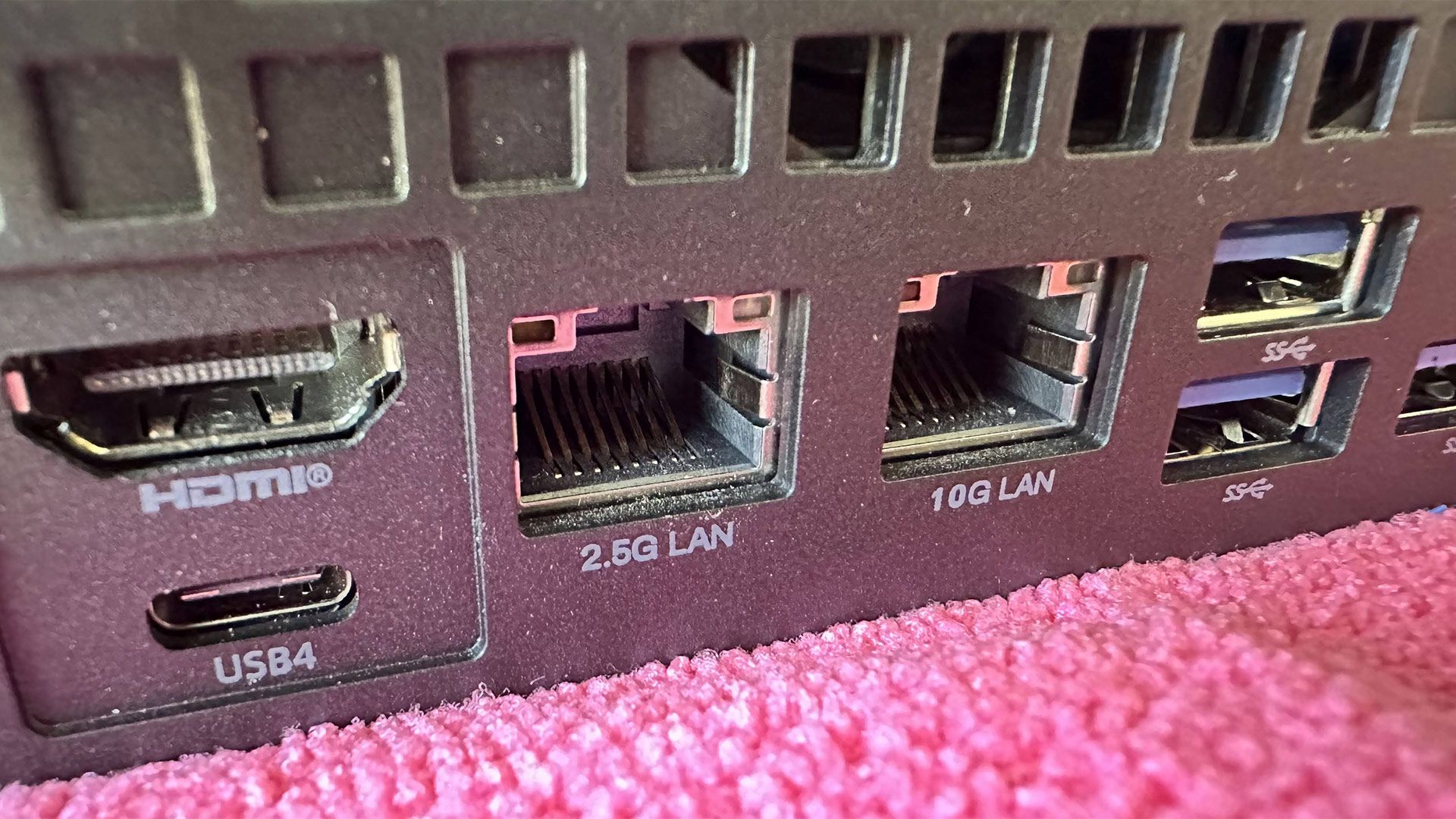
Speeds then increased tenfold, reaching 100 Mbps in 1995. Only four more years passed before the next tenfold jump, with the debut of Gigabit Ethernet at 1 Gbps. For buyers of PCs in the current market, Ethernet ports labeled 2.5G and 10G are now commonly seen. To take advantage of a 10G link, Cat6a or better cabling is typically recommended for reliable connections, according to the report.
Data centers, meanwhile, run equipment connected through Ethernet protocol links of 800 Gbps and above over advanced fiber optics. Despite the generational advances delivered by Wi-Fi 7, wired Ethernet is still favored for speed, low latency and stability, the report said. Those qualities are desirable for enthusiasts, home lab users and gamers.
That preference persists even on small form factor PCs and laptops that ship with the latest Wi-Fi but no RJ45 networking port. Some users in that situation may choose to connect a USB Type-C to RJ45 Ethernet dongle when they are at home or in the office where wired networking is available. The dates and figures come from Tom's Hardware's retrospective on the specification's drafting.
Tom's Hardware also directs readers to follow it on Google News or add it as a preferred source for its latest news, analysis and reviews. The article carries a byline from Mark Tyson, a news editor at the publication. Tom's Hardware notes that Tyson covers the breadth of PC tech, from business and semiconductor design to products at the edge of reason.
More hardware news from TechManNews.