Taiwan’s military reported a failed test flight of a prototype rocket intended for a future satellite launch vehicle. The National Chung-Shan Institute of Science and Technology said the rocket veered off course shortly after liftoff Wednesday, triggering its self-destruct mechanism. The agency reported no injuries or property damage, with debris falling into a planned safety control zone near the southern tip of the island. Details are scarce, but the flight likely involved a sub-scale suborbital version of the military’s planned solid-fueled launcher for small payloads in low-Earth orbit. Separately, the civilian Taiwan Space Agency is developing a liquid-fueled launcher that could reach orbit in the early 2030s.
South Korea’s Innospace suffered its second consecutive launch failure, this time with its Sebit multipurpose suborbital rocket, designed to carry payloads to 100 kilometers altitude. The rocket failed seconds after liftoff from a Brazilian spaceport, spinning out of control. That mirrors the December failure of Innospace’s Hanbit-Nano orbital rocket from the same site, which also spun out of control shortly after launch.
Commercial satellite operators are increasingly worried about losing access to SpaceX’s Falcon 9 rocket. Ars Technica reports that SpaceX is eager to retire Falcon 9 in favor of the larger, still unproven Starship, and may focus on its own payloads, including Starlink V3 satellites and orbital data centers. A Pez-style satellite dispenser optimized for Starlink suggests where the company’s priorities lie. Customers are already having trouble buying launches after 2028, with one source saying SpaceX told the US government it intends to end commercial launches after that year, though it may continue federally contracted Falcon 9 missions. This uncertainty has made it hard for satellite startups to plan around the workhorse rocket.
Ukraine confirmed it struck Russia’s Progress Rocket Space Center in the Samara region using ground-launched Flamingo cruise missiles. President Volodymyr Zelenskyy said the facility, a key Roscosmos enterprise involved in electronics production, was hit. The Progress Center assembles Russia’s Soyuz-2 and Soyuz-5 rockets as well as military satellites. Soyuz-2 is the principal rocket for Russian human spacecraft launches, raising potential spillover concerns for the International Space Station.
China has now recovered a second orbital-class rocket booster, as LandSpace’s Zhuque-3 lifted off from Jiuquan Satellite Launch Center on Tuesday. The medium-lift rocket placed a satellite into low-Earth orbit, and its first stage landed downrange in the Gobi Desert. This was the second flight of Zhuque-3, after the booster crash-landed in December. The achievement follows China’s first booster recovery of a Long March 10B in July. Chinese companies collectively launch about half as often as SpaceX, but their move into reusable rockets could change that.
New research published in Economics Letters quantifies America’s growing launch dominance. Researchers from the UK and Italy found the cumulative payload to orbit by nation shows the United States pulling far ahead of Russia in the last decade, thanks to Falcon 9’s high cadence and reuse. Launch costs in Europe are now three times higher than in the US. The average cost per kilogram to orbit is $3,225 in the US, versus $5,287 in Japan, $5,809 in China, $6,682 in Russia, $9,897 in Europe, and nearly $15,000 in India.
The European Space Agency has dropped plans for the Ariane 6 Block 3 upgrade, which would have introduced a carbon-fiber reinforced plastic upper stage. An ESA spokesperson said development continues on Block 2 technologies, including larger solid rocket boosters, and an orbital transfer vehicle named Astris will be available around 2029. The lightweight Icarus upper stage was halted after failing to win support from member states. The decision was first signaled in a presentation on a proposed robotic mission to Saturn’s moon Enceladus, whose team had assumed Ariane 6 Block 3 would be available for launch in the 2030s.
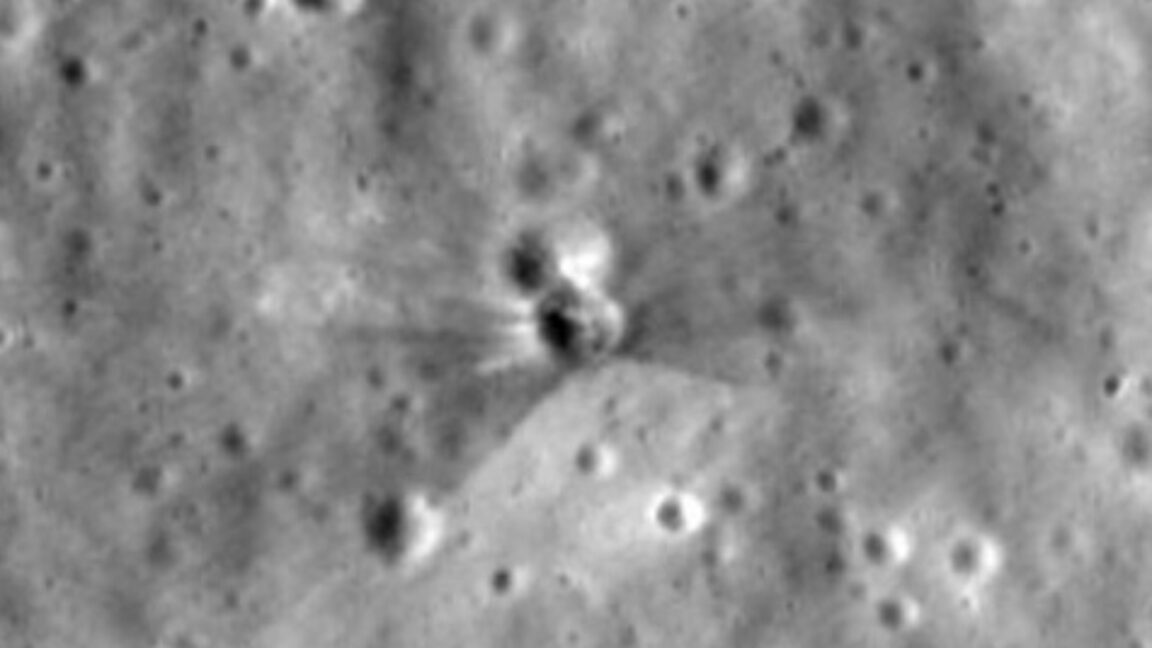
NASA’s Lunar Reconnaissance Orbiter released images this week showing a fresh impact scar from a spent Falcon 9 rocket body near Einstein Crater on the Moon’s western limb. The impact is visible in narrow-angle camera views from the spacecraft.
More technology news from TechManNews.