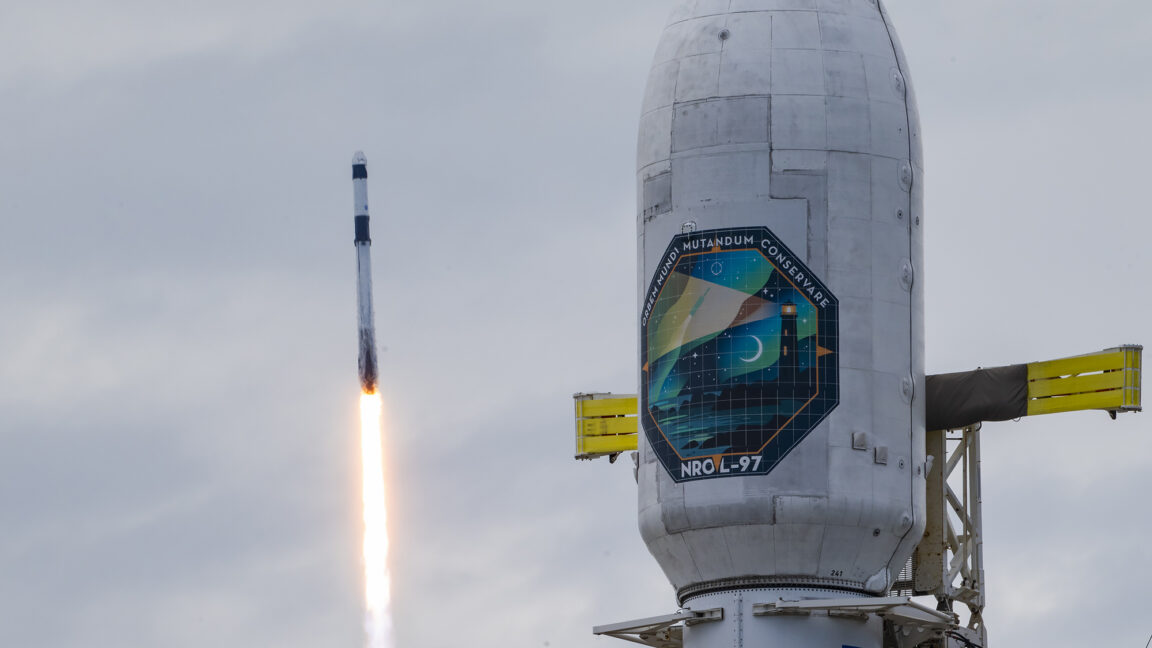
SpaceX launched its Starship rocket to low-Earth orbit for the first time this week, a milestone that took 14 test flights to reach. The Monday morning flight from South Texas saw the super-heavy vehicle’s upper stage push its Raptor engines to orbital velocity, after previous flights intentionally flew suborbital trajectories. Those earlier launches were slowed so Earth’s gravity would pull the vehicle back into the atmosphere before it could complete a full lap around the planet, with safety concerns about stranding the rocket in space. Following several successful suborbital flights, SpaceX officials decided this launch should go all the way to orbit.
The flight also deployed the first 26 next-generation Starlink V3 satellites, which SpaceX said unlocked significant growth potential for the broadband network. The launch was the 14th test flight of the rocket. Starship had previously reached 99 percent of the way to orbit before this week’s success.
Rocket Lab signed its largest Electron launch service agreement to date, a 20-mission deal with Japanese radar Earth-imaging company Synspective, according to Aviation Week & Space Technology. The agreement extends Synspective’s total bookings with Rocket Lab to 47 launches, including 13 already flown. Electron has launched 13 of Synspective’s StriX radar satellites since 2020, with the most recent flight occurring Friday, September 25. Rocket Lab founder and CEO Peter Beck said signing 20 launches in a single deal reflected confidence in Electron’s launch cadence, mission reliability, and orbital precision.
In other space sector news, Portuguese space technology business Omnidea acquired the assets and intellectual property of Scottish rocket maker Orbex, which collapsed earlier this year, the Scotsman reported. Omnidea plans to establish its UK operations at Orbex’s former manufacturing facility in Scotland and will bring on an initial team of ex-Orbex employees, with further recruitment planned as operations develop. Omnidea, a former Orbex partner and a supplier of propulsion, fluid control, avionics, and thermal management components in the European space industry, said it will use the Scotland base as a center for structures development and fabrication and as a hub for flight and ground system electronics. Orbex’s Prime rocket, which never reached a launch pad, remains dead.
SpaceX launched NASA’s Crew-13 mission Thursday from Cape Canaveral Space Force Station in Florida, sending four crew members to the International Space Station for a six-month expedition. A Falcon 9 rocket and Dragon spacecraft lifted off from Space Launch Complex-40 at 11:10 am EDT, and the crew reached orbit nine minutes later to begin closing in on the station for docking Thursday evening. It was SpaceX’s 21st human spaceflight launch. Commander Jessica Watkins became the first Black woman to lead a mission into space, and Canadian astronaut Joshua Kutryk flew while he and his wife expect their third child later this year. The launch was delayed several weeks to fix a leaky valve on Dragon’s propulsion system, a repair that involved cutting out the suspect valve and welding in a new one.
Canada Rocket Company said it is skipping the small launch segment and moving directly to a medium-lift rocket, following several US launch providers. CEO Hugh Kolias said in an interview with Ars that advice from roughly 150 engineers, from the director of Starship engineering to entry-level personnel, indicated a smaller rocket would not de-risk a development program. The company’s R-2 rocket resembles SpaceX’s Falcon 9 in renderings, with nine engines and landing legs pointing toward future first-stage reuse, and could carry up to 12.5 metric tons to low-Earth orbit. Kolias said the company could be ready to launch by 2032.
SpaceX also flew a Falcon 9 rideshare mission from Vandenberg Space Force Base, California, on Thursday afternoon, carrying 130 payloads to a polar Sun-synchronous orbit on Transporter-18. It was SpaceX’s second launch of the day, following Crew-13 from Florida. Customers ranged from Google, with an artificial intelligence prototype, to Starfish Space, alongside remote sensing companies Planet Labs and ICEYE, and included a methane-tracker and pharmaceutical manufacturing labs.
More technology news from TechManNews.