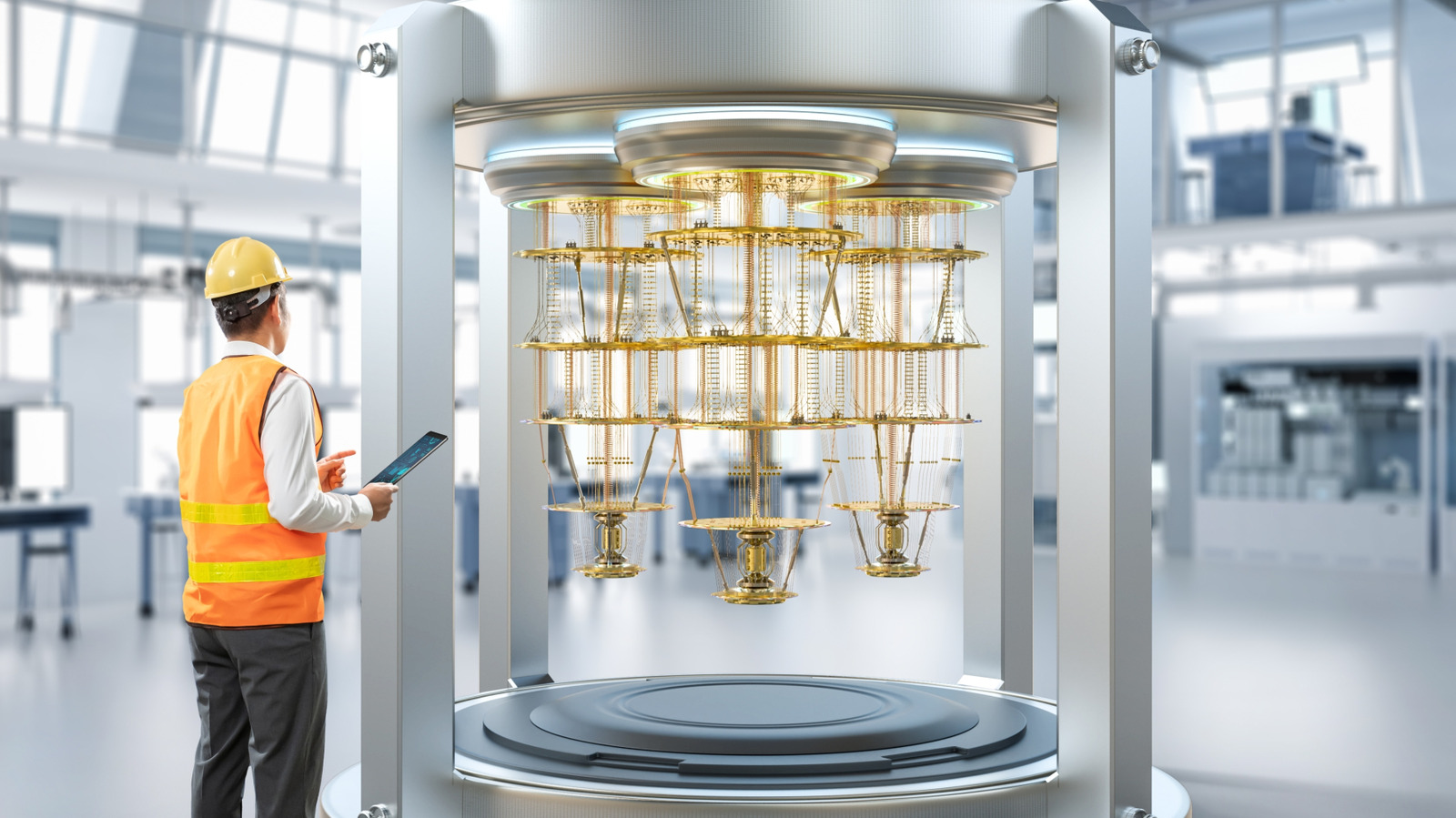
IBM's newest modular cryogenic system operates below 15 millikelvin, the company says, making it more than 180 times colder than deep space, which sits at about 2.7 Kelvin, or 454.8 degrees below zero Fahrenheit, according to Space.com. The figure puts the machine a fraction above absolute zero and makes the interior of an Earth lab one of the coldest places in the universe. The cold matters because of what IBM is keeping inside it: the qubit.
A bit, the unit of ordinary computing, is a switch that is either on or off. A qubit behaves more like a dial than a switch, holding many positions between on and off, much as a dimmer differs from a light switch. Each qubit also carries information in a direction, so it can hold multiple values in two directions at once. Bits operate alone, while qubits can be linked so that learning about one reveals something about the others, like a console of connected dials where turning one shifts the rest.
A quantum computer runs algorithms designed so that wrong answers cancel out and the right one remains, similar to waves on a lake that cancel in some spots and stack up in others. The dials, however, are extremely delicate. Any outside disturbance spreads across all of them and raises the odds of a wrong answer. Even a small amount of energy can knock a qubit out of its state, disrupting how qubits interact, a loss called decoherence. The more energy the machine is exposed to, the less accurate its calculations become.
That is why IBM and other quantum computing companies push as close to absolute zero as they can, leaving as little heat as possible to scramble the qubits. A quantum computer typically looks like a sci-fi chandelier, hanging down and narrowing toward the bottom. That structure is the dilution refrigerator, a stack of metal plates with each one colder than the plate above it, beginning at room temperature; the processor hangs at the coldest point at the bottom. The wires controlling the qubits run down from room temperature and conduct warmth toward the very thing the refrigerator is protecting, so the more qubits a machine has, the more wires it needs and the warmer it gets.
Not every quantum computer depends on a giant refrigerator. Neutral-atom machines, such as those built by QuEra, trap individual atoms in a small vacuum chamber and use lasers to cool them to microkelvin temperatures, colder than any refrigerator can reach, while the chamber walls and surrounding equipment stay at room temperature. The wiring problem largely disappears because there is no cold stack for the wires to warm. Photonic machines, which use particles of light as qubits, are similar: many parts run at room temperature, but the single-photon detectors typically still require cooling. Each approach trades the cooling problem for another, such as trapping thousands of atoms or detecting single photons reliably.
For now, the difficulty is not what quantum computers will do once they work, but keeping them cold enough to work at all.
More hardware news from TechManNews.