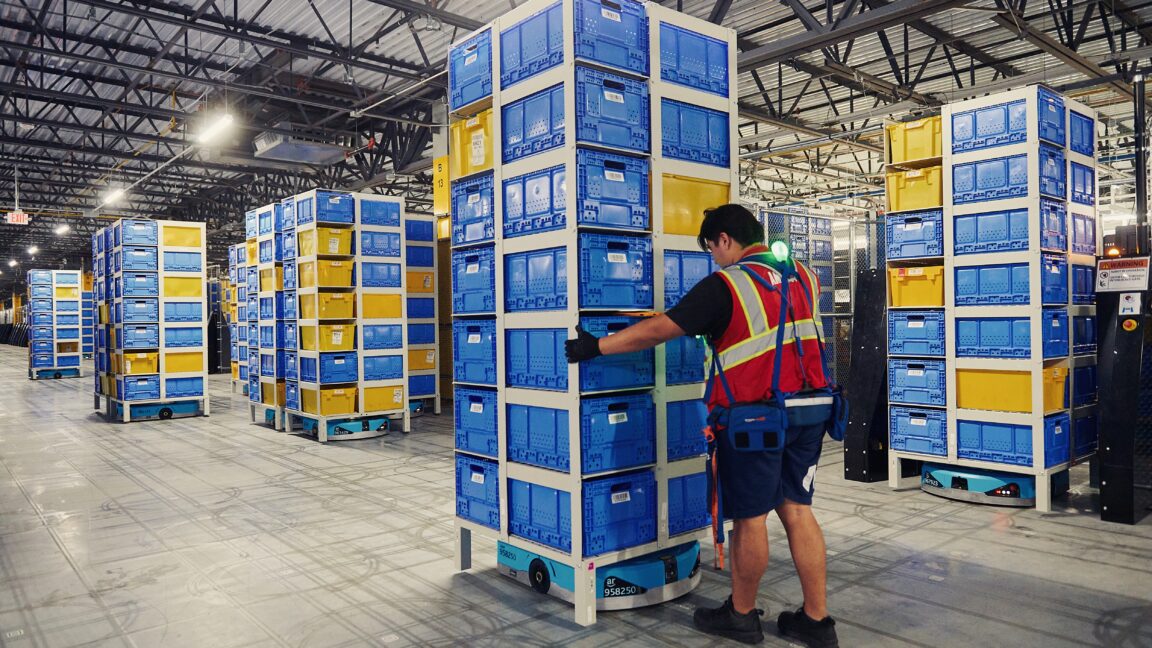
Meta is testing robots capable of plugging in cables, resetting servers, and performing other routine tasks inside its data centers, according to several current and former workers familiar with the projects. The effort, which has not been previously reported, could eventually let the company operate its rapidly expanding data center footprint with fewer human employees, helping to control labor costs as its spending on AI infrastructure rises. The workers, who asked not to be identified because they were not authorized to speak to the media, said Meta is using hardware from Watney Robotics, Kinova, and ABB. Kinova and ABB declined to comment, while Watney did not respond to requests for comment.
In one experiment, Meta is evaluating whether a Kinova Gen3 robotic arm can power cycle or cut electricity to servers. The company is also testing a different robot to swap networking cables. One Meta data center worker estimated that if the cable-swapping bot succeeds, it could replace up to 80 percent of some people’s workloads. “We thought those of us performing the physical tasks were safe for a while, but not anymore,” the worker said. “It’s coming for us all, unfortunately.”
At some facilities, Meta has quietly adopted a simpler robot that looks like a finger or a pointy stick, which can press the power button on a Mac Mini or other device to restart it when prompted remotely by a human. Meta declined to comment on the testing described in this story. Spokesperson Francis Brennan said in a statement that Meta is investing heavily in training and hiring workers to build and operate its data centers, adding that America is in the middle of its biggest infrastructure boom since World War II and faces a major shortage of skilled workers. “We need more workers, not fewer,” he said.
At a conference last year, Eric Xu, senior manager for robotics at Meta, said the company’s long-term goals include putting robots in data centers to speed up incident response, monitor the environment, and handle preventative maintenance. He noted that more collaboration and research will be needed, but that the company has to start somewhere. Until recently, robots were often too expensive and ill-suited for delicate data center work, and earlier industry trials sometimes saw machines crush servers while attempting simple tasks, according to a person briefed on the experimentation. However, hardware costs have declined and AI models powering robots have become far more capable, and several startups are now working on commercial robots that can assemble servers, swap parts, and replace wires.
Robots could offer more consistent output at lower cost than human labor, especially in less populous regions where data centers are plentiful but qualified workers are scarce. Proponents argue that robots could take over technicians’ most repetitive and dangerous tasks, freeing humans for more complex challenges. Longer term, reducing the need for human workers could make it more feasible to run data centers underwater, in space, or in other environments inhospitable to people, according to the article. Paul Golding, who oversees physical intelligence at the chipmaker Analog Devices, said more customers are telling him they want to run data centers using humanoid robots because they can operate in higher temperatures, in the dark, and similar conditions.
The growing use of robots has drawn little attention from activists who have organized a nationwide movement against data centers. Tech companies often tout human jobs as a benefit of new developments, which can help justify tax breaks. In Altoona, Iowa, Meta operates its largest data center campus, which employs hundreds of workers and opened in 2014, with several years left on a property tax break that saves the company tens of millions of dollars annually. Mayor Dean O’Connor told WIRED he hasn’t given much thought to robots taking jobs at Meta’s facility, though he framed automation as inevitable. “We will deal with it as it comes,” he said.
Worker group chats in Altoona have taken on a demoralized tone, with people saying they’ll all be gone in a few years because of the robots, according to a person familiar with the discussions. Two workers said Meta is developing AI software and other technologies that they believe will let it hire lower-skilled, lower-paid workers and centralize some roles in areas like Denver, Colorado. One worker said the company no longer wants people who can think independently or perform complex troubleshooting, but rather “smart hands” who can follow AI instructions without messing anything up. Meta contends its need for skilled workers remains strong, and this year launched a no-cost training program for thousands of people annually in electrical, mechanical, and plumbing work, with guaranteed employment in states such as Louisiana, Ohio, Indiana, and Texas for those who complete it.
Meta’s tugger and inventory robots, which move heavy server racks and track inventory using barcode-reading technology, are now operating in several data centers, including in Iowa and Virginia, according to the people familiar with the projects. The inventory bot is also used for failure inspections, but its grayscale camera can’t distinguish between green and red indicator lights, so humans are still needed to assess some breakdowns. The device struggles with corners and cables in its path, and because there are few of them, the robots must be moved between buildings by a human using a remote control. Sources also described the inventory bot as too slow, and said Meta explored but did not pursue drones as a faster alternative. Since last June, Meta has been testing a pair of dual-armed robots, according to the article.
More hardware news from TechManNews.