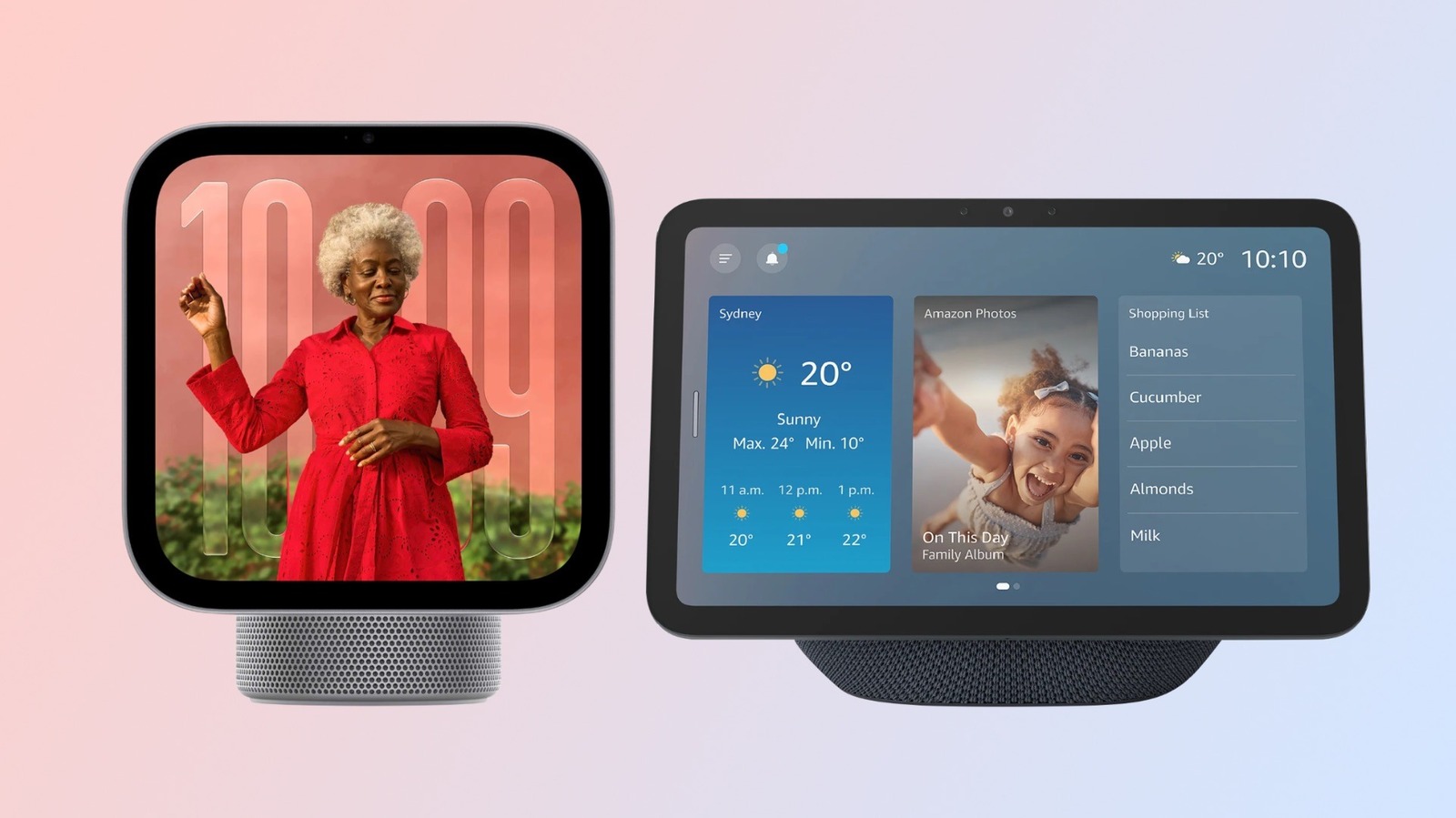
Apple's HomeView, a $299 smart display, has entered a market long dominated by Amazon and Google, and its closest point of comparison is Amazon's Echo Show line. Both devices put an AI assistant in the home, but they operate in markedly different ways, and the choice between them ultimately depends on which company's ecosystem a household already uses. Apple's entry pairs a touchscreen and built-in speakers with an experience tuned for people deeply invested in the company's products, including Messages, Apple Music and built-in HomeKit.
The two product lines diverge first on size. HomeView is available in a single version with a 7-inch square screen, while Amazon sells Echo Show devices across a range of screen sizes. The entry-level Echo Show has a 5.5-inch screen and costs $99, and Amazon also offers a 21-inch model for $499. All the Echo Show devices share mostly the same features, though the 16-inch and 21-inch models can run Fire TV apps.
The Echo Show 8, with its 8.7-inch display, is the model most easily compared with HomeView. The aspect ratios differ: Echo devices use widescreen displays that suit 16:9 video, while HomeView's square shape may frustrate buyers who plan to watch videos on it. Inside, HomeView runs on the same A18 chip as the iPhone 16, which likely makes it the most powerful smart display available, whereas Amazon builds custom chips for its Echo devices that are not designed for high performance.
Camera hardware is similar but the software differs. HomeView's 12-megapixel camera works only with FaceTime, a Mirror feature and facial recognition, while the Echo Show 8's 13-megapixel camera can take selfies or serve as a live-view camera for monitoring the home. Sound specs are close, with both devices carrying two full-range drivers and a woofer; HomeView's base adds two passive radiators for more low end.
The largest difference is how the devices operate. The Echo Show is a standalone device linked to an Amazon account that runs directly on a home network, and Alexa+ can be used through a Prime membership to manage calendars, reminders and shopping without a phone. HomeView requires an iPhone or iPad for setup, and its built-in Siri AI can handle personal requests only when a recently unlocked iPhone 15 Pro or later is paired and nearby.
Both devices support multiple profiles verified by voice and facial recognition. Amazon lets users switch profiles manually by asking Alexa, while HomeView does so automatically, a process that some early reviews say does not always work. Amazon positions the Echo Show as a standalone product suited to almost anyone, while HomeView functions more as an accessory for people who already own Apple products and rely on the company's core apps and features.
More hardware news from TechManNews.