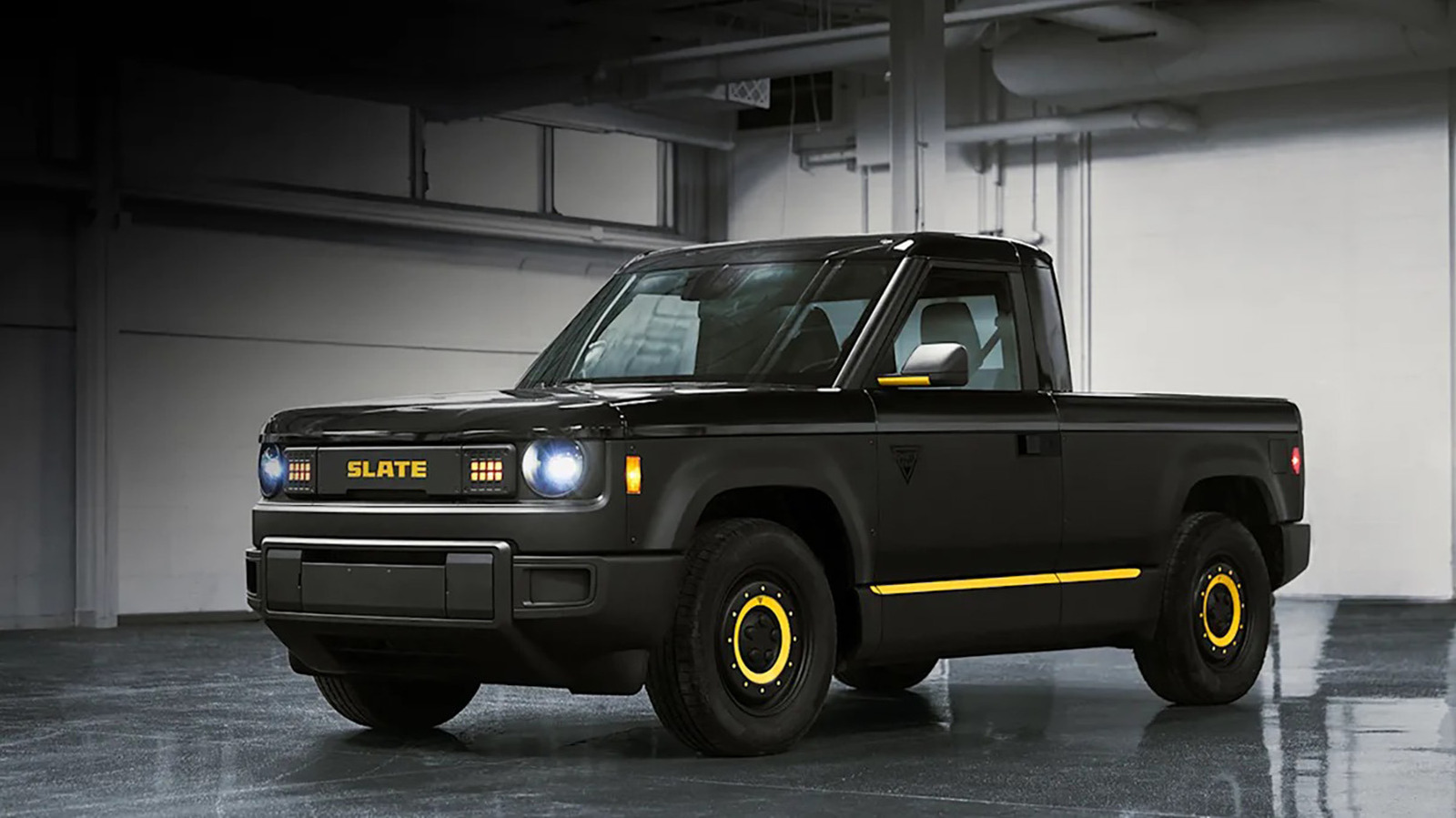
Slate Auto's Slate truck can receive over-the-air software updates even though the base version of the EV has no built-in infotainment system and no cellular connection. The truck instead relies on the driver's phone to download and transfer updates, the company says.
The base Slate also omits a radio, speakers, power windows and even a paint job, offering vinyl instead. Slate's minimalism is not only a design decision but the center of its business model, which reaches a sub-$25,000 entry price by removing everything unrelated to driving and safety. The company will still sell add-ons to fill the gaps, including speakers, an iPad mount, a kit that turns the truck into a five-seat SUV and a telematics module for in-app door unlocking. A fully loaded version of the modular vehicle can surpass $45,000.
The update process runs through the Slate app on a phone. When an update is available, the app downloads it to the device; the phone is then plugged into the truck's USB port on the dash for the initial file transfer, which takes about a minute. The truck then completes installation on its own, a step that can take around 45 minutes. Slate says the updates will be limited to bug fixes and small improvements rather than large new features.
The same app handles other tasks, including displaying range, helping drivers find chargers and passing directions to Google Maps, Apple Maps or Waze. The Slate truck has an estimated 205 miles of range, a 1,550-pound maximum payload and a 2,000-pound tow rating, positioning it for short-run hauling and errands rather than long road trips.
Slate says it will not sell app data and collects only what it needs for purposes such as diagnostics, service and update status. That stance may appeal to buyers wary of data practices following the recent GM data selling debacle.
Whether enough buyers want an electric pickup that scales back on so much remains an open question. For those who do, the software will still stay up to date.
More software news from TechManNews.